Google and Flo to Sync Cycle Data With Google Health and Build Joint Hardware

Google has partnered with Flo Health to bring menstrual cycle data into the Google Health app and to develop future products together. Details of the arrangement were published on Oct. 12, 2026 Engadget. The scope covers app sync in the near term and hardware and research work over a longer period.
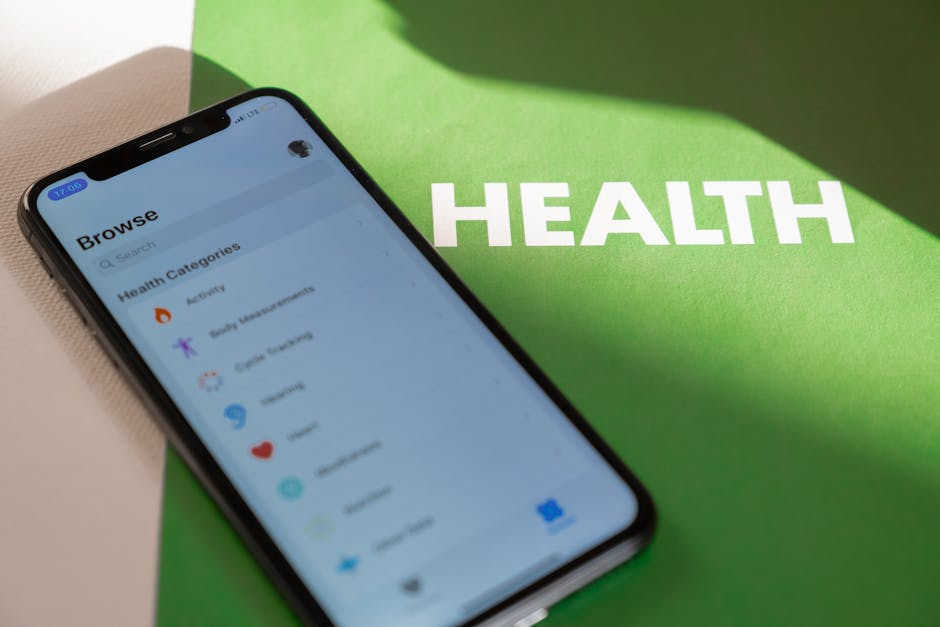
Starting early next year, Flo users will be able to sync cycle data with the Google Health app. The sync will run in both directions. For users who opt in, data from Flo will appear in Google Health alongside other health metrics, and data from Google Health will appear in Flo.
The connection will be opt-in. It will require explicit permission separately for each data type and purpose. Users will be able to withdraw permission at any time. Flo data synced to Google will not be used for advertising and will not be sold or shared with other apps or developers.
For Google Health Premium subscribers who opt in, synced Flo data will be available to Google Health Coach to offer more personalized guidance. That puts cycle information in the same coaching context as the rest of a user's combined health data, rather than keeping it isolated in a separate app.
Beyond software, the companies plan to develop future wellness hardware combining Flo's women's health insights and algorithms with Google's wearable hardware and sensor expertise. Google described the partnership as long-term and including research initiatives into underserved areas of menstrual health.
The announcement follows a separate privacy settlement involving the same two companies. In September 2025, Google and Flo Health agreed to pay $56 million to settle a class action claiming they violated the privacy of millions of Flo period-tracking app users Reuters.
The broader context for health platforms is how permissions hold up over time, not just the sync itself. Per-type, per-purpose consent with revocation is the right starting point. The hard part is making that choice stick across stored copies, derived features, coaching suggestions and logs. Enterprise developers will recognize the pattern from OAuth scopes, the limited permissions used for work logins, and data retention rules. Consumer health raises the stakes because cycle regularity, fertility windows or symptoms can be inferred again from nearby signals even after the source data is removed, unless the system tracks where data came from.
In my view, the firewall around advertising and redistribution is the other control to watch. A commitment not to use synced Flo data for ads and not to sell or share it simplifies the threat model. It still leaves the ordinary platform questions. How strictly coaching calculations are kept separate from ads personalization. What technical data remains visible to the phone system and sync setup. How deletion spreads. Those are implementation details, not press release lines, and they will determine whether opt-in earns sustained use.
Looking at devices, co-designing around women's health makes technical sense. Cycle physiology changes over time, varies across users, and is poorly served by single-number cutoffs. Useful estimates depend on combining basic signals over weeks and months, handling gaps and irregularity, and showing uncertainty rather than overstating precision. Flo brings domain models and labeled histories. Google brings wearable hardware, low-power sensing pipelines and on-device processing. If that combination improves signal quality without sending more raw data to the cloud, users gain something concrete. Better predictions, fewer manual logs, earlier flags for patterns worth clinical follow-up.
Worth flagging in that light is the research element. Underserved areas of menstrual health remain undersampled in training data and clinical literature. A long-term program that expands study groups and checks algorithms against health outcomes would have compounding value. It would improve the coaching layer in the short term and the sensor needs for future hardware in the longer term. The optimistic case is straightforward. Consent-based reproductive data, linked to general health context, could make day-to-day guidance more accurate for a large population that health tech has often treated as an edge case.