Mechanism's $49 Basecase Gives the Switch 2 Mounts and a Swappable Back
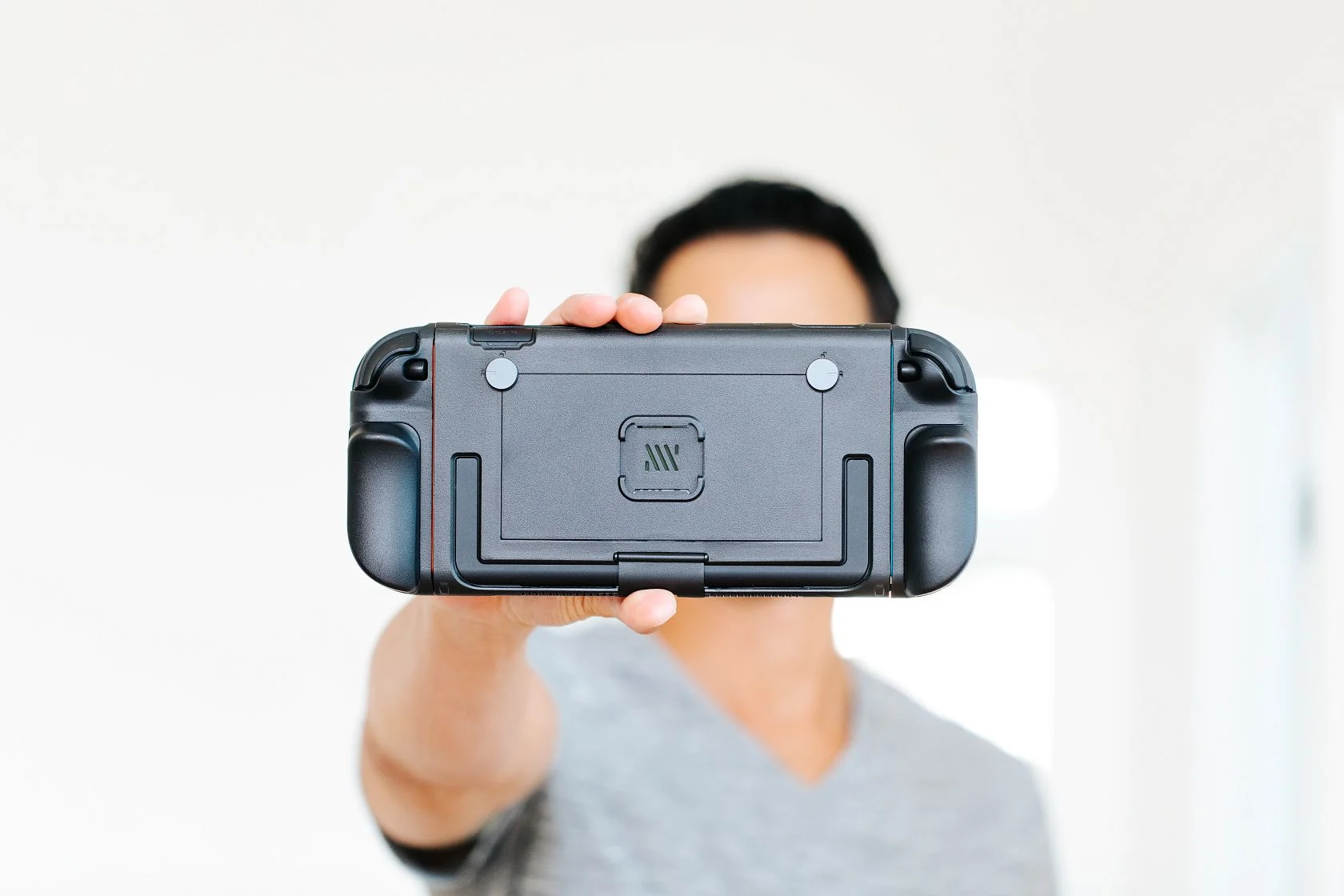
Mechanism has released its first case for the Nintendo Switch 2. The $49 Basecase is a snap-on shell that connects to the company's modular mounts, according to hands-on reporting from The Verge.
The shell stays on for handheld and tabletop play. It preserves the full range of the Switch 2 kickstand. All ports, buttons and fan vents remain accessible.
The rear plate unlocks and can be replaced with a custom 3D-printed version, built layer by layer from a digital file. Mechanism offers those files for free, and its listing on getmechanism.com notes hidden game storage.
Docked play needs an extra part. The Switch 2 cannot sit in its dock with the Basecase attached without Mechanism's included dock adapter.
Mechanism describes it as a full protective case with ergonomic grips, meaning shaped holds for longer sessions, and easy removal. It markets the Basecase as the only Switch 2 case with a built-in mount point, compatible with all Mechanism mounts. Those claims are stated on its product pages on getmechanism.com.
The launch follows a delay. Formerly called Basegrip+, the case was first set for the end of Summer 2025 and is now set for early 2026, as reported in The Verge. Mechanism prices its Basegrip for Switch 2 at $19.00 and its Basegrip+ for Switch 1 at $25.00. The Basecase sits above both as the enclosed, mount-ready option.
The broader context here is accessory design as interface design. A plain shell only protects. A shell with a structural mount point, preserved venting and kickstand travel, plus a swappable rear, acts like a small platform. It lets the console attach to desks, walls, arms and other fixtures with protection on, and shifts customization from skins to geometry.
In my view, the trade-offs are instructive. Dock clearance and mount rigidity pull in opposite directions. A shell thick enough to carry load and protect corners rarely matches Nintendo's tight dock tolerances, hence the adapter. Mechanism chose mount compatibility over drop-in docking, a fair exchange for handheld or tabletop players and existing mount users, but added friction for dock-first players.
Looking at what this means for Switch 2 owners, the open back stands out. Free files lower the cost of trying new shapes. Hidden storage handles cartridges without a separate wallet. If the mounts hold the heavier Switch 2 and the adapter stays simple in daily use, portable Nintendo hardware gains a more fixed place on a nightstand, workbench or cockpit-style setup without losing portability.


