Rubin Observatory Begins Its Decade-Long Sky Survey; Cyborg Cockroaches Enter Disaster Response
The Sky Survey Begins
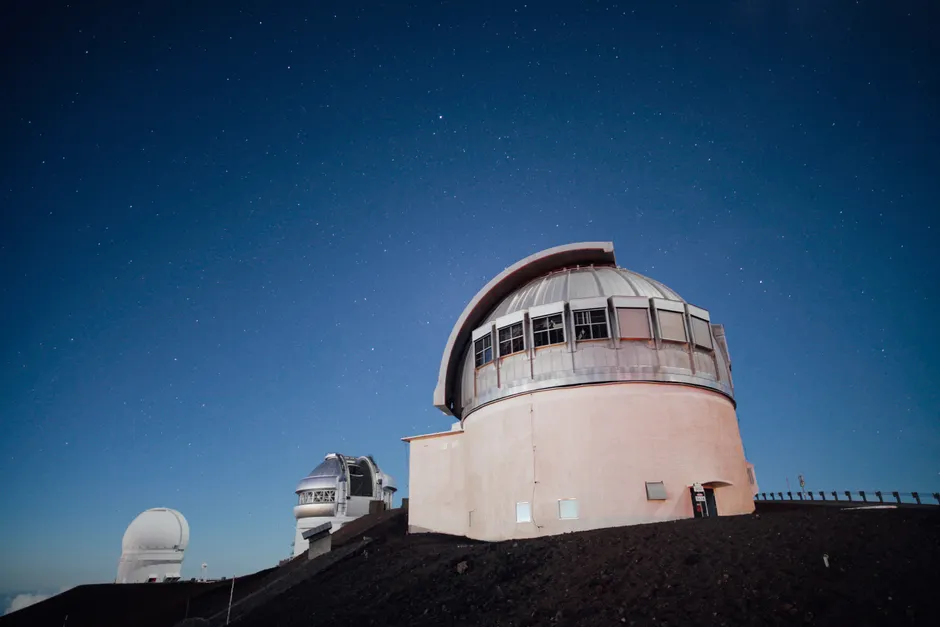
The Vera C. Rubin Observatory's Legacy Survey of Space and Time officially commenced on June 30, 2026, initiating a ten-year program that will collect roughly ten terabytes of imaging data every night from its site in Chile.
The LSST Camera — 3,200 megapixels, the largest digital camera in operation — sits at the heart of the instrument. The observation schedule is relentless: approximately one thousand images per night, with a new frame captured every 40 seconds, and the entire southern sky revisited every few nights. Over the decade, each point in the sky will be photographed around 800 times, creating a time-series dataset unprecedented in ground-based astronomy.
Brian Stone of the National Science Foundation called the launch the beginning of "the greatest cosmic movie ever made." Darío Gil, Under Secretary for Science at the US Department of Energy, stated the mission will "redefine modern cosmology and astrophysics." Such language is standard at major facility openings, but the data infrastructure behind Rubin gives those claims weight.
The scientific value lies not in individual images but in the accumulated time-series — detecting transient events (sudden flares, explosions, moving objects), tracking near-Earth objects, refining dark energy models, and measuring weak gravitational lensing, a subtle bending of light by matter that only becomes statistically meaningful after hundreds of repeated observations. The 800-pass depth transforms the camera from a mere survey instrument into something closer to a longitudinal study: watching the same patch of sky repeatedly to catch changes.
The observatory captured its first images in summer 2025 during a commissioning test run, reported by Engadget, giving engineers an early look at the data pipeline under live conditions before the formal survey began. That period also allowed them to characterize the camera's focal plane — 189 individual 16-megapixel sensors arranged across a field of view wide enough to contain roughly 40 full moons — before committing to a decade of continuous operation.
The broader context is worth considering for anyone working at the intersection of scientific computing and machine learning. A petabyte-scale, time-tagged, uniformly sampled all-sky dataset is precisely the kind of structured corpus that modern ML pipelines are designed to exploit. Real-time alert brokering — flagging transient events within seconds of readout — was architected into the Rubin pipeline from inception, and several independent broker systems are already positioned to ingest and classify alerts as they stream in. The machine learning component is not bolted on afterward; it is foundational.
In my view, the LSST dataset will become one of the most consequential training and benchmarking resources for astronomical machine learning over the next decade. No comparable time-domain corpus exists. The volume, temporal cadence, and uniformity of the data make it ideal for training algorithms to detect rare events, track objects, and extract statistical signals from noise.
Cyborg Cockroaches Enter Disaster Response
Separately, Engadget reported a development in biohybrid robotics with direct implications for search and rescue. Researchers at Nanyang Technological University Singapore and Waseda University have developed a miniaturized diving apparatus allowing cyborg cockroaches — living Madagascar hissing cockroaches equipped with electronic motor controllers — to survive submersion underwater for hours.
The apparatus comprises an oxygen-generation tank, a flexible outer shell, and four silicone tubes connected directly to the insects' spiracles, the respiratory openings along their abdomens. The mechanism replaces the cockroach's passive gas exchange with active oxygen supply, effectively extending its survivable environment from dry rubble to flooded spaces.
The operational relevance is not theoretical. Cyborg cockroaches were deployed for the first time in an actual search-and-rescue operation following an earthquake in Myanmar — a significant threshold, moving the technology from lab demonstration to active disaster response. A controllable biological platform with underwater endurance opens access to search spaces — flooded basements, collapsed drainage infrastructure, submerged debris fields — currently unreachable to human responders and most wheeled or legged robots.
A Common Logic Across Scales
Both developments operate at the same conceptual intersection: sensor platforms generating structured data from environments otherwise opaque to human observation. One does it at astronomical scale; the other at the scale of a collapsed building. The engineering challenges differ substantially. But the underlying logic — extending the reach of sensing into places we could not previously access — is identical. Rubin opens the time-domain sky. The cyborg cockroaches open flooded search spaces. The principle of reaching into the unknown through instrumentation binds them together.


