China Stations Coast Guard Patrol East of Taiwan—and What That Means
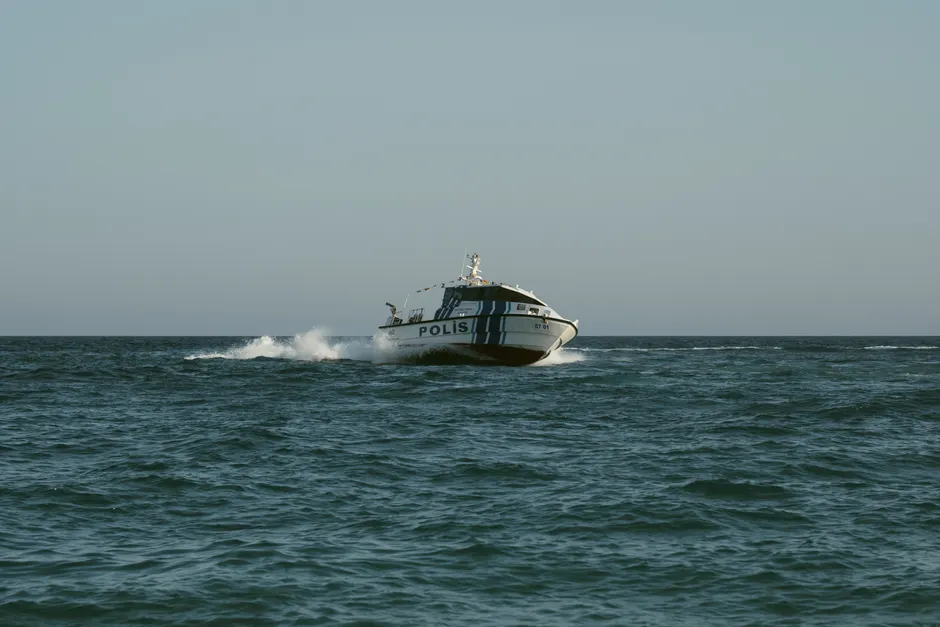
China's Coast Guard announced on July 4, 2026, that it would establish a permanent patrol zone in the waters east of Taiwan. Until then, Chinese vessels had conducted occasional patrols in the area, but this announcement signals a shift toward a continuous, official presence—what Beijing calls "strengthening" the operation going forward.
The move didn't come from nowhere. A Chinese Coast Guard vessel conducted patrols in those same waters on June 1. When the July 4 announcement came, Reuters reported it had drawn objections from several countries. Beijing's response has been consistent: Foreign Ministry spokesperson Lin Jian said at a June 9 press conference that the patrols were routine and happened in areas China claims jurisdiction over. When the United States, Britain, France, and Germany each raised concerns on June 25, Beijing treated those objections as irrelevant.
Why the Eastern Waters Matter
Geography tells much of the story here. China's coast guard has long operated in the Taiwan Strait—the roughly 180-kilometer channel between mainland China and western Taiwan. But the waters to Taiwan's east are different. They open toward the Philippine Sea and represent Taiwan's main deep-water access routes. A permanent Chinese Coast Guard presence there reaches a part of Taiwan's waters that has historically felt safer, beyond the range of Beijing's daily pressure.
Taiwan's government rejected the legitimacy of the patrol outright. Taipei called it a "provocative act" and said its military would coordinate with Taiwan's own coast guard to respond. On July 1—three days before Beijing announced the permanent patrol—Taiwan's government instructed Taiwanese vessels off the island's east coast to ignore any boarding or inspection demands from Chinese coast guard ships. This puts civilian sailors in a difficult position: Chinese coast guard law allows officers to board and inspect vessels in waters Beijing claims, but Taiwan says those waters are not subject to Chinese law enforcement.
On the same day Taiwan issued that directive, China told the United States to handle the Taiwan issue "with utmost caution." The timing suggests Beijing was warning Washington against sending military ships to counter the patrols or escalating the issue diplomatically before the July 4 announcement.
The Pattern at Work
What Beijing is doing follows a familiar playbook: establish a presence, make it routine through repetition, give it legal language (calling it "law enforcement" in China's "jurisdiction"), and then treat the new situation as normal. Each step on its own looks reasonable; taken together, they shift the burden onto anyone trying to push back. By explicitly saying it will strengthen the patrols, Beijing is framing the move not as a threat but as a schedule.
The concern from Washington, London, Paris, and Berlin stands out for its reach. European countries have gradually expanded their military role in the Indo-Pacific since 2021, but coordinated public statements about Chinese Coast Guard activity near Taiwan are a big step, especially for Britain, France, and Germany—each of which has substantial business interests in China. Whether that concern turns into concrete action—naval transits through the area, port visits, greater intelligence-sharing with Taiwan—is the question facing Western policymakers now.
For Taiwan, the practical challenge is immediate. Its government has told ship captains to resist inspection. Its military has promised to work with the coast guard. But enforcing that stance against a fleet operating in waters that international law treats as contested requires constant presence and clear rules for when its ships can use force—something Taiwan hasn't publicly spelled out.
The July 4 announcement transforms what had been occasional pressure into a declared, permanent operation. The line between a coast guard patrol and a de facto blockade is narrow, and depends on intent, how many ships are actually there, and whether China will enforce its boarding authority. None of those variables have been fully tested in the waters east of Taiwan yet.


