AST SpaceMobile Cut to Hold: $54 Target After Launch Delay and SpaceX Pressure
Piper Sandler cut AST SpaceMobile to Hold from Buy and lowered its price target to $54 from $98 on Oct. 13, 2026. Barron's
A Buy rating means the analyst expects the stock to beat the market. Hold means roughly track the market. A price target is the analyst's estimate for the stock in about a year.
AST closed at $50.97, down 10.48% on Oct. 9. Yahoo Finance That leaves the new $54 target about 6% above the last close.
The analyst warned the commercial rollout could face delays from satellite-launch challenges and SpaceX's growing ambitions. MarketWatch The warning came days after U.S. and European telecom stocks finished among the top decliners on their respective benchmarks on Friday after SpaceX's spectrum deal. Reuters
That Friday price action was broad. It was not confined to AST. The Reuters account puts telecom equity weakness and SpaceX spectrum expansion in the same session, Oct. 9.
Launch timeline slips
AST pushed its commercial launch to 2027, according to Sept. 23 reporting. Yahoo Finance That replaces older company language, published without a clear date, that put commercial launch planned from 2026.
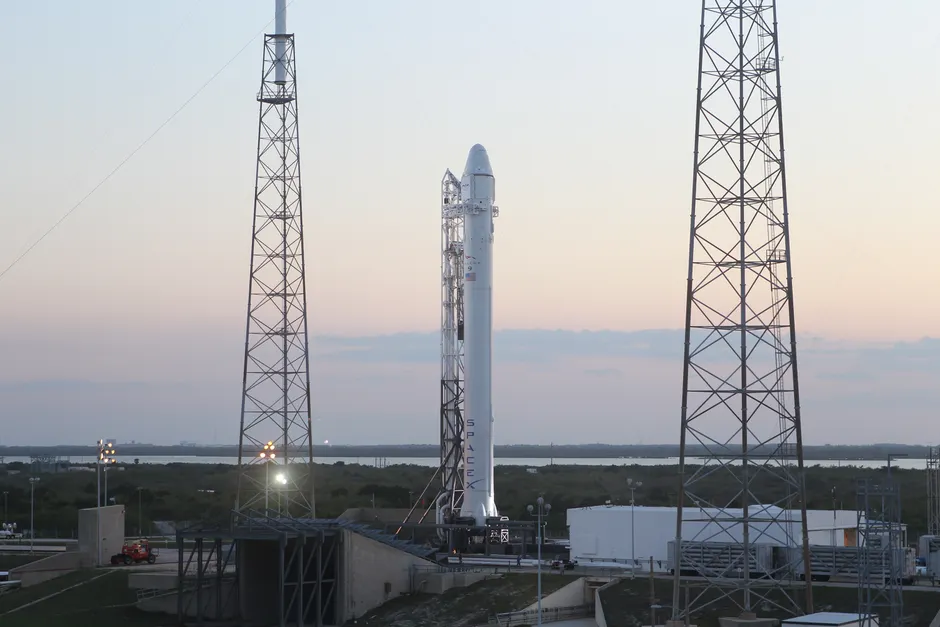
Part of the hardware is built. AST launched its first five commercial satellites, BlueBird 1-5, in September 2024. Those enable non-continuous coverage across the United States. The company then launched its next-generation BlueBird satellites on Aug. 5, 2026 from Cape Canaveral, Florida aboard a Falcon 9 rocket. Those spacecraft had been scheduled for launch throughout 2025 and 2026.
The first tranche of the plan calls for 20 satellites to offer seamless, low-latency mobile connectivity. Low latency means short signal delay. That design was first laid out in a December 2020 disclosure tied to Vodafone and AST. Five satellites give intermittent U.S. coverage. Twenty are needed for continuous service, like having enough cell towers in orbit to avoid gaps.
AST describes its system as a space-based cellular broadband network accessible directly by standard, unmodified mobile phones. AST SpaceMobile Its stated mission includes eliminating connectivity gaps faced by nearly six billion mobile subscribers. It says more than 87% of the world's surface is out of reach from traditional cell towers. It states its service works with existing everyday smartphones with no need for special devices, software updates, or apps.
SpaceX, which is both launch provider and direct competitor, states that Starship will launch the next generation of direct-to-mobile satellites to deliver full cellular coverage everywhere on Earth. SpaceX
Competitive overhang hardens
MarketWatch once described AST as the only pure stock play on direct-to-cell service. MarketWatch Direct-to-cell means a normal phone connects to a satellite instead of a tower. That positioning helped the stock rise more than sixfold after announcing partnerships last year with Verizon.
Shares fell as much as 21% on Friday in late May before losses were pared back. MarketWatch MarketWatch's archive for Feb. 12, 2026 lists an item stating AST stock was falling as the satellite company sought more cash. MarketWatch The same archive lists an item stating SpaceX's Starlink Mobile plans were pressuring AT&T.
The broader context here is a repricing of timetable risk rather than a debate about final demand. The pitch is simple: fill dead zones without new handsets. A one-year shift changes when AST must raise funds, when revenue can start, and how much time rivals have. The gap between 5 satellites and 20 is where launch pace, in-orbit performance, and access to cash meet.
In my view, Piper's math tells that story. A cut from $98 to $54 is a 44.9% reduction in forward value while keeping a Hold rating. That points to a longer launch curve and a larger discount for competition, not rejection of the idea. Pure-play status helped on the way up. It also concentrates launch, regulatory, and funding risk in one ticker. With the stock at $50.97 on Oct. 9, the market was already discounting slippage before the Oct. 13 note.
Looking at what this means for holders and carriers, three variables now dominate. First, launch schedule visibility into 2027. Second, cash. A February headline about seeking more cash still frames the balance-sheet question for a build without full revenue yet. Third, SpaceX pace. Spectrum deals and Starship-based direct-to-mobile deployment shrink the window for early pricing power and raise the bar for exclusive carrier deals. None of that resolves whether a 20-satellite tranche delivers the latency and throughput needed for commercial-grade broadband at scale. That test comes in orbit, not in models.