Niobia Aims to Cut Battery and Chip Defect Diagnosis From Days to Minutes
Niobia, a San Francisco-based startup and Startup Battlefield finalist at TechCrunch Disrupt 2026, has built AI software to flag defects in battery and chip manufacturing and let engineers ask a chatbot what caused them. TechCrunch
The company was co-founded by Gaurav Jha and Harveen Kaur, both PhDs in chemistry. The goal is diagnostic latency, the time between spotting a defect and explaining it. Niobia aims to give answers in minutes rather than days.
The system runs on-tool. Its AI agents operate on self-contained GPUs, specialized processors for AI work, mounted directly on manufacturing equipment. That keeps image capture, analysis (inference) and chatbot queries local to the machine, instead of sending raw process data to a central cluster and back.
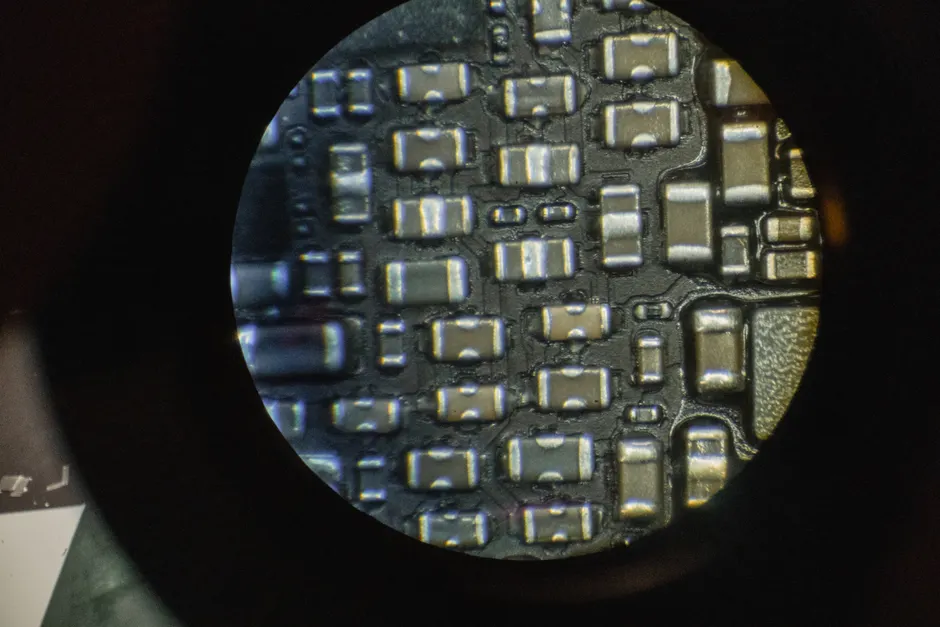
It is designed for small features. The software can catch pinhole-sized flaws such as scratches. Once a defect is flagged, an engineer can ask in plain language for a probable cause. That merges two usually separate steps, automated optical inspection, where cameras scan for flaws, and manual failure analysis, where people investigate the reason, into one loop.
Under the hood, Niobia starts with open-source models and further trains them on battery and chip research and other data. In practice that means fine-tuning existing vision and language models on specialist material such as process recipes, defect categories and scientific literature, rather than building a foundation model from scratch.
The initial scope is narrow by design. Niobia is focused on film coating, electroplating and fluidized bed reaction processes. All three are coating and surface-formation steps, where uneven layers, contamination or drifting settings quickly lead to yield loss or reliability problems downstream.
On data control, Niobia lets customers hold their own encryption keys so Niobia itself cannot decrypt customer data. That bring-your-own-key setup means process images and query logs stay hidden from the vendor unless the customer grants access.
The company's own description matches that focus. Its official domain is niobia.ai, where it describes AI-powered defect detection and process intelligence platforms for battery gigafactories. Niobia AI In a separate company post, Niobia AI states that it builds agentic AI for battery and semiconductor manufacturing. LinkedIn
For process engineers, the combination matters. Vision-only inspection shows where a defect is. A language interface trained on process knowledge tries to explain why it is there. If minute-level turnaround holds in production, the containment cycle gets shorter. Engineers can quarantine a batch, adjust a coater or plating bath, and restart with less scrap.
In my view, the on-tool GPU choice is pragmatic. Fabs and gigafactories are cautious about moving high-resolution process images outside the plant. Local analysis lowers bandwidth load and keeps sensitive yield data on the line. The tradeoff is a different hard problem, managing a fleet of distributed processors, keeping model versions consistent at the edge, and coping with heat and vibration inside production hardware.
Worth flagging for buyers is the trust architecture. Customer-held keys answer a real procurement concern in batteries and semiconductors, where process details are trade secrets. The technical test will be how key management works with remote support, retraining and debugging. A vendor that cannot see customer data needs clean ways to reproduce failures from redacted logs or on-site replays.
The broader context here is specialization. General-purpose multimodal models can describe a scratch. They cannot reliably link that scratch to coating viscosity, web speed, bath chemistry or fluidization settings without domain training and close integration with tool data. Niobia is betting that focused coverage of three process families, plus chemistry expertise from its founders, will give more useful answers than a broader but shallower copilot. If that bet works, the gain is faster yield learning in factories where each hour of misdiagnosed drift is expensive.


