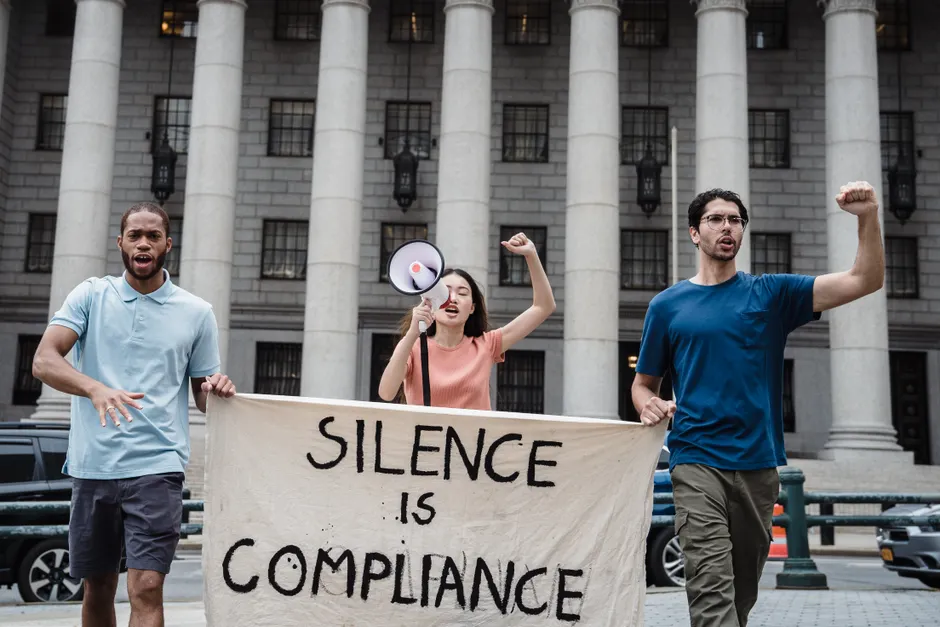
Council Insurance Rules Are Limiting Protest on Public Land, Report Says
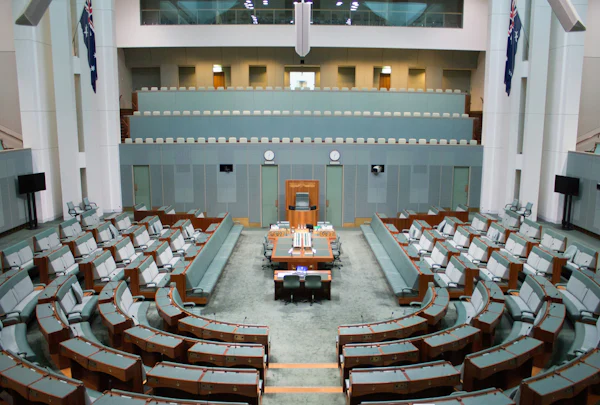
Councils in Australia are requiring protest organisers to buy public liability insurance for rallies on council land, according to a report released on Wednesday, 14 October.
The report was co-authored by the Australian Democracy Network (ADN) and Deakin University's Centre for Law as Protection. It reviews permit and insurance rules set by local councils and warns they restrict assembly on public land The Guardian.
Titled 'Permission to Protest', it states that across most Australian jurisdictions, protest is unlawful or unprotected without permission from police and councils.
The report uses Bathurst as an example. In July, Mariella Gussoni notified Bathurst Regional Council of a planned protest in a local park against the culling of brumbies in Kosciuszko National Park. The rally was planned as part of nationwide rallies in August.
Bathurst Regional Council said she could proceed only if she took out a $20m public liability insurance policy. Gussoni instead held the protest on the footpath next to the park after notifying police. An estimated 120 people attended. She said it went ahead without issues.
The report says New South Wales law leaves little room to bypass councils. Holding a public gathering on council land without a permit carries a $2,200 fine as a default rule under the Local Government Act. The City of Sydney has passed motions affirming the right to protest on council land.
The report recommends permits be treated as notification, not authorisation. It also recommends no insurance requirements.
The broader context here is what separates telling from asking. Notification gives police and councils information on time, place and scale. Authorisation gives them discretion to set conditions or refuse. It is similar to registering an event versus applying for a licence. Insurance sits on the authorisation side, because an organiser who cannot pay for cover cannot proceed lawfully on council land.
In my view, the stakes are practical as well as legal. A $20m policy is not a nominal admin step. For a community rally of about 120 people, the cost and logistics can decide whether the event is held in the park requested or moves to adjacent land. Assembly still occurs, but access, visibility and planning change.
Looking at what this means for councils and organisers, the report points to two paths. One keeps permits as approvals, with fines for non-compliance and conditions such as insurance. The other treats permits as notifications, with councils informed but not acting as insurers of last resort. The ADN had flagged the Bathurst conditions in July as demands that price communities out of protest. The question now is whether other councils follow Sydney's approach of affirming protest on council land, or retain insurance and permit conditions as standard practice.