Tesla Roadster October 15 Demo: Testing the 2017 Promise Live
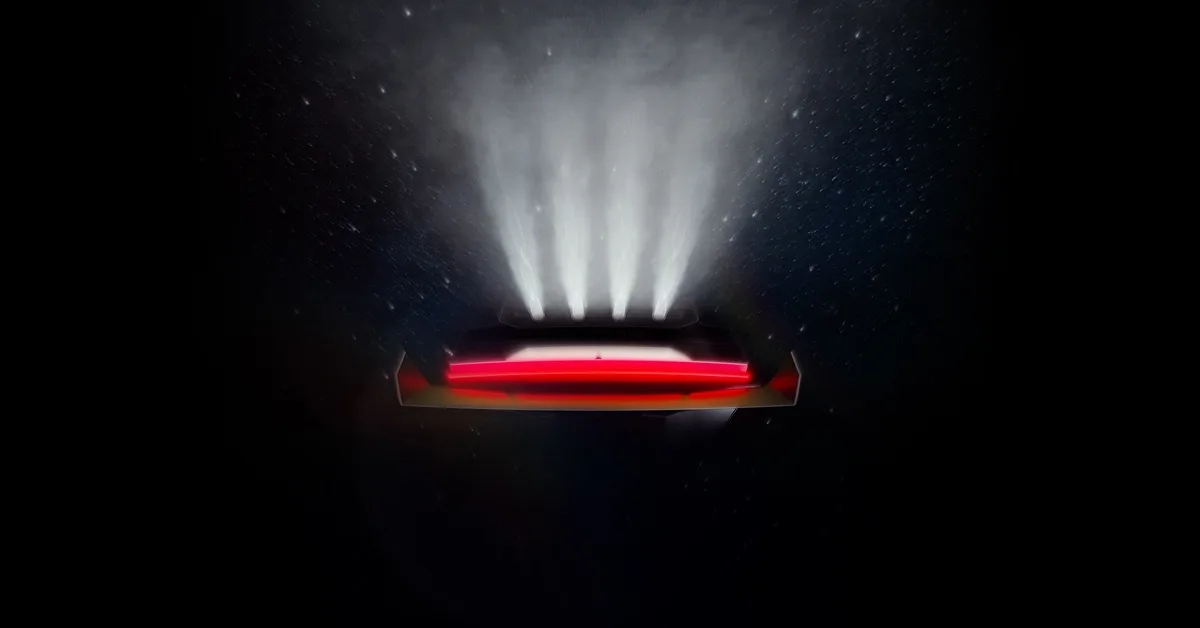
Tesla planned to unveil its second-generation Roadster hypercar on October 15 at 8:55PM ET. Engadget
The format was an outdoor livestream event to show the next-generation Roadster driving, not just parked on a stage. Hypebeast Tesla's livestream page invited viewers to a "Roadster unveiling on Thursday, October 15th at 7:55 PM CST." Tesla Livestream Engadget said it would begin its Roadster reveal liveblog at about 4PM ET. Engadget
The October 15 date was the latest in a short sequence of plans. According to August reporting, Tesla planned to unveil a redesigned Roadster. Reuters Elon Musk then said Tesla would unveil its long-delayed Roadster on October 1. Reuters The October 15 livestream replaced that earlier date.
The Roadster is Tesla's origin product. Tesla states its first production vehicle, the Roadster, launched in 2008. Tesla The company describes that 2008 Roadster as the "world's first fully electric sports car." Tesla introduced an updated version of the Roadster in 2017 and said it would be ready in 2020. Engadget At that 2017 reveal, Tesla promised 620 miles of range on a charge. It also promised zero-to-60 mph in 1.9 seconds.
Those 2017 figures remain the reference point for the October 15 demo. No newer range or acceleration figures were in the verified pre-event materials. Tesla's current Roadster page calls the car an "all-electric sports car" and the "quickest vehicle in the world." Tesla The same page says the Roadster delivers "record-setting acceleration, range and performance." Musk set expectations for the event in strong terms. He called the new Roadster demo a candidate for "greatest product demo of all time." Engadget He added that the Roadster demo "will be a BANGER, probably metaphorically, though some chance literally."
A static unveiling can control lighting, angles and access. An outdoor livestream leaves less room to edit. Acceleration runs, launch control behavior (how the car manages full-power starts), thermal stability (how it handles heat under load), traction management (how it avoids wheel slip), ingress and egress (getting in and out), and panel fit and closure operation are all harder to stage-manage in continuous video.
In my view, the central test for engineers watching is how the 2017 specification lines up with a drivable vehicle. A 620-mile claim and a 1.9-second 0-60 claim stress different systems. One concerns usable energy, mass efficiency, aerodynamics and the test cycle used to measure range. The other concerns power delivery, grip, heat tolerance for repeated runs, and how the structure handles launch loads. The credibility of the October 15 event will turn less on staging than on how much continuous, instrumented driving Tesla lets observers see.
One detail worth keeping in mind is the gap between a demonstration and production intent. A prototype can validate a powertrain design without settling manufacturability, serviceability, crash compliance, or sustained performance. Those distinctions are normal in vehicle development. They are also the reason experienced watchers separate a successful demo from a shippable specification.
The broader context here is continuity. From a 2008 electric sports car to a 2017 promise of long range with supercar acceleration to a 2026 outdoor demo, the Roadster program has worked as Tesla's performance laboratory. If the October 15 demonstration closes that loop with a running vehicle under livestream conditions, it gives engineers concrete data to evaluate. That outcome would be useful regardless of delivery timing, because verified performance limits tend to spread across the wider electric vehicle field.


