500 Dogs Wear a Shed-Built Nose Guard for Sun Disease
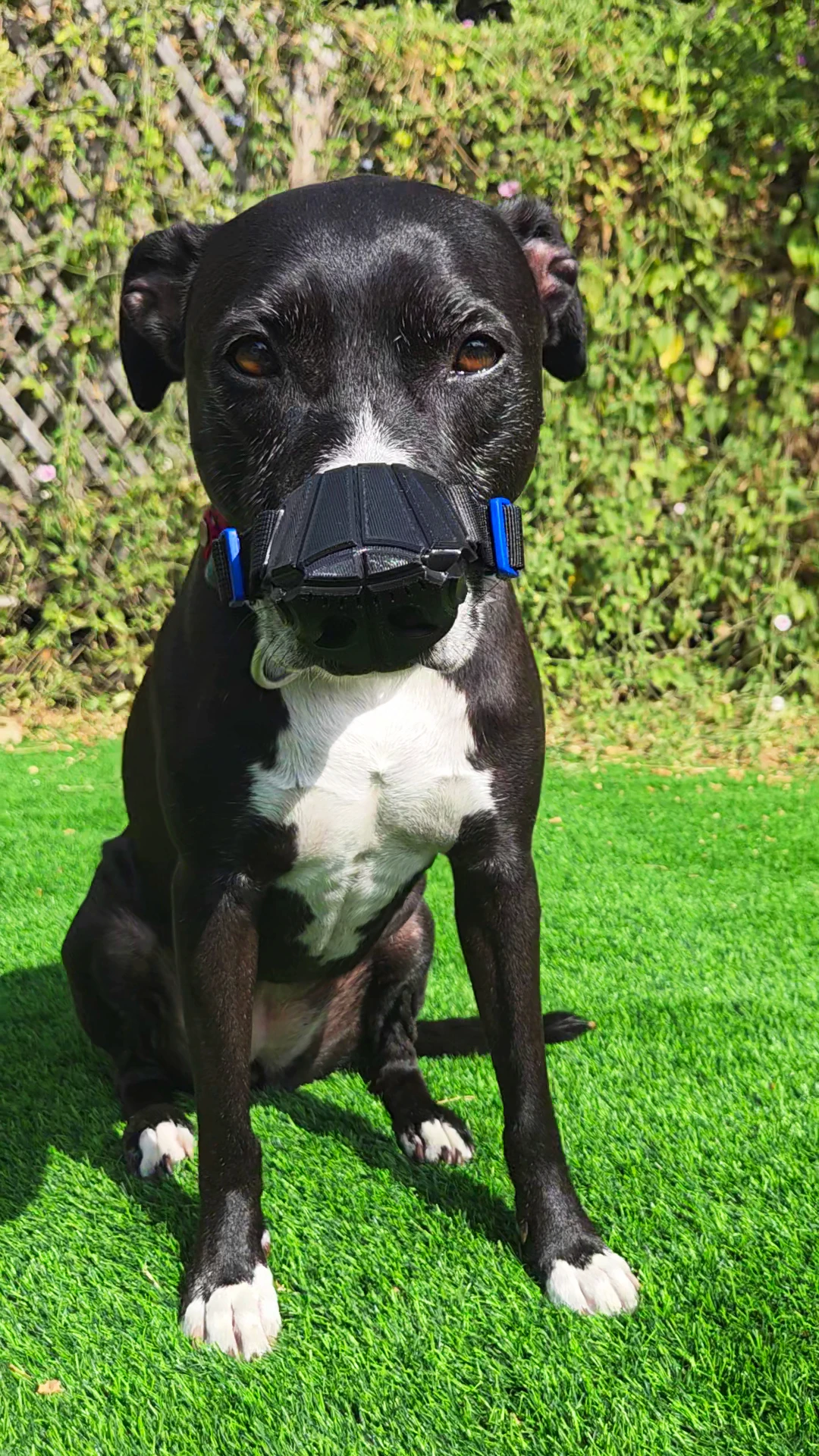
500 dogs now wear a SnoutCover nose guard.
That figure comes in an update published Oct. 15, 2026, one year into the project. The guard was designed by Omri Hillel for his own dog and given away. Hillel still designs, prints and packs every unit in his shed. SnoutCover One-Year Update
SnoutCover is a breathable UV nose guard for dogs with Discoid Lupus Erythematosus (DLE), an immune condition that damages the nose. It protects the nose from sun damage and keeps medication in place on the nose. SnoutCover
The implementation is 3D-printed hardware. The product is described as a 3D-printed nose protector, supplied with 3D files, TPU parts, straps and hardware. TPU is a flexible plastic used in 3D printing. It ships in three sizes plus Custom. That limit is deliberate. The design is not adjustable by design and fits medium-to-large dogs as is. In the case of the designer's own dog, the guard is credited with helping the nose fully recover. Billie Story
Distribution now extends beyond direct owners. SnoutCover offers a clinic kit containing three Shield sizes, a Care sample and a spare strap kit in one box. SnoutCover Vet Partners
The legal and technical boundaries are stated explicitly. SnoutCover is a privately developed aid. It is not a medical device. It does not provide veterinary advice. Users are advised to consult a veterinarian for diagnosis and treatment. The project also states that 3D-printed parts including flexible TPU can vary in safety and durability. SnoutCover
The broader context here is low-volume, single-operator hardware. Designing, slicing, printing, post-processing, kitting and fulfillment all collapse into one person. Slicing turns a model into printer instructions, and post-processing means cleaning and finishing. That keeps iteration tight. Fit changes, strap hardware changes and size grading can move without tooling lead time or minimum order quantities. It also concentrates failure modes. Print-to-print variation, slow stretch in TPU, strap fatigue and size shifts across spools and seasons all land on the same operator who is also customer support.
Looking at what this means for scaling assistive animal hardware, 500 active units is a useful stress test. It is large enough to surface edge cases in anatomy, behavior and owner compliance. It is small enough to remain manual. The clinic kit points to the next bottleneck. Veterinary clinics standardize intake. A box with three Shield sizes, a Care sample and a spare strap kit maps to triage logic, try the fit in the exam room, send the owner home with consumables and replacements. That is practical. It does not solve throughput. Every Shield still passes through one printer and one pack bench.
In my view, the interesting technical decision is non-adjustability. For readers used to parametric customization, where software creates endless variants, fixed geometry plus set sizes looks limited. For field reliability, it has advantages. Fewer sliders, hinges and tensioners means fewer setup errors, fewer chewable protrusions and more predictable UV coverage and medication retention. The tradeoff is coverage. Medium-to-large dogs as is leaves smaller anatomies to the Custom path, which in a single-operator workflow is inherently capacity constrained.
Worth flagging is the materials disclosure. Stating that flexible TPU parts can vary in safety and durability is unusual candor for a product page, and it matters. TPU resists abrasion and is often tolerant of skin contact, but strength shifts with filament batch, moisture uptake, print orientation, wall count and infill, the inner density. For a nose-contact shield under repeated sun, saliva and paw loading, that variance is not theoretical. Documenting it, paired with the not-a-medical-device status and the direction to consult a veterinarian, keeps the aid in the correct regulatory lane while placing the burden of inspection and replacement on the owner and clinician.
What enables optimism here is the shape of the problem. DLE management is daily, unglamorous work, sun avoidance plus topical compliance. A breathable physical shield that holds medication in place does not need connectivity or autonomy to be useful. It needs to stay on, stay clean and not irritate. Five hundred dogs wearing the same shed-built guard suggests that requirement is being met often enough to sustain demand, without claiming universality.