Meta's Huge Open AI Model Can Run on Two Mac Desktops
Meta announced Muse Spark Open on Oct. 15, 2026, a natively multimodal model with 816 billion total parameters released as open weights. Meta claims it is the most capable U.S. open-weight model to date. The Verge
The weights were releasing Oct. 15, according to Mark Zuckerberg, who said the model runs on new Mac Studios following work with Apple and John Ternus.
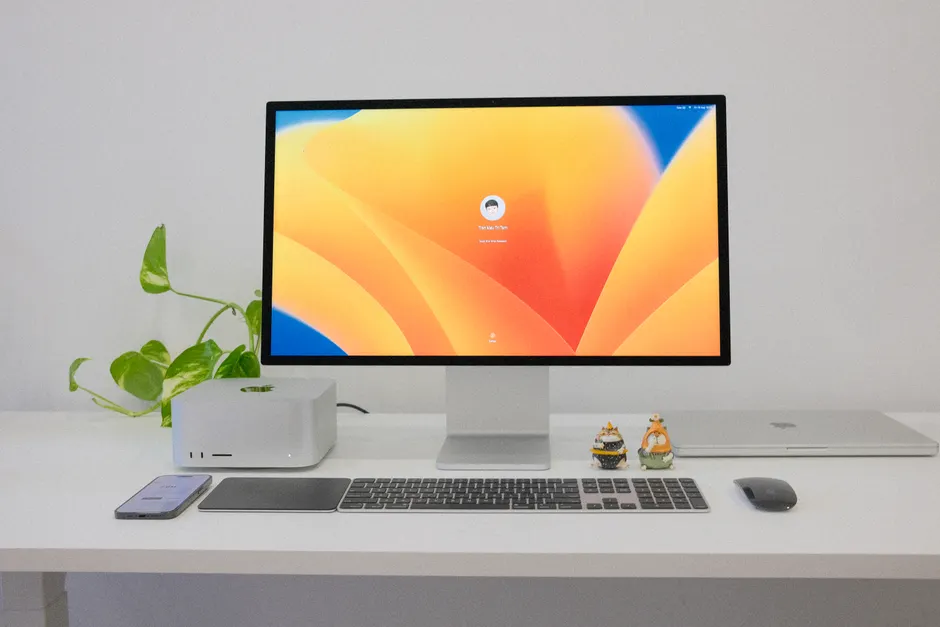
Meta describes Muse Spark Open as the first model in its class that can run on a desktop using two Apple M5 Ultra Mac Studios with the latest MLX framework. MLX is an array framework for machine learning on Apple Silicon, the basic software for running AI math on Apple chips. Apple published a technical post covering MLX, Muse Spark Open, and two other open models.
Apple and Meta collaborated on the launch to make the model easier to run locally on clustered Mac Studio systems, or two machines linked to act as one. CNBC The emphasis is on local, multi-node execution rather than datacenter-only deployment.
Meta says the model excels at long-horizon tasks, complex software engineering, and multi-step reasoning. For developers who do not want to run the clustered desktop setup, Muse Spark Open is available through API platforms including Baseten and Fireworks.
The desktop configuration is not inexpensive. A Mac Studio with an M5 Ultra chip and 256GB of memory costs at least $10,799, with a 512GB version due later in October 2026. Quartz Two machines are required for the reference desktop deployment Meta describes.
The broader context here is a shift in where open-weight frontier models are expected to run. For several years, parameter counts at this scale have effectively meant hosted inference or custom infrastructure, with local execution limited to distilled or heavily quantized derivatives, or smaller compressed versions. Meta and Apple are testing whether a clustered workstation can become a supported target, not just a hobbyist workaround.
In my view, the technical detail worth watching is not the parameter count alone but the co-optimization work. Porting an 816-billion-parameter multimodal model to two consumer workstations requires close attention to sharding, interconnect, memory placement, and framework-level kernels, or how the model is split, how the machines share data, and how the software uses the chips. That is why the MLX updates and the joint engineering matter as much as the weights themselves. If the stack is stable and reproducible, it gives research labs, security teams, and regulated enterprises a way to evaluate and fine-tune without moving data off premises.
Looking at what this means for practitioners, two paths are now explicit. Teams with the hardware budget and operational skill can experiment locally. Teams without it can call the same weights through Baseten or Fireworks. That dual availability has become the norm for open-weight releases, and it keeps the focus on tooling, evaluation harnesses, and inference cost rather than access alone.
In practice, there are still questions any team will need to answer with measurements, including throughput, latency under concurrent load, and behavior on long-horizon agentic tasks. Meta has stated its positioning on capability. Independent testing will define how the model handles sustained software engineering workflows and multi-step reasoning in production.
What makes this launch notable over the longer arc is the direction of travel. Workstations have absorbed larger and larger models over three decades, from early speech and vision systems to LLMs that once needed a rack. Putting an 816-billion-parameter system on two desktops does not make it lightweight, but it points toward a future where powerful open models are inspectable and runnable outside a small number of datacenters. That expands who can build, audit, and adapt them.