AI Boom Reshapes Chip Market: What Micron, SK Hynix, and SpaceX Tell Us About Where the Money's Flowing
AI Boom Reshapes Chip Market: What Micron, SK Hynix, and SpaceX Tell Us About Where the Money's Flowing
US stock indexes rose on Monday, July 6, 2026, led by a broad jump in artificial intelligence and technology stocks, according to AP News. President Trump rang the opening bell at the New York Stock Exchange that same day, per AP News.
What the Numbers Say
Three concrete pieces of news anchored the trading day. Micron Technology reported record revenue in its latest quarter, with its Cloud Memory Business Unit alone bringing in $13.769 billion — a single business line, in three months, nearly as large as the company's entire annual revenue two years ago, per Micron's results filing via the Financial Times.
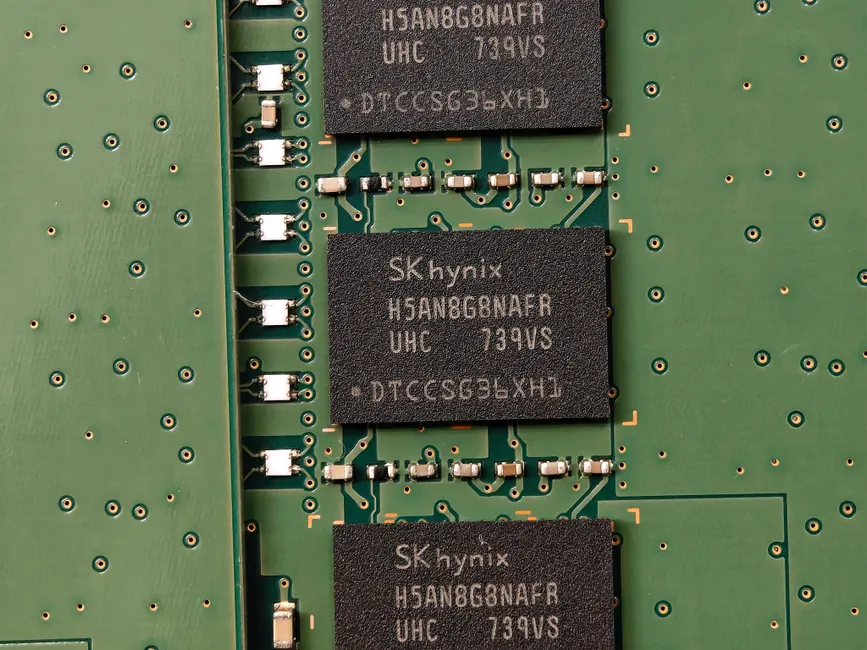
SK Hynix, a major supplier of high-bandwidth memory (specialized chips that move data faster) used by Nvidia in its AI processors, plans a US public stock offering. The company will issue 17.79 million new shares as part of that listing, according to the Financial Times. Notably, a hedge fund run by a former researcher at OpenAI — the company behind ChatGPT — is betting on this IPO, signaling confidence from people deeply involved in cutting-edge AI work.
Finally, SpaceX was set to join the Nasdaq 100, a widely tracked index of large-cap tech and growth stocks, AP News reported. This matters for a technical reason: index funds that track the Nasdaq 100 — including the $300 billion QQQ ETF — must automatically buy any new index member. For a private company like SpaceX that has only recently become eligible, that mandatory buying can drive demand regardless of the company's current business performance.
Why This Pattern Matters
The semiconductor world is experiencing a genuine restructuring. For years, memory chip makers saw demand rise and fall based on consumer electronics cycles — phones and laptops. Now, a different force is driving growth: companies building the computing power needed to run large language models and other AI systems. Micron's numbers prove this shift is real, not speculation. A single quarterly result — from one business unit focused on cloud memory — showing revenue near the company's entire yearly haul from two years back illustrates how fast AI infrastructure spending has accelerated.
The SK Hynix story adds a layer of signal. When people who actually build AI systems are putting money into a company that supplies the specialized memory those systems require, it suggests informed capital sees real value in the memory layer of AI infrastructure. That's worth noting.
When a major company enters a popular index, the automatic buying pressure from passive index funds can be substantial and independent of any news about the business itself. Whether that's a positive or a warning depends on how you see the gap between what index mechanics are forcing buyers to pay versus what the business is actually worth — but that's speculation about the future, not fact about what happened Monday.
Trump's appearance at the exchange was ceremonial. That a sitting president stood on the trading floor on a day when AI stocks led the market higher will likely get picked up as a symbolic moment in financial media, which is how narratives form. Whether it signals anything about policy is a separate question the facts here don't settle.
What to Watch
The Hynix IPO will be watched closely for price discovery on high-bandwidth memory economics. The company's output is already essentially committed to Nvidia's supply chain before the stock even trades publicly in the US — an unusual dynamic that will become clearer once the market sets a price.


