OpenAI Confirms It Will Build Its Own Humanoid Robot
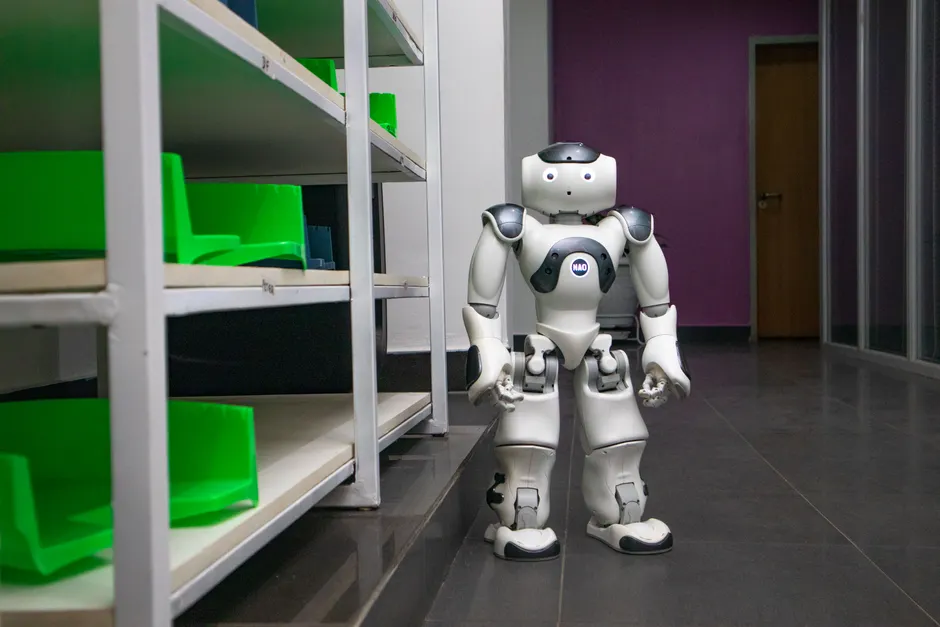
OpenAI is building a humanoid robot itself.
Chief executive Sam Altman confirmed the plan on the Sources podcast. Asked whether the company would build the hardware, he answered, "We will." Engadget
Altman said the human form is logical because the world is built for people. Doors, keyboards and tools are sized around the human body. He said the brain that runs the robot matters more than the details of what it looks like.
On timing, Altman said OpenAI will have a demo humanoid robot in 2027. He does not expect robots walking the streets for a few years longer.
The hiring detail describes a full hardware and software program. OpenAI is hiring across motion control, or how the robot moves, state estimation, or working out its position and contact, actuator control, or driving its joints, whole-robot behavior, and the computing systems used to train physical AI, meaning AI for movement in the real world.
Its listings describe custom electromechanical parts, including motors, transmissions that pass on motion, sensing and cooling systems. They also describe manufacturing and supply chains to build hardware at scale.
OpenAI has prior work in robot learning. Its Dactyl project taught a robotic hand to handle real objects with training done entirely in simulation, later tried on a Rubik's Cube.
The confirmation follows earlier reporting. In early September, coverage described OpenAI as building the robot itself, not only the physical AI to run it Forbes. Altman separately told Bloomberg that the humanoid robot moment has not arrived yet but is coming soon Automate.
Separately, OpenAI introduced GPT-6 Astra in early September 2026 as its latest AI model Bloomberg. In January, the company said it was investing in Merge Labs to support brain-computer interfaces that link biological and artificial intelligence OpenAI. In September 2026, Altman told staff the company was open to slowing AI development Reuters. On October 15, 2026, he backed a push for AI regulation and said the world was right to be afraid Reuters.
The broader context here is the split Altman draws between brain and body. Walking and grasping can be shown under controlled conditions. Reliable autonomy is harder. Tracking position during contact, holding balance after a slip or bump, and moving skills learned in simulation to varied objects and lighting remain the limiting factors. A controlled demo in 2027, with unattended street use a few years later, fits that difficulty.
In my view, the listings deserve close reading. Motion control, state estimation and actuator control, plus custom motors, transmissions, sensing and cooling, plus manufacturing and supply chains, points to a vertically integrated program. Anyone can show a concept humanoid. Building consistent hardware at volume takes factory discipline as much as model training. If OpenAI holds that course, that will be its test. The long-term opening is clear enough. A machine fitted to human spaces could absorb software gains for years.