Explosions Near Macron's Hotel in Damascus Raise Questions About Syria's Stability
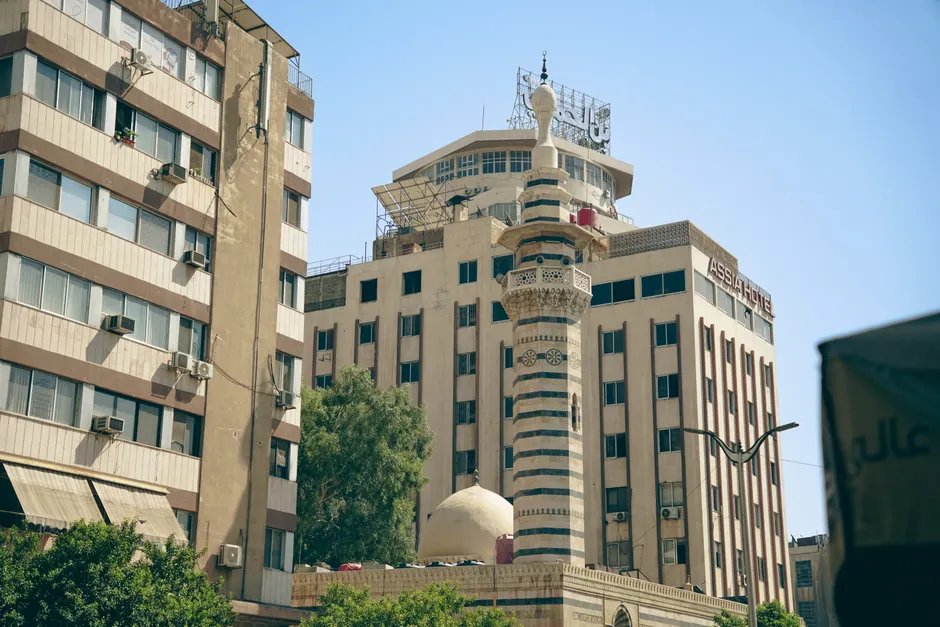
Explosions were heard in Damascus on Tuesday, July 7, 2026, near a hotel where French President Emmanuel Macron was staying during his visit to Syria, according to security sources cited by The Times of Israel. A Reuters witness heard the blasts and saw smoke rising over the area, though the cause remained unconfirmed at the time of reporting. i24 News reported two distinct explosions near the hotel designated for the French delegation, while The Jerusalem Post, also citing a Reuters witness, confirmed the timing and location. France24 reported the same sequence of events. No party had claimed responsibility as of publication, and Reuters explicitly flagged the cause of the blasts as unknown.
The precise nature of the devices — whether improvised explosives, ordnance, or another mechanism — has not been established by any of the cited outlets. Security sources described the blasts as involving explosive devices detonated near the hotel, but stopped short of attributing intent or origin to any group or faction.
This was not an isolated incident in Damascus this week. On July 2, 2026—five days before the Macron-visit explosions—SANA, Syria's state news agency, published a statement from the UN Secretary-General condemning attacks on civilians following a separate explosion in the capital. That statement does not appear directly linked to Tuesday's incident, but it shows that explosive attacks in Damascus had already drawn international concern before Macron's arrival.
When a foreign leader visits another country, their security teams coordinate closely with local officials to control access to hotels, plan routes, and manage perimeters. An unexplained explosion near a visiting president's accommodation forces that security apparatus to reassess its arrangements immediately, regardless of who caused the blast or why. Reuters' reporting noted that the incident underscores the security challenges facing Syria's transitional government at a moment when it is trying to convince Western leaders that the country is stable enough for high-level diplomatic engagement.
Macron's visit to Damascus carries weight on its own. A sitting French president traveling to Syria marks a significant step in post-Assad Syria's effort to re-engage with European capitals, given the rocky state of French-Syrian relations in recent years. Whether the explosions were deliberate or coincidental, they will inevitably shape how Paris and Damascus's transitional authorities frame the trip's security narrative and what that says about Syria's current political trajectory.
None of the outlets reporting on the incident have confirmed casualties, structural damage, or a specific target. The absence of a claimed motive leaves several interpretive possibilities open: a targeted attack against the French delegation, an unrelated security incident that coincided with heightened media attention on the city, or continued instability tied to the broader pattern of violence referenced in the UN's July 2 statement. Given Syria's unsettled security environment since the fall of the Assad government, multiple scenarios remain plausible until Syrian authorities or France's presidential office provide formal clarification.
The next steps will likely depend on whether French or Syrian officials issue statements explaining the cause of the explosions and whether Macron's schedule proceeds as planned. A shortened or relocated visit would signal serious concern about the threat environment; continuation without public comment might suggest either confidence that the situation is contained or a deliberate diplomatic choice not to amplify the incident.