Netanyahu's Annexation Claim and the Fragile Lebanon Ceasefire

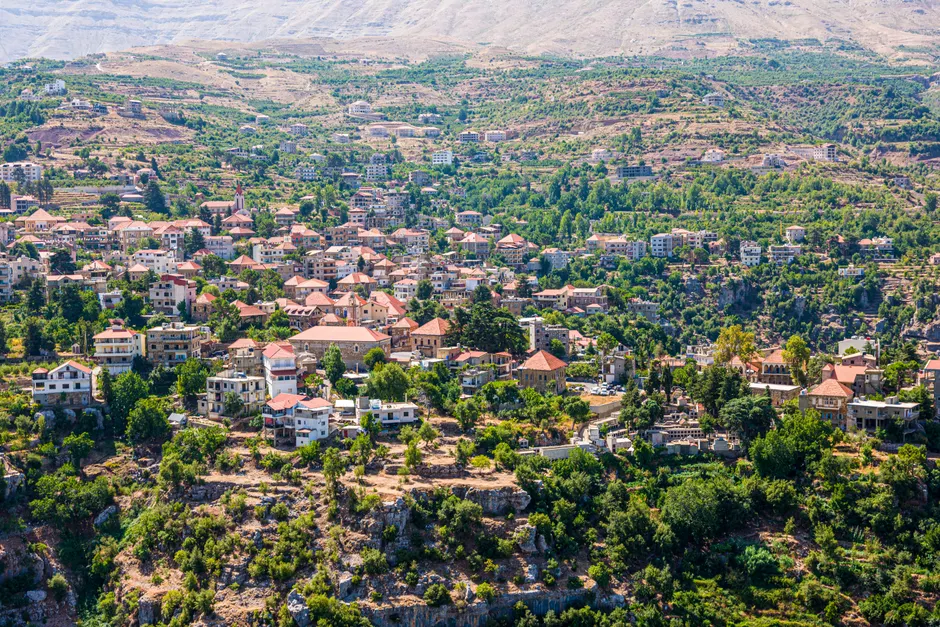
Fifteen towns in southern Lebanon with Christian populations issued a joint statement on July 7, 2026, denying Prime Minister Benjamin Netanyahu's claim that they had asked to be annexed by Israel Al Jazeera.
The dispute began with an interview Netanyahu gave on Fox News's "The Sunday Briefing," which aired July 5. When asked about Israel's position in Lebanon, he said: "Christian villages in Lebanon, some of them have actually asked to be annexed to Israel, because we protect them against Hezbollah, Hezbollah fanatics who want to kill them, and we do the same things with Christians everywhere" France 24. Le Monde reported the same comments Le Monde.
Lebanese analysts quickly rejected the characterization. Karim Emile Bitar, a professor of international relations at Saint Joseph University of Beirut, called Netanyahu a "pathological liar" in response Al Jazeera. Lebanese sources saw the remarks as an attempt to exploit sectarian divisions in a country where political power is distributed among religious communities—a system known as confessionalism.
The escalation that prompted this dispute is recent and severe. On March 2, 2026, Hezbollah fired six rockets at Israeli targets. Israel responded with intensified strikes across Lebanon and launched a ground invasion of the south. As of July 2026, Israel occupied roughly six percent of Lebanese territory Al Jazeera.
The human cost has been unevenly distributed. More than 1.2 million people were displaced during the intensified attacks, the majority of them Shia Muslims—the demographic community most associated with Hezbollah. This fact complicates Netanyahu's framing of Israel as protector of Christians.
There are also documented incidents that contradict a protector narrative. A Lebanese priest was killed by Israeli tank fire in south Lebanon in early March 2026. In early April, an Israeli soldier smashed a statue of Jesus in south Lebanon, drawing international criticism. An official of a Christian political party was killed in an eastern suburb of Beirut that same month. These events, while not addressed in Netanyahu's Fox News remarks, feature prominently in how Lebanese commentators assess the credibility of his claim.
Netanyahu's Fox News comments also conflict with his own government's public messaging. On June 10, 2026, the Israeli Prime Minister's Office published a statement in his name: "Israel is not at war with you. We're at war with Hezbollah, that has taken your country" Israeli PMO. This statement distinguished between the Lebanese state and population on one side and Hezbollah on the other. An annexation claim, by contrast, would imply a break with Lebanese sovereignty itself—a fundamentally different proposition than a military campaign against a non-state armed group.
A formal diplomatic framework adds another layer of complexity. A US-brokered agreement between Lebanon and Israel was signed with the stated purpose of ending Israel's war on Lebanon. Under its terms, Israel affirmed it has no territorial ambitions in the country. An unsolicited statement on American cable television claiming that villages seek annexation sits poorly with that commitment, and Lebanese officials and analysts have treated Netanyahu's remarks as rhetoric rather than policy.
The Netanyahu claim needs to be understood against a backdrop of acute sectarian sensitivity in Lebanon. The country's political system allocates power among religious communities, making it extremely sensitive to suggestions that one confessional group might align with a foreign occupying power against others. Netanyahu's framing—portraying Israel as guardian of Christians against "Hezbollah fanatics"—uses a rhetorical strategy Israeli officials have employed before with regional minority communities. Lebanese analysts read it not as description but as an attempt to fracture the national consensus that has, despite real communal grievances, generally resisted framing the conflict along sectarian lines.
Whether the fifteen towns' joint statement resolves the matter politically is an open question. The statement addresses the specific claim about annexation requests, but it does not address the underlying dispute: Israel's continued military presence in the six percent of Lebanese territory it occupies, or the broader status of the ceasefire framework.