Egypt's World Cup Exit, Watched From Gaza's Rubble, Raises Questions About FIFA Politics
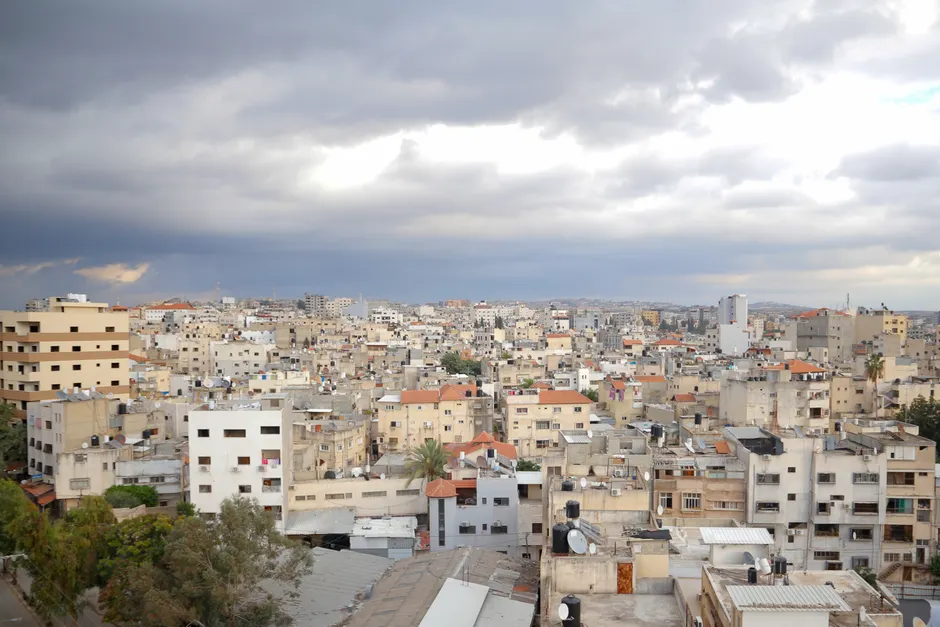
Argentina defeated Egypt 3-2 in the 2026 World Cup round of 16 on July 7, after Egypt surrendered a two-goal lead in the closing minutes, AP News reported. Palestinians in Gaza City gathered amid the rubble to watch the broadcast, according to Reuters, which documented the scene in both video and photography.
Reuters' photo captions consistently identified the gathering as Gaza City rather than Nuseirat—a geographic distinction the wire service maintained across its coverage of Palestinian viewership throughout the tournament. The footage titled "Egypt fans in Gaza gather amid rubble to cheer against Argentina" showed supporters watching from a devastated urban setting, a contrast between the match's intensity and the physical surroundings that recurred through Egypt's tournament run.
Roya News reported that fans across the Gaza Strip celebrated when Egypt took an early lead against Argentina, before that advantage slipped away in the match's closing stages. The timing of that celebration—premature relative to the eventual result—framed it as a fleeting moment for those watching, though it did not diminish the emotional force of the moment itself.
This Gaza viewership fits a pattern that extends beyond the Argentina match. AP video from June 27 documented Egyptian fans celebrating their team's progression to the knockout rounds "in the camps of the Gaza," alongside celebrations in Seattle and Cairo—a geographic scatter that reflects the diaspora and displacement woven through Egyptian football support this cycle. Placing Gaza's tent camps alongside a World Cup host city and Egypt's own capital speaks to how thoroughly displacement has become part of the tournament's background narrative.
Egypt's coach has leaned into that narrative rather than stepped back from it. AP News reported that head coach Hossam Hassan delivered an impassioned address about Palestinians during a pre-match press conference ahead of the Argentina fixture, and separately that Hassan waved a Palestinian flag on the pitch after Egypt's win over Australia on July 4. Coaches invoking political solidarity from official podiums at a FIFA-sanctioned tournament are not without precedent, but the frequency of Hassan's gestures—a press conference statement followed by a flag display days later—suggests a deliberate pattern rather than a single spontaneous moment.
None of the available sources indicate any organized FIFA or Egyptian federation response to Hassan's gestures, nor does any coverage suggest disciplinary action was contemplated. That silence is worth attention given FIFA's historically strict rules against political messaging inside stadiums. It may reflect selective enforcement, a calculated decision not to escalate, or simply gaps in the available coverage. The absence of a reported response is itself a data point.
What matters here is the larger picture: sport functioning as a rare shared civic experience inside Gaza's active conflict zone. Reuters' visual documentation—gatherings staged amid rubble, watched on presumably limited power and connectivity—offers evidence about how people seek normalcy and connection under siege conditions. The decision by journalists and photo editors to feature these scenes repeatedly across multiple match days, from mid-June through the round of 16, suggests an editorial judgment that the imagery carried enduring news value beyond a single cycle.
Egypt's elimination came through a second-half collapse from a position of control. For a team whose coach had spent the tournament amplifying Palestinian solidarity messaging, the manner of the loss—squandering a two-goal lead rather than being outclassed—adds on-field disappointment to whatever symbolic weight Hassan and his squad had invested in the run. Whether Hassan or Egyptian football authorities will address the flag incident or the broader political framing in post-tournament remarks remains unresolved in available coverage, and stands as an open question for anyone tracking how FIFA enforces its political-neutrality rules going forward.