Calif Says It Compromised an iPhone and Demonstrated the Attacks at Hexacon Paris
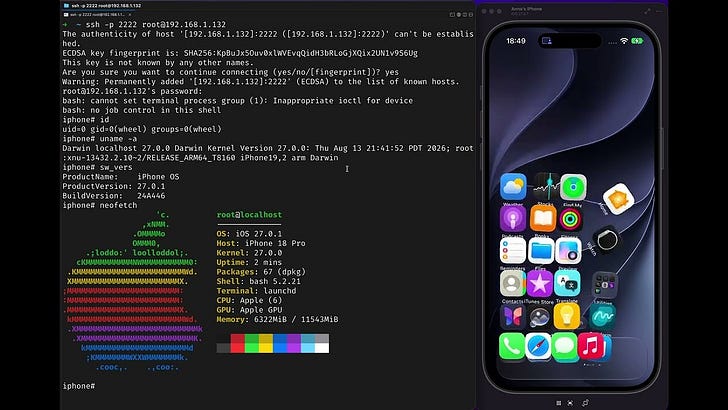
Calif, the security research team that publishes at blog.calif.io, says it hacked the iPhone it set out to hack and presented a series of demonstrations at Hexacon in Paris. The account appears in a post on the team's blog dated 16 October 2026, which lists the demos the group showed at the conference.
The post includes a demo labelled "Signal 1-click" among the Hexacon presentations. In security shorthand, a "1-click" exploit, meaning a method that abuses a software flaw and needs only one user interaction, is one of the more concerning categories because it asks little of the victim. The label points to an exploit of that kind.
Calif also describes a separate body of work, its MAD Bugs project, as an effort to uncover security bugs and exploits with AI by pairing top models with human researchers. The project is a different initiative from the iPhone demonstrations.
For practitioners, the immediate questions are technical. Which iOS versions were affected, what the attack surface (the set of entry points an attacker can reach) was, whether the bugs were patched before the talk, and what mitigations Apple has shipped will determine how an enterprise fleet should respond. A one-click vector against a flagship messaging client carries a different risk profile from a local privilege escalation that requires physical access. Defenders will want the write-up details, not the conference abstract, before they reprioritise.
In my view, the more durable story is the method. A research group that describes its tooling as pairing frontier AI models, the largest and most capable systems, with human analysts is describing a workflow in which the model narrows the search and the researcher validates and turns the result into a working exploit. Whether that workflow yields a genuinely new capability or a faster route to known bug classes is the question the field will argue about once the technical detail is public. Either way, the time between a bug being latent and being shown on a live device now has a new variable in it, and mobile vendors' patch cadence will have to be measured against that.
The broader context here is that Hexacon is a venue where offensive research is presented in public, which puts the findings in front of defenders and the press at the same time. Demonstrations specific enough to be verified tend to move vendors and enterprise security teams faster than theoretical advisories do. They also give the mobile security community concrete targets for hardening work, from memory safety in media parsers to messaging-app interaction surfaces that expose a device to remote input with minimal user involvement.
The risk side is also real. Any public demonstration of a working iPhone compromise is a roadmap for less careful actors who read the same slides, and its defensive value depends on how quickly fixes reach devices in the field. The next useful signal will be the technical write-up and the vendor response. Until those arrive, the accurate summary is short: a research team says it compromised the device it targeted, showed a series of demos in Paris, and published the material on 16 October.