Steam's Personal Calendar Refreshes Game Recommendations Daily
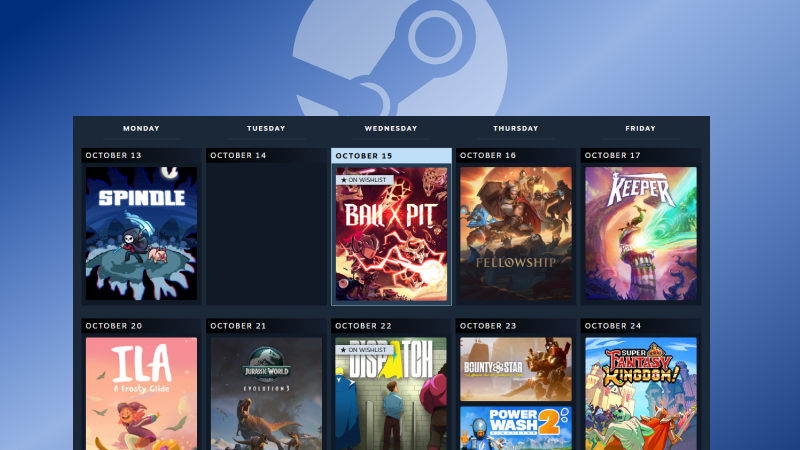
Valve has rolled out Personal Calendar, a Steam feature that constantly updates its recommended games, according to a report published on 24 October 2026 by Engadget. The feature can be tried on the Steam store homepage.
Personal Calendar displays both recently released and upcoming games as personalized recommendations. It began as Steam Labs Experiment 16, according to Valve's Steam news post, and went through several months of testing and feedback within Steam Labs, the program Valve uses to trial experimental store and discovery features.
Valve built the feature to bridge two kinds of search behavior. Some users look for trending or niche titles, while others want suggestions tied to their own gaming tastes. Personal Calendar is meant to serve both groups from the same surface.
The recommendations draw on a user's recently played titles, which are compared with those of players who have similar gaming profiles. Logged hours and wishlists also factor in. Recommendations are refreshed daily, because the user-specific algorithms, the models that learn patterns from data, are re-trained regularly to incorporate the latest information.
The weighting has a practical consequence. Trying a new game for a few minutes will not change the algorithm much, since it relies mainly on titles a user has spent substantial time playing. Users are more likely to see new suggestions across an eight-week window, or when developers confirm release dates for upcoming games.
Steam reports a usage figure for the feature: players click on more than 2,000 different games within Personal Calendar during an average 24-hour period.
The broader context here is that storefront discovery has long struggled to reconcile popularity with personal taste. A feed that weighs sustained play over casual sampling rewards accumulated behavior rather than a single impulsive click. That design choice makes the feed more stable for established players, but it also means a user who wants to steer recommendations has to commit real hours to a title before the signal moves.
The inclusion of upcoming releases adds a second dynamic. Once developers confirm release dates, those titles can enter a user's feed, which gives publishers a reason to keep release timing and announcements precise. For smaller studios, a recommendation surface tied to individual profiles could help a well-matched title reach players who would never have searched for it by name.
In my view, the most useful test of Personal Calendar will be whether it surfaces games that players finish and return to, rather than games they merely click. Click volume shows that the feed is being explored. It does not, on its own, show that the recommendations are fitting the people who see them. Over time, a daily-refreshed model that reliably connects niche titles with the right players would be a meaningful improvement in how games are found, and that is the outcome worth watching as the feature matures.