Ubicloud Measures 8% Tool-Call Failure for Kimi K2.6 on vLLM 0.28
Ubicloud reported that serving Kimi K2.6 with vLLM 0.28 produced the expected tool-call schema 92% of the time, which means 2 of every 25 attempted tool calls failed. The findings appear in a blog post titled "Fixing Tool-Call Accuracy in vLLM," published on October 26, 2026 (Ubicloud).
The post focuses on tool-call schema accuracy and its role in serving agentic workloads. A tool call is a model's structured request to invoke an external function, such as a database query or an API lookup, and the request must match a declared JSON schema, the specification of required fields and their types. In an agent loop, a call that does not match cannot be dispatched cleanly, so the orchestration layer has to catch the error, retry, or abandon the step. The failure rate Ubicloud measured is therefore a question of pipeline reliability as much as of output quality.
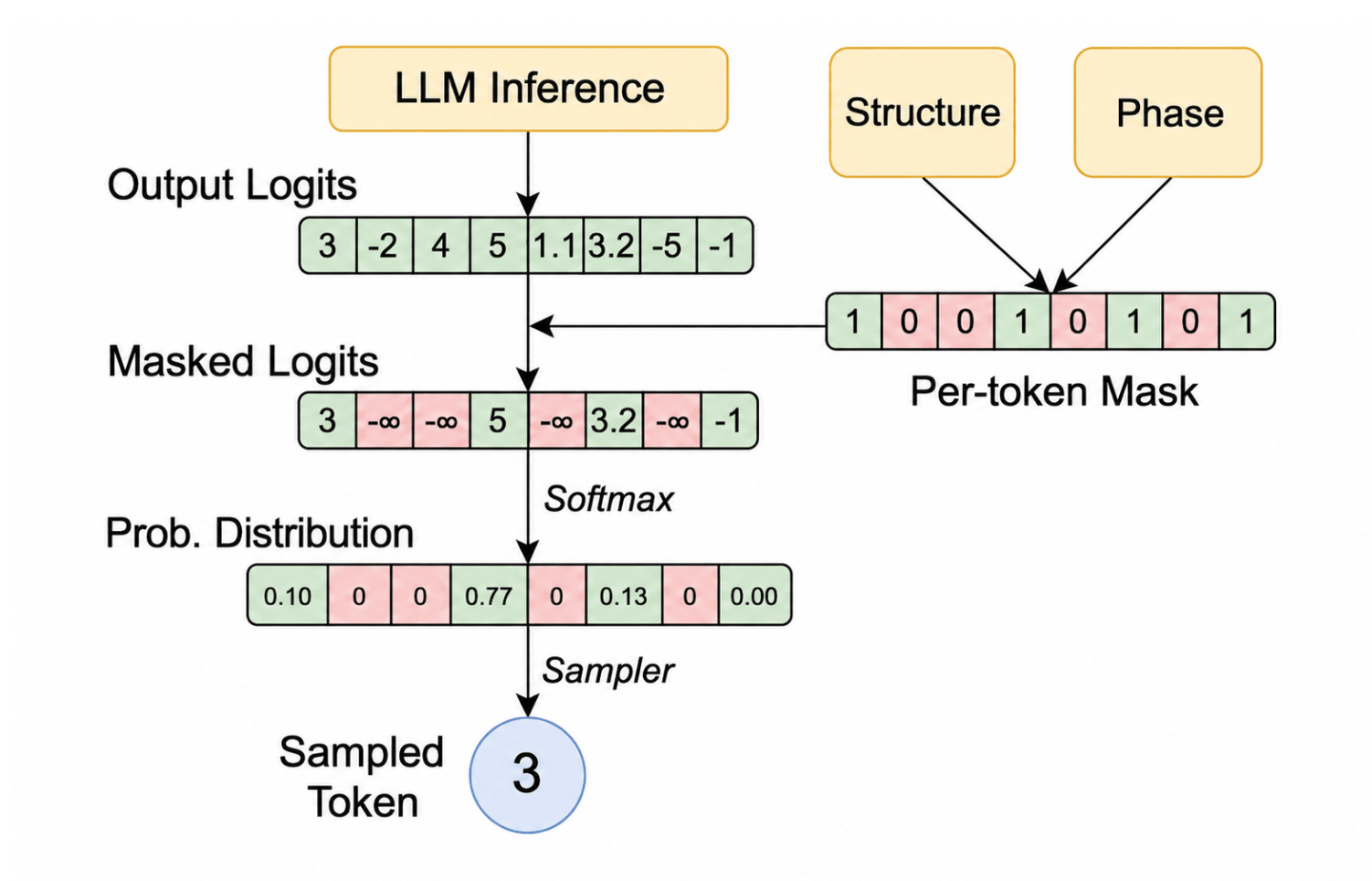
Ubicloud stated that vLLM, an open-source inference server, recently added support for constrained decoding, a technique that restricts which tokens the model can sample so that generated output conforms to a specified schema. According to Ubicloud, constrained decoding was released as a server-side flag in vLLM 0.31. The company also stated that enabling it achieves 100% schema accuracy with newer Kimi and DeepSeek models (Ubicloud).
The tool-calling problem with the Kimi family is not new. In October 2025, vLLM published a write-up on debugging Kimi K2's tool calling, in which only 218 of more than 1,200 potential tool calls were successfully parsed, a success rate below 20% (vLLM). That investigation covered a different model generation and a different failure profile, so the two figures should not be read as a like-for-like measurement of progress. They do show that the parsing and schema-conformance path has been a recurring point of friction for this model family.
The broader context here is the gap between a model's raw capability and the reliability of its structured output at the serving layer. Teams building agents on open-weight models typically combine prompt engineering, output validation, and retry logic to absorb malformed calls. Constrained decoding moves part of that burden into the inference engine itself. That simplifies the client but adds a dependency on the server version and its flags.
The numbers warrant careful reading in both directions. The 92% figure is a measurement of one model on one vLLM release, and an 8% failure rate is high for production agent traffic. The 100% figure is Ubicloud's claim for newer Kimi and DeepSeek models with constrained decoding enabled. Operators running K2.6 on vLLM 0.28 would need to validate their own workloads before drawing conclusions about their error budgets.
What the post makes concrete is a path to deterministic schema conformance inside the inference server, rather than in application code. For teams running multi-step, tool-using agents, the practical questions are how quickly they can move to a release that exposes the flag, and how latency and throughput change once constrained decoding is active. Those measurements are not in the material published so far, and they will determine how much of the 92% gap closes in production.