US Strikes Iran During Khamenei's Funeral, Breaking a Promised Pause
The United States struck targets in Iran on July 8, contradicting President Trump's earlier pledge to hold back military action during Ayatollah Ali Khamenei's funeral period Al Jazeera. The strikes occurred the same day Khamenei's funeral procession crossed the border into Iraq, with thousands of mourners marching through the holy city of Najaf Reuters.
The six-day mourning period began on Saturday, July 4, structured around ceremonial stations in different cities: funeral prayers in Tehran on July 3, additional rites in Qom on July 7, and a dedicated day to honor Iraq Al Jazeera CNN. The procession extending into Najaf—a major center of Shia religious authority outside Iran's borders—connects the question of who will lead Iran to the broader network of political relationships Tehran has built across Iraq since 2003.
Attendance figures from Tehran varied significantly by source. The New York Times initially reported tens of thousands at the funeral prayers The New York Times, then revised upward to hundreds of thousands as coverage continued The New York Times. Reuters reported the July 6 procession through Tehran could draw millions Reuters. These variations reflect both the scale of a multi-day event spanning several cities and the challenge of verifying attendance in a country where state media controls the narrative around public events.
Reporters documented calls for revenge among some mourners at funeral prayers The New York Times. Yet the Washington Post described the entire funeral as a "highly scripted show of public mourning and fury"—a characterization that highlights Iran's long-standing use of state funerals as tools for political messaging, not just occasions for grief The Washington Post.
Who will lead Iran next has become the central question. Three of the late supreme leader's sons appeared publicly at the funeral, but Mojtaba Khamenei—the son most often mentioned as a potential successor—made no public appearance Reuters. Observers disagree on what his absence means: it could signal deliberate distancing from dynastic succession talk, or it could reflect security concerns. Iranian authorities have offered no explanation. The Assembly of Experts, the council of senior clerics constitutionally responsible for selecting a new supreme leader, has not yet announced its selection process publicly.
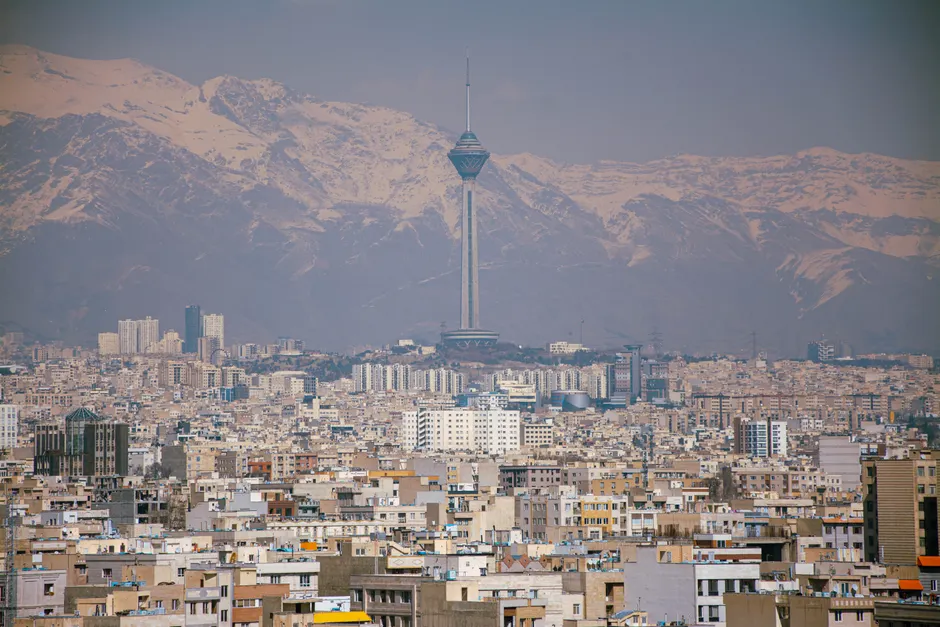
Foreign journalists received unusual access during the funeral. The Washington Post confirmed it obtained rare visas to report from inside Iran during this period, though its correspondents worked under standard restrictions on state-supervised reporting The Washington Post. This access provided more independent visual documentation of Tehran's streets than Iran's typical press controls would allow.
Breaking a promised pause carries political weight independent of military tactics. In diplomacy, agreeing to halt hostilities during a funeral period signals respect for religious and cultural practices around death—a gesture both Iran's partners and opponents would notice. Continuing strikes while a funeral procession still moves across a neighboring country raises stakes for Iraq, which now hosts mourning ceremonies for a foreign leader while that leader's nation fights nearby.
The overlap of funeral proceedings with active military strikes also shapes how observers read Iran's intentions. A leadership transition unfolding under ongoing bombardment gives little room for the internal consolidation that normally accompanies a change of supreme leader. The Assembly of Experts will conduct its selection process in a security environment shaped by battlefield events as much as by clerical discussions. Any successor will inherit the office's institutional authority while inheriting as well an ongoing conflict they did not create.
The funeral's extension through Iraq in the coming days will signal whether Tehran plans to use this moment as a regional political statement or as a domestic Iranian affair.


