Helion and Commonwealth Fusion Trade Government Shares for $260 Million in Chip Awards

Helion and Commonwealth Fusion Systems have agreed to give the U.S. government non-voting shares in exchange for awards totaling $260 million from the Department of Commerce under the CHIPS and Science Act, TechCrunch reported on October 26, 2026. Non-voting shares give the government an economic stake in each company but no vote on corporate decisions.
Helion received $175 million to develop advanced semiconductors that power and control its fusion reactors. Commonwealth Fusion Systems received $85 million to develop fusion-ready semiconductors for the same purpose. The CHIPS and Science Act, a 2022 law, funds domestic semiconductor development, so the awards sit in the chip supply chain rather than in plant construction.
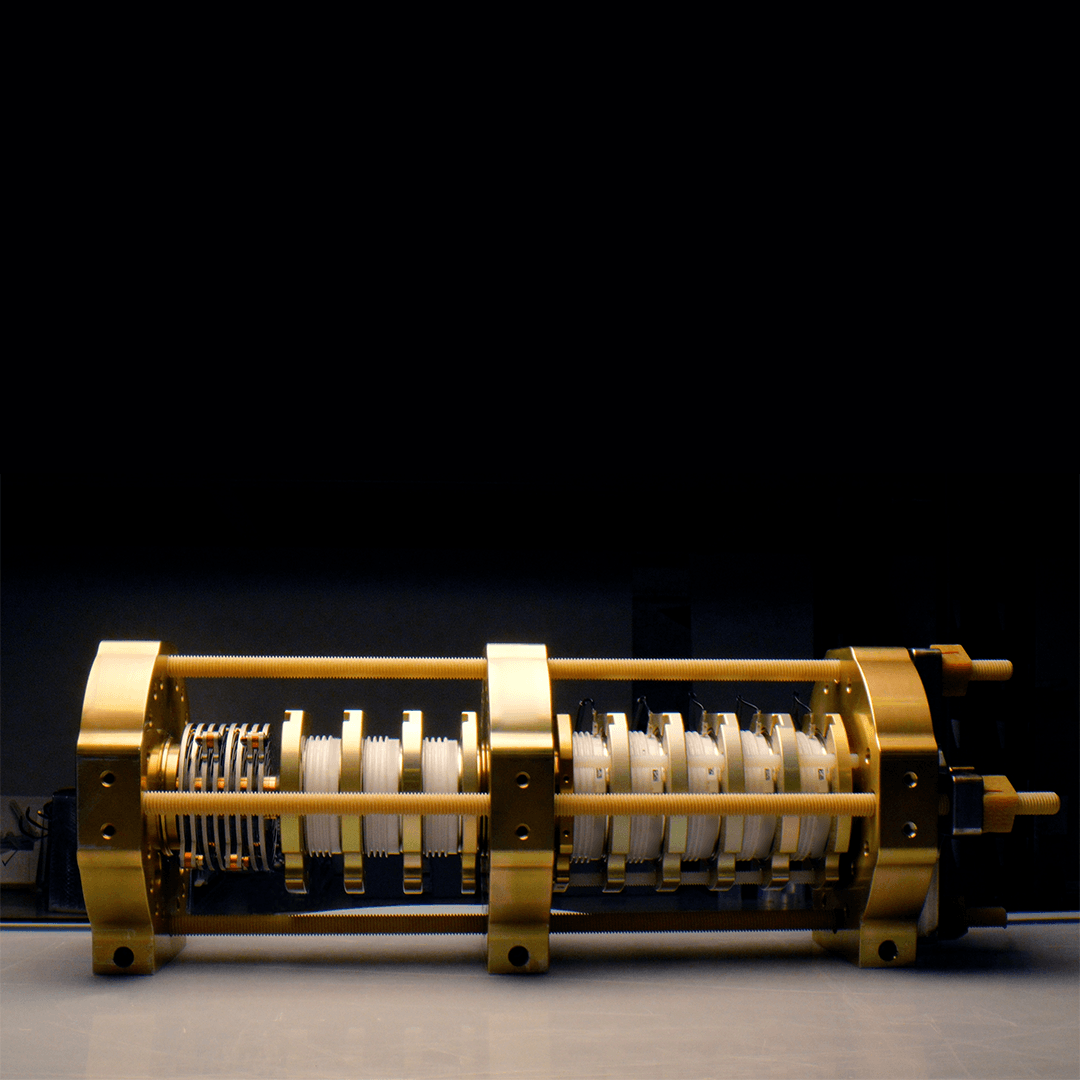
Power electronics are central to Helion's roadmap. On October 22, 2026, TechCrunch reported that Helion is developing new semiconductors that could double the output of its power plants. The reactors rely on pulsed power, which delivers short, intense bursts of electricity, and on control electronics that shape and time those bursts. The Commerce money is aimed at that hardware layer.
The companies have raised substantial private capital. Helion has $3.2 billion in committed capital. Commonwealth Fusion Systems has raised about $4 billion, including $1 billion it announced on July 30, 2026, as it moves toward its first commercial fusion power plant. Private investors have bet more than $14 billion that one or more fusion companies will put a power plant on the grid.
Government funding has been far smaller. The Department of Energy's Milestone Based Fusion Development Program distributed less than $50 million in its first couple of years. The Fusion Industry Association has asked for a one-time $10 billion federal infusion into fusion, with $5.4 billion intended for startups. In September 2025, the Department of Energy announced $128 million for Fusion Innovative Research Engine (FIRE) collaboratives, awarded to seven teams. Its Office of Science Fusion Energy Sciences office has said it is interested in receiving applications from private companies. In December 2025, fusion industry leaders met with Department of Energy officials to urge support worth billions of dollars.
Smaller awards are also moving. Thea Energy landed a $20 million federal grant in July 2026 to build magnets for fusion reactors. The company raised $100 million in May 2026, on top of a $20 million Series A it raised in 2024.
Industry-wide funding has grown quickly. Reuters reported in March 2026 that fusion developers raised $2.6 billion worldwide in 2025, up 180% from the previous year. The record annual amount was $2.9 billion in 2022, according to the same report. The Fusion Industry Association's 2026 Global Fusion Industry Report puts the total raised by fusion companies at $14.24 billion.
Public markets have opened as well. General Fusion became the first publicly traded fusion company when its stock debuted in July 2026. The company had raised $108 million from private investors, and it might receive less than $30 million after redemptions and fees from the listing. Separately, Trump Media and TAE Technologies agreed in December 2025 to combine in a $6 billion deal. Trump Media agreed to provide up to $200 million in cash to TAE at signing, plus $100 million more upon the initial filing of the registration.
The broader context here is the structure of the deal. Trading equity for grant money is an unusual arrangement for a federal research-adjacent award, and TechCrunch frames the central question as whether it is worth it for the companies and the public. The answer depends on facts not yet settled: whether the semiconductors perform as Helion and Commonwealth Fusion Systems expect, and what the government's shares would be worth if a plant reaches the grid. The gap between the $5.4 billion the industry association requested for startups and the sub-$50 million distributed under the Milestone program is also a measure of how far federal support still has to go.
In my view, the more useful question for engineers is what the chip work changes. If control electronics and power conversion hardware are the bottleneck, funding them directly addresses a constraint that private capital alone has not removed. Fusion has been a long-horizon bet for decades, and the people building it have been waiting for hardware that can run reactors continuously and efficiently. Whether these awards produce that hardware will show up in device specifications, not in press releases.