Envoys From Turkey, Pakistan and Saudi Arabia Travel to Tehran to Head Off US-Iran Fighting
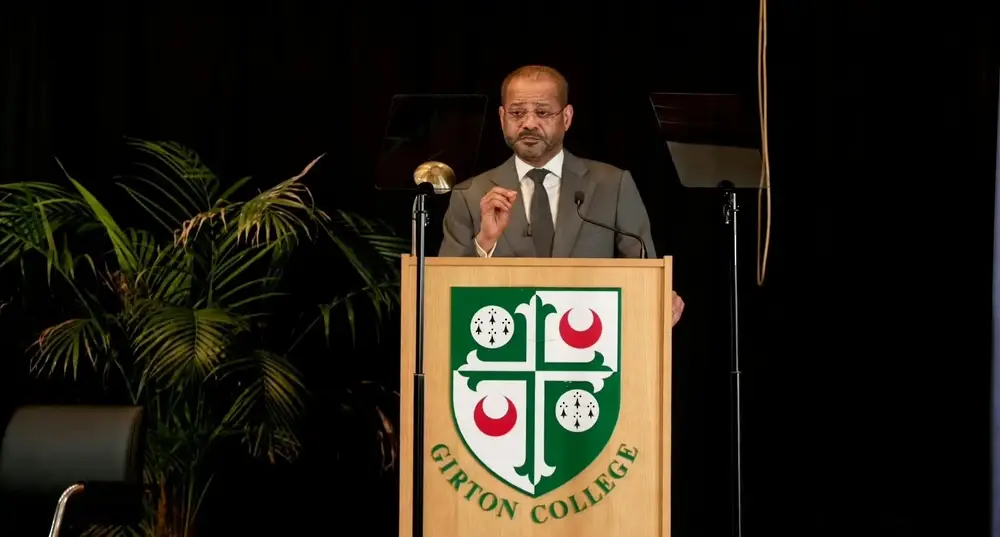
Defence and intelligence officials from Turkey, Pakistan and Saudi Arabia travelled to Tehran on October 26, 2026, in an effort to prevent a renewed outbreak of fighting between the United States and Iran. According to The Guardian, Saudi Defence Minister Khalid bin Salman, Pakistan Army Chief Asim Munir and Turkish intelligence chief Ibrahim Kalin met in the Iranian capital that day.
On the same day, Oman's Foreign Minister, Sayyid Badr Albusaidi, delivered a lecture at Girton College, Cambridge, in which he took a broader view of the region's security. He said that a half-century of American insistence that Gulf states regard Iran as a security threat has held back the Middle East's ability to solve its problems. He also said Iran had been systematically excluded for fifty years from any meaningful role in the region's security arrangements.
Albusaidi called for a non-aggression security pact, meaning a commitment by the parties not to attack one another, involving all six members of the Gulf Cooperation Council, the regional bloc of Gulf states, along with Iran and Iraq. He said the United States would in future no longer be the primary provider of security in the region. He described the requirement that Iran be excluded and cast as the threat around which regional security must be organised as the most damaging priority imposed on the region from outside.
Oman has been at the centre of recent diplomacy between Washington and Tehran. Albusaidi said the previous round of US-Iran talks, held in February and mediated by Oman, was making significant progress and that an agreement was within reach. Those talks were later overtaken by events, and no new round has been announced.
The waterway at the centre of much of the recent diplomacy is the Strait of Hormuz, the narrow passage linking the Gulf to the open sea. In August, Iran's Foreign Ministry announced that Albusaidi would visit Tehran to continue Iran-Oman talks on the strait, as Reuters reported. Oman and Iran have since reached a temporary agreement on how shipping traffic should be managed there. That arrangement is on hold until the United States and Iran lift their respective blockades, measures that prevent ships from passing through the waterway.


