Hilltop Standoff in Majd al-Krum Raises Fears Ahead of Israel's Vote

Palestinian citizens of Israel who gathered on a hilltop above the village of Majd al-Krum in September say they fear it was a preview of what could follow if the far right gains power. Israelis vote on Tuesday, October 27, in an election that polls suggested could leave Prime Minister Benjamin Netanyahu's coalition without a majority.
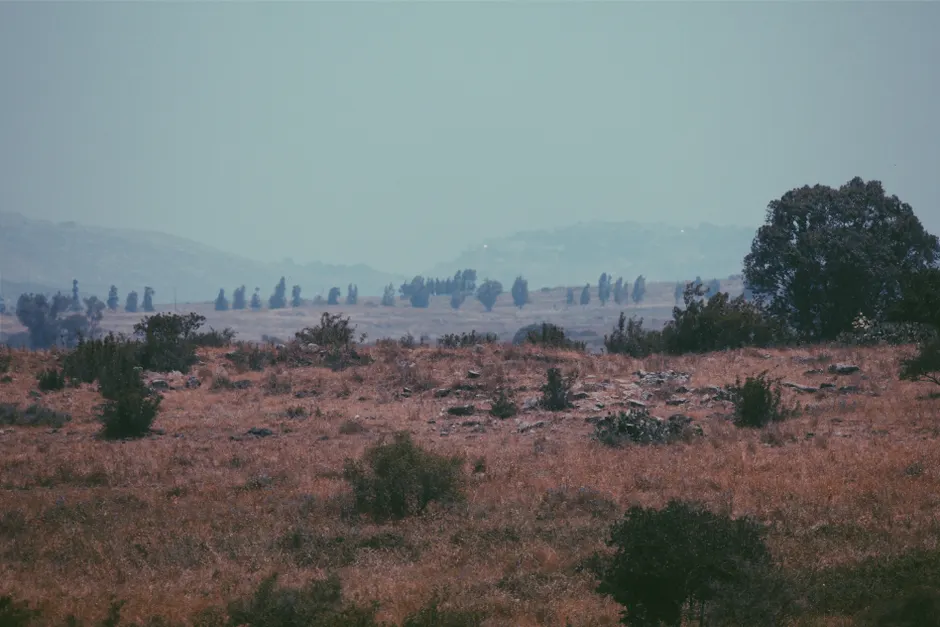
Beginning on September 13, residents climbed to the al-Rus hilltop on horses, in off-road vehicles and on foot after police closed the road, according to Al Jazeera. Settlers from the occupied West Bank had started building an outpost on village land a couple of weeks earlier. The site was described as one of the first such attempts on the Israeli side of the Green Line, the boundary between Israel and the West Bank.
Young Israeli settlers at al-Rus said they were there to graze livestock under a Jewish National Fund permit. Hussein Mannaa, 50, a lawyer and member of the village's Popular Committee, said there was no livestock at the camp. Villagers said the camp grew from a handful of people to between 25 and 30 within a week, with a kitchen, a toilet, a water line and electricity. Haaretz reported that large tents, refrigerators, gas cylinders, cooking stoves and furniture had been brought to the compound.
The village's Popular Committee met once the outpost reports were confirmed and, together with the local council, called daily demonstrations at al-Rus. Anas Sgaier, a 21-year-old law student and youth organiser, helped drive the protests with Instagram posts inviting people to come drink coffee on the land. After almost a week of peaceful protests involving hundreds of Palestinians each day, the Jewish National Fund ordered the settler tents removed, and the site was cleared by September 16. +972 Magazine described the encampment as a West Bank-style settler outpost in northern Israel.
The episode has become part of the election debate. Finance Minister Bezalel Smotrich is campaigning on a promise to "Judaise" the Galilee, a region of northern Israel, and says he will repeat there the approach carried out in the occupied West Bank. Villagers in Majd al-Krum have cited that pledge in describing their concerns.
The vote is the first election since the Hamas-led attacks of 2023. Voters are choosing 120 members of the Knesset, Israel's parliament. Reuters reported on October 20 that Itamar Ben-Gvir was poised for election gains as young voters turn to the far right. A Yedioth Ahronoth poll published on October 9 suggested that more than 16% of first-time voters would choose far-right parties. AFP reported that Ben-Gvir's election pledges include encouraging Palestinians to leave the occupied West Bank and Gaza, and enforcing the death penalty.
Polling stations are due to close at 10 p.m. Israel time, or 2000 GMT. Most polls ahead of the vote showed Netanyahu's coalition losing its majority in the 120-seat Knesset, according to The Guardian.