Bank of America Tells Customers Not to Share Banking Passwords With AI Agents
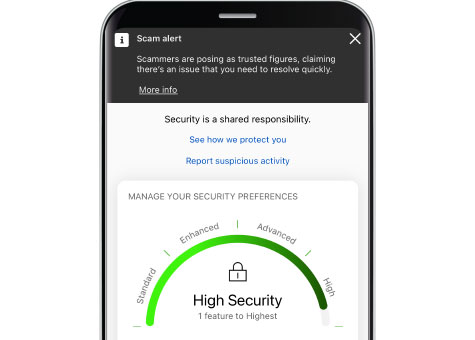
Bank of America has told customers never to share their online banking username and password with another person or an outside service, including an AI-enabled tool or agent that offers to act on their behalf. The guidance arrived in an email titled “Protecting your finances in the AI World,” TechCrunch reported on Oct. 27.
The same email states that customers who share their credentials are responsible for activity that results from that access. Liability for delegated logins therefore sits with the account holder who handed over the password, not with the bank.
The message comes amid a wider question about autonomous agents, which are software programs that take actions on a user's behalf, operating inside retail accounts. Axios reported on Oct. 22 that major U.S. banks are detecting unauthorized third-party AI agents, meaning tools built by outside companies, operating inside customer accounts. Reuters reported the same day, citing sources, that U.S. banks are blocking third-party AI agents' access to customer accounts.
A Bloomberg opinion column published on Oct. 22 states that Citigroup Inc. and Bank of America Corp. do not allow third-party AI agents or assistants to access client accounts.
Bank of America's own virtual financial assistant is named Erica. According to the bank's Erica page, the assistant can help customers access routing and account numbers, find companies that have their card information stored, and access their security meter. Erica is a first-party tool, meaning the bank builds and operates it, which distinguishes it from the outside agents the email warns against.
The bank has discussed its internal use of AI before. An April 2025 press release described AI adoption by its global workforce as improving productivity.
The broader context here is a mismatch between how banks authenticate and how agents work. A password login proves that someone holds a credential, not which software is acting for that person. When a customer gives an agent a username and password, the agent presents what looks like the customer's own login, so the bank's systems must infer from behavior whether the session is legitimate. That is why the reported responses focus on detection and blocking rather than on the credential check itself.
In my view, the email addresses the simpler half of the problem. Telling customers not to share passwords sets a clear rule, and the liability language makes the cost of breaking it explicit. The harder question is how an agent acting for a customer can be authorized in a form the bank can scope, meaning limit to specific actions, log, and revoke, meaning cancel at will. Scoped, revocable delegation with explicit consent is a well-understood pattern in enterprise identity management. It is also the more plausible route to letting customers use agents without surrendering a password, and it gives banks a control point they currently lack when a credential is the only proof of identity.
For now, the operative guidance from Bank of America is narrow. Keep the username and password to yourself, and treat any agent that asks for them as a party you have chosen to trust with your money, with the consequences falling to you if that trust is misplaced.