SpaceX AI's New Grok 4.5 Model: What It Means for Coding and Work Tools

SpaceX AI's New Grok 4.5 Model: What It Means for Coding and Work Tools
SpaceXAI launched Grok 4.5 on July 8, 2026, its first major model release since going public and its first built in collaboration with Cursor, a popular AI coding assistant, following a development partnership announced in April Axios.
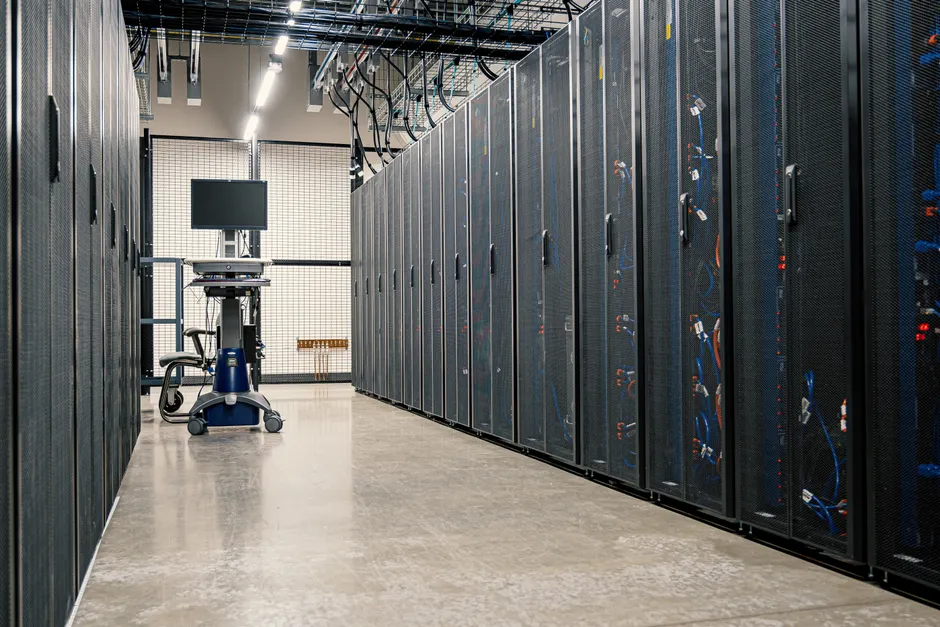
The model was trained using tens of thousands of high-end NVIDIA GB300 GPUs housed in SpaceXAI's own data centers. The training data focused heavily on coding, science, engineering, and math problems x.ai xAI docs. SpaceXAI is positioning Grok 4.5 for writing code, automating multi-step work tasks, and general knowledge work, and internally calls it their most capable model to date.
Pricing and Availability
The pricing is competitive: $2 per million input tokens and $6 per million output tokens. (Tokens are small chunks of text that AI models process; think of them like individual words or parts of words.) This undercuts OpenAI's GPT-5.6 Sol variant, which costs $5 for inputs and $30 for outputs, and roughly matches Luna, priced at $1 in and $6 out Engadget. Reuters reports SpaceXAI describes Grok 4.5 as an "Opus-class model" — a tier typically associated with slower processing — but claims it runs faster than that category usually delivers Reuters. The model is available across multiple server clusters with pricing adjusted by region, per xAI's developer documentation.
Grok 4.5 is now the default model in Grok Build, SpaceXAI's terminal-based coding agent (a tool that can write code based on your instructions). It is also available directly through the SpaceXAI console and across all of Cursor's subscription tiers. Notably, SpaceXAI says Grok Build handles not just software engineering but also Excel, PowerPoint, and Word tasks, positioning it as a general assistant for knowledge work rather than a tool only programmers would use.
Cursor published an announcement on X and a blog post describing Grok 4.5 as its most powerful model to date and the first one designed to do more than just software engineering Cursor.
The Partnership Behind the Release
This collaboration runs deeper than a simple business deal. When SpaceXAI and Cursor agreed in April to develop AI together, the terms included an option for SpaceXAI to invest $10 billion in Cursor or to acquire the company entirely for $60 billion later this year Engadget. Having Grok 4.5 trained "with Cursor's help" and shipping as the default model across Cursor's products at the same time suggests a deeper strategic arrangement than a typical vendor partnership. The two companies are moving in lockstep.
SpaceXAI claims Grok 4.5 outperforms other leading AI models on real engineering tasks and can build working applications from minimal instructions. These are vendor claims rather than independent test results, and neither company's announcement includes third-party evaluation at the time of writing.
Grok 4.5 is not yet available in the European Union. SpaceXAI says it expects to bring the model to EU customers by mid-July, a gap of roughly a week to ten days after the US launch — presumably due to regulatory review, though neither company's materials explain the delay.
Why the Pricing Matters
The pricing structure deserves attention. Grok 4.5's $2/$6 rate against GPT-5.6 Sol's $5/$30 is not a small discount — it is a five-fold difference on output tokens, which is where costs really add up in agentic workflows (multi-step processes where the AI calls tools and makes decisions sequentially). Chat interfaces, by contrast, typically don't trigger long chains of outputs. If SpaceXAI's performance claims hold up in independent testing, that price difference could matter more to enterprise adoption than benchmark scores alone, since agentic coding workflows burn through tokens quickly in ways that typical chat assistants do not.
The broader context here is what "trained with Cursor's help" actually means in practice. Cursor has spent years collecting detailed data on how developers use AI coding tools — what they accept, what they edit, where models make mistakes or misunderstand the code repository. Feeding that real-world operational knowledge directly into Grok 4.5's training, rather than layering it on top afterward, represents a different kind of partnership than the API deals that have been standard since 2023.
This development carries an implication worth noting: Cursor's future is now more tightly bound to SpaceXAI's model roadmap than to a strategy of remaining open to multiple AI providers. That runs against the position Cursor built its early reputation on — being agnostic about which models it uses.
What the Rebranding Signals
The shift from "xAI" to "SpaceXAI" is easy to overlook but meaningful. It suggests tighter organizational alignment with SpaceX than the company's previous independent structure implied, though neither SpaceX nor the company have detailed what this integration actually entails for xAI's past work or technology.
The Bottom Line
For companies shopping for AI coding agents this quarter, Grok 4.5's combination of lower pricing, built-in availability through Cursor, and reach into office productivity tasks makes it a genuine alternative to OpenAI and Anthropic's Claude Opus models. Whether it actually delivers on those promises against real-world engineering work — rather than the vendors' own testing — is what independent benchmarking in the coming weeks should help clarify.