Akai plans open-source MPC Sample Key and early units for modders
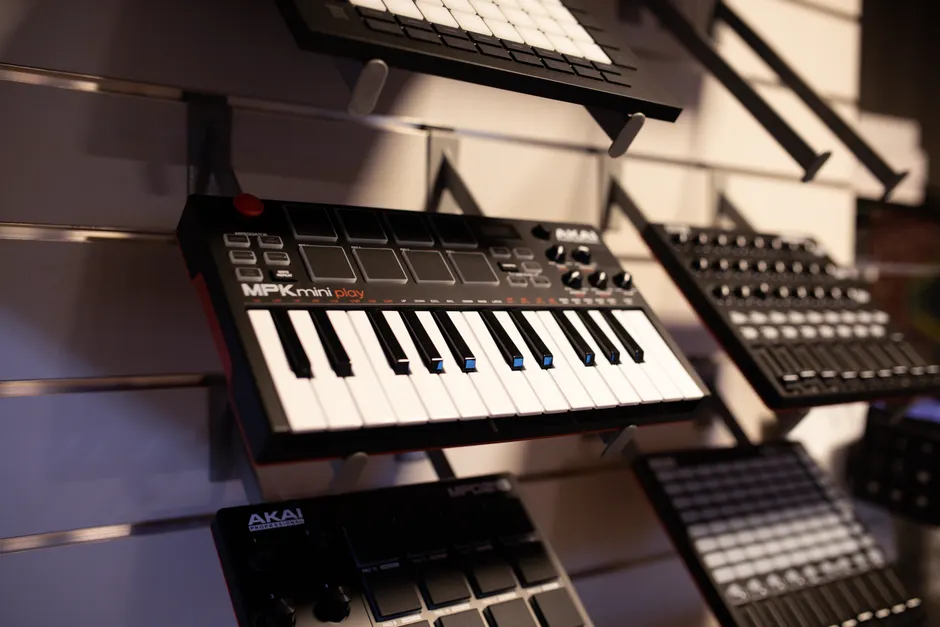
Akai is developing an MPC Sample Key that runs open-source firmware, and it plans to give early units to developers in its modding community, according to The Verge. The product has not been formally announced.
The instrument has 37 keys and no pads. Unlike the MPC Key 37, it plays back samples from its keys, making it a keyboard-first counterpart to the MPC Sample. The keyboard takes over the role the pad grid normally plays in the sample-playback workflow.
Akai showed the unit running a custom operating system that hosts several synths. The demonstrations also included mods built with vibe-coded synthesizers (code produced largely through AI prompting), among them Native Instruments Massive, a virtual analog engine and an FM engine. Akai said it intends to bring the same community features to the standard MPC Sample, which it showed running synths built with Claude.
Akai CEO Jack O'Donnell told The Verge that inMusic brands, with Akai named specifically, would embrace the modding community by seeding early devices to developers. He said the effort will include open-sourcing some software and providing a software development kit (SDK), a toolkit for writing code against the platform. No release date or pricing for the Sample Key was reported.
On the existing line, Akai says upcoming firmware updates will let MPC Sample projects open on MPC hardware and software running version 3.8 and higher, according to the company's MPC Sample product page. That matters for anyone who builds sessions around the MPC Sample today, because moving projects across the hardware and software ecosystem is the prerequisite for third-party tooling to be useful in a studio.
The Sample Key teaser arrived a day after Behringer's open-source Kick teaser, according to MusicRadar. Two hardware makers floating open-source angles within a day of each other is a coincidence of timing.
The broader context here is a shift in where an instrument's capabilities are defined. Samplers have traditionally had their engine, sequencer and synth set fixed at the factory, with users extending them through sample libraries and plug-ins running on a host computer. Open-source firmware and an SDK move that boundary onto the hardware itself, so the device's behavior can be rewritten by the people who use it.
In my view, the question that matters most for developers is not the custom synths shown on stage but whether the SDK and firmware source are complete enough to build against without reverse engineering, meaning working out how a system functions from its behavior alone. Early access will test that. If it holds, the MPC Sample Key and MPC Sample could become platforms for synths and workflows Akai never shipped, giving the modding community a supported path to run them on dedicated hardware rather than in a laptop's audio stack.


