Amazon's Cloud Business Grew 39%, but Overall Results Missed Expectations
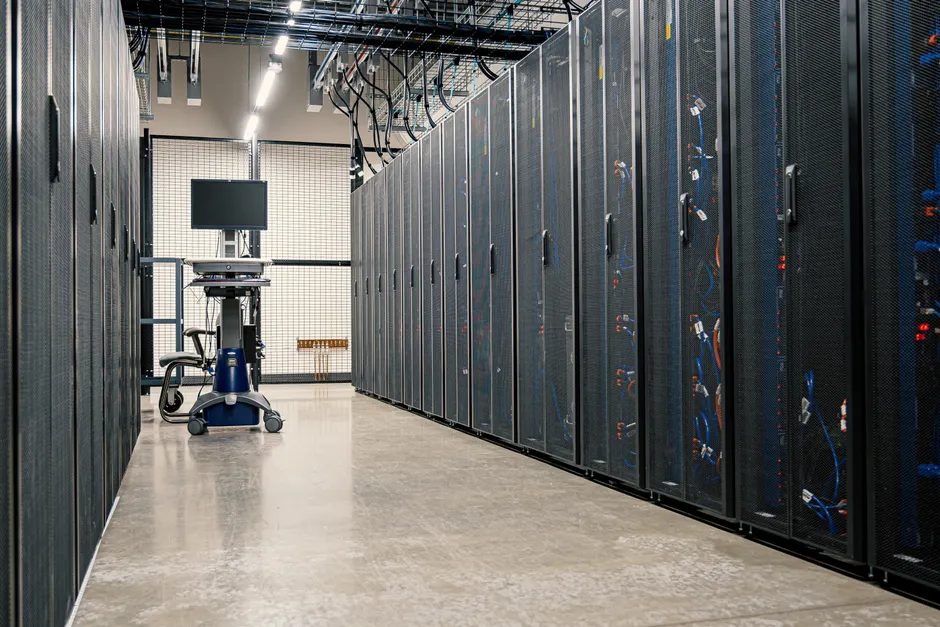
Amazon missed analyst expectations for both total revenue and earnings per share in its third-quarter 2026 results, reported October 29, while Amazon Web Services (AWS), the company's cloud computing division, grew 39% year over year.
Net sales rose 12% to $201.9 billion, slightly below the $202.2 billion that analysts polled by FactSet had modeled. Fully diluted earnings per share, which measures profit per share including potential dilution from stock awards, came in at $1.89, against an expectation of $1.97 (TechCrunch). Before the report, analysts had been modeling fiscal 2026 earnings of $8.03 per share, up from $7.17 in fiscal 2025 (Yahoo Finance).
The cloud unit beat its estimate. AWS sales reached $46.0 billion, up 39% from the year-ago quarter, according to Amazon's earnings release. TechCrunch put the figure at $45.98 billion, against a $45.29 billion expectation. AWS operating income, the profit left after operating costs but before interest and taxes, was $17.8 billion, compared with $11.4 billion in the third quarter of 2025. Amazon's release reports total operating income of $28.1 billion for the quarter.
The segment trend has moved in one direction for two quarters. In the second quarter, AWS net sales rose 37% and AWS operating income was $16.6 billion, compared with $10.2 billion a year earlier. Consolidated net sales grew 20% in that quarter, and consolidated operating income was $27.5 billion, up 43%. In the third quarter, AWS growth accelerated to 39% while consolidated sales growth slowed to 12%. The gap between the two lines is now the central feature of the results.
Cash generation moved sharply the other way. Free cash flow, the cash left after capital expenditures (capex, spending on long-lived assets such as servers and buildings), was negative $42.4 billion for the trailing twelve months, compared with positive $14.8 billion for the twelve months ended September 30, 2025. Amazon reiterated that it expects to end 2026 with cash capex of about $220 billion, driven largely by AI investments. For the fourth quarter, the company forecast net sales of between $240 billion and $247 billion.
In my view, the cash line is the number that practitioners will examine most closely. A $220 billion capex program is largely a bet on capacity, meaning accelerators, power, and data center shells that must be heavily utilized before they convert into operating income. AWS's 39% growth and $17.8 billion of segment operating income suggest that current demand is absorbing a large share of that capacity. Whether the depreciation of this infrastructure can be offset by margin expansion across the cloud business, and whether the retail and advertising lines can carry the rest, are questions the quarter does not answer.
The broader context here is that the AI build-out has changed the economics of hyperscale cloud. Training clusters and inference fleets (the servers that run trained models to answer requests) consume capital faster than the previous generation of cloud buildouts did, and the revenue has to arrive as sustained consumption rather than one-time projects. The third quarter shows that demand for AWS capacity from enterprises and model developers is strong. It does not indicate how long the spending cycle will last.
For engineers and architects who build on these platforms, the practical effect is more immediate. Capacity expansion at this scale typically shows up as new instance generations, broader availability of inference hardware, and lower per-unit costs over time, provided the spending converts into supply. If the bet pays off, the infrastructure that now strains the cash flow statement could become the foundation for workloads that were uneconomic a few years ago. That is the outcome the spending is meant to produce, and this quarter is one data point on the way there.