Arrowmax's Arrowspace S1 Aims to Pick the Right Screwdriver Bit With a Camera and AI
Arrowmax has opened a Kickstarter campaign for the Arrowspace S1, an electric screwdriver that uses a camera and AI to identify the bit type and size a screw needs. According to The Verge, the standalone unit has a preorder price of around $79, and the version bundled with the S1 smart bit case is around $129. The tool is not expected to ship until April 2027 at the earliest.
The sensing hardware sits in the tool's nose. A small camera with an LED light on its underside captures an image of the screw head. Beside the camera, a precision contact probe extends to rest on the screw surface, which fixes the focus distance, meaning the fixed gap the lens needs to stay sharp. The identified bit type and size appear in a connected mobile app. The tool then selects a torque setting, the rotational force it applies before stopping, which it describes as safe for the identified screw. An OLED screen on the body shows remaining charge, the current torque setting, and rotation direction.
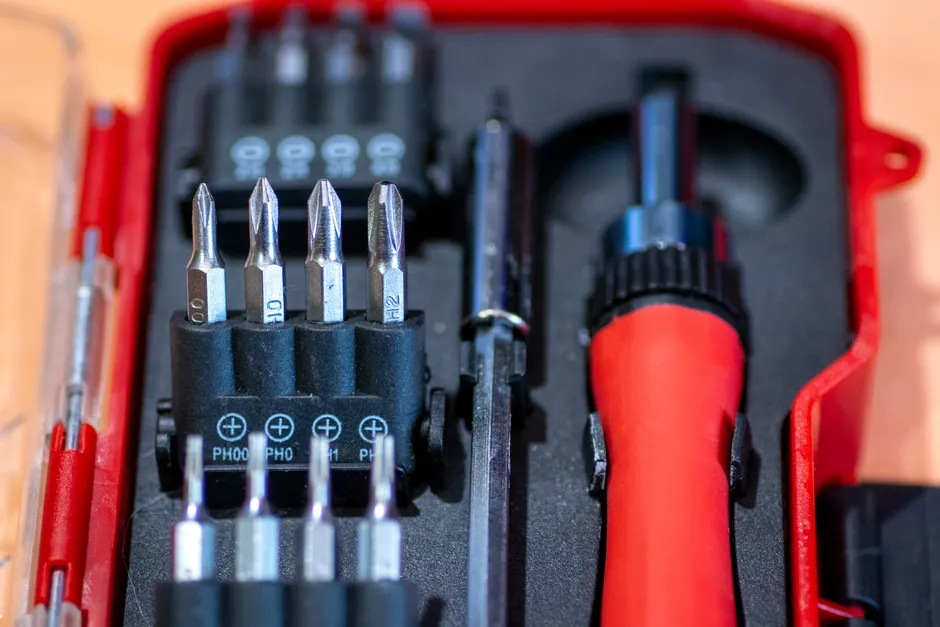
The campaign is packaged as a kit. The S1 Smart Case holds 52 steel bits, with an LED beside each bit that lights to indicate the one required. New Atlas describes the product as a 52-in-1 electric screwdriver and says it uses an HD camera system to automate driving. The Verge reports a 600mAh rechargeable battery, which Arrowmax claims will run for up to 90 minutes or tighten or loosen more than 900 screws.
The Kickstarter page presents the device under the heading 'The World's First AI Screwdriver With Eyes And Brain.'
In my view, the questions that matter for a buyer are the ones the campaign has yet to answer in public. Identification is the core promise. A camera-and-probe system has to read heads that are stripped, painted, recessed, or partly obscured, and a contact probe has to hold its reference distance on uneven surfaces. Torque selection raises a similar question. A tool that sets torque from a visual identification of the fastener is only as safe as that identification, and the consequences of a wrong call fall on the assembly, not the tool.
The timeline also deserves weight. A product that ships no earlier than April 2027 is, for now, a set of renders, specifications, and preorder commitments. Backers are paying for a design that has not yet reached their hands, and crowdfunded hardware carries the usual schedule and specification risk between a funded campaign and a delivered unit.
The broader context here is a familiar one for anyone who has followed consumer hardware. A capable tool becomes more useful when it removes a judgment call that the user used to make by feel, and bit matching is a small, daily example of that. Most people know the cost of a guess: a stripped screw. If the Arrowspace S1 performs as described, it could make that mismatch less common for home users who do not keep a full bit set on hand. Whether it does so will depend on field testing across the unglamorous range of real fasteners, which is where the next few months of reporting will matter.