Big Tech's $740 Billion AI Bet Begins to Strain Balance Sheets
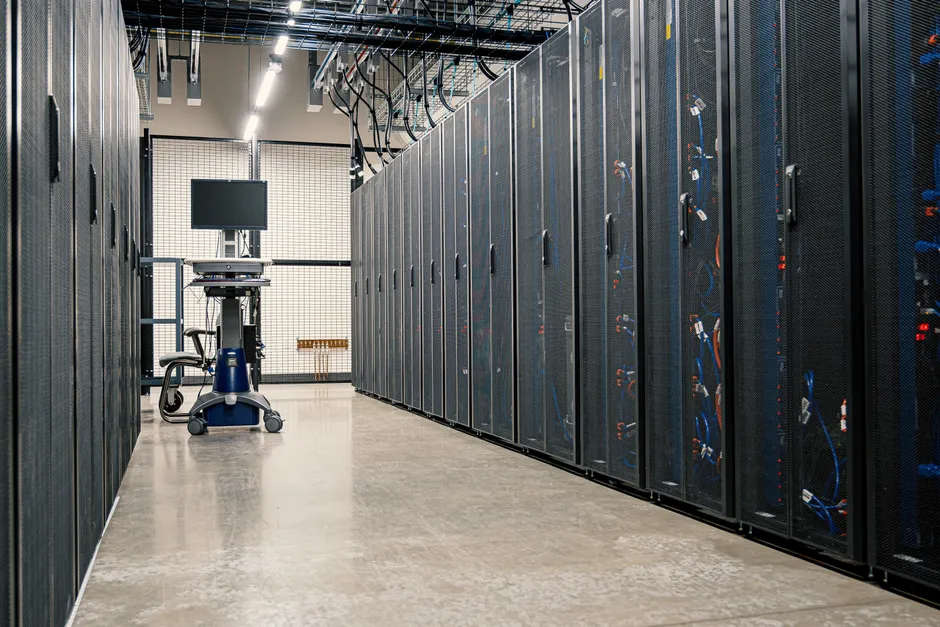
Alphabet, Amazon, Meta and Microsoft have outlined plans to spend more than $740 billion on capital expenditures (capex, the money spent on long-lived assets such as servers, chips and data center buildings) in 2026. On Friday, October 30, the Nasdaq fell 2.9% amid anxiety over that spending, and the Reuters report on the session put the index's October losses at a $2 trillion wipeout.
The spending figures are the core of the story. TechCrunch reported that Alphabet expects to spend up to $205 billion on capex in 2026 and expects spending to keep rising in 2027. Its quarterly capex reached $51.4 billion in the third quarter. Amazon expects $220 billion in 2026. Meta narrowed its anticipated 2026 capex, including principal payments on finance leases (the cash repayments on equipment leased over multiple years), to $135-145 billion in its October 21 third-quarter release. Microsoft expects calendar-year capex of about $170 billion, down from its prior outlook because of delays, according to Business Insider. That outlook, which also includes SpaceX, puts the combined 2026 figure at up to $828 billion.
Free cash flow (operating cash flow minus capex, the cash left after a company pays for its own operations and upkeep) is where the strain is visible. Alphabet reported negative free cash flow of $9.1 billion in the third quarter, its second consecutive quarterly deficit. Meta posted negative free cash flow of $2.1 billion in the same period. Amazon reported negative free cash flow of $42.4 billion over the prior twelve months, against $14.8 billion of positive free cash flow in the year before. Microsoft was the exception, with $18.6 billion of positive free cash flow in its latest quarter and capex of $45.2 billion, compared with $50 billion projected.
Revenue does not tell a uniform story either. Microsoft reported quarterly revenue of $92.3 billion on October 28, up 19% from a year earlier, and its tenth consecutive quarter of record revenue. Amazon's AWS revenue grew 39% in the quarter reported October 29. Meta's ad revenue grew 26%. Google's Search business, which accounts for roughly half of Alphabet's revenue, grew 12% in the third quarter, its slowest pace in five quarters.
Markets reacted sharply. Alphabet fell 12% on October 29, its worst single day on record, erasing $500 billion in market value. Amazon shares fell 7% after earnings. Meta's stock took a 10% hit during the same week, despite the ad growth. On October 30, Nvidia dropped 4%, Broadcom fell more than 5%, and Qualcomm fell 11%. CNBC reported that AI stocks sold off as investors questioned returns on AI spending, and that investors said they needed to see AI profits materializing.
Debt is the other leg of the build-out. Global AI infrastructure debt sales totaled about $450 billion so far in 2026, according to a Bloomberg report from October 12. Gartner, in an estimate cited by Bloomberg on October 25, said more than $3.5 trillion of AI infrastructure spending could be at risk of impairment (a write-down of an asset's book value) by 2030.
For practitioners, the numbers describe a shift in how the hyperscalers fund their infrastructure. For most of the cloud era, operating cash flow covered buildouts with room to spare. Now the largest spenders are running negative free cash flow, borrowing in capital markets, and tying their next-year guidance to accelerating outlays on GPUs, power and data center shells. Each of those lines carries depreciation schedules and utilization assumptions that will only be tested as the capacity comes online.
In my view, the most important question the quarter raises is not whether AI demand exists. The revenue growth at AWS and Microsoft suggests a real and paying customer base. The open question is the return on the marginal dollar: whether incremental capacity will be filled at prices that justify the depreciation, and whether core advertising and search franchises can absorb the cost of the transition without further slowing. Investors have begun to price that uncertainty, and the selloff in semiconductor suppliers suggests the repricing is not confined to the spenders.
The broader context here is that the same capacity straining balance sheets today is also the base on which the next generation of inference workloads, agentic systems and enterprise AI services will run. Cheaper and more abundant compute has, in earlier platform cycles, opened markets that were not visible at the time of the investment. Whether this cycle follows that path depends less on the headline capex figure than on whether revenue per unit of compute rises faster than the cost of building it.


