Italian Farmer's Attic Wheat Grows Seven Ears per Stalk, but Its Drought Claims Remain Unproven
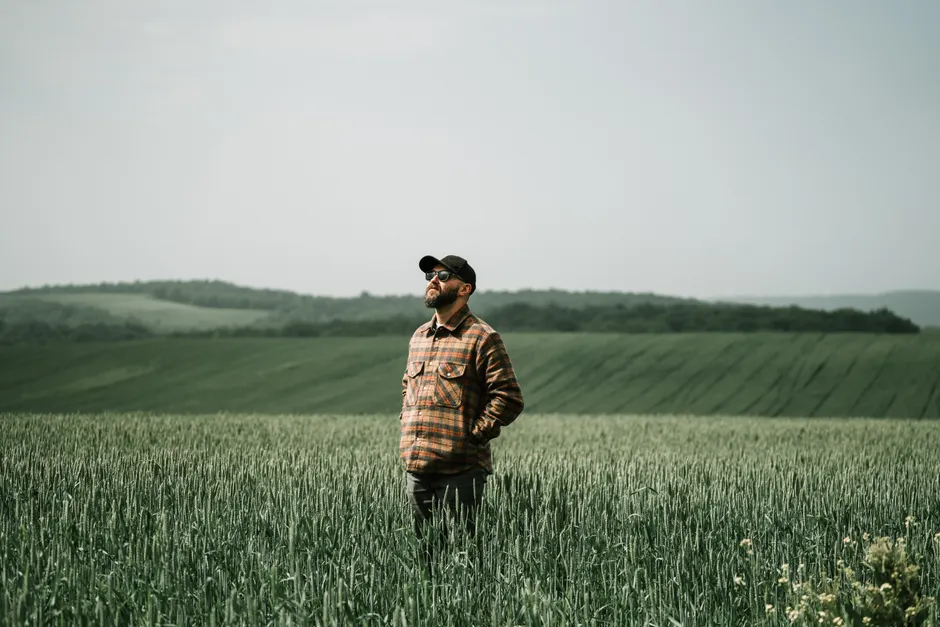
Claudio Grossi, a grain farmer near Parma in northern Italy, grew several types of wheat from an unidentified sack of seeds he found in his attic. One type reached about six feet, roughly twice the height of commercial wheat. Smithsonian Magazine published the account on 27 October 2026.
In the early 1990s, Grossi, then 40, was clearing out his attic when he came across the old bag. He could not identify the contents. He believed his late great-grandfather, who started the farmstead around 1915, had left it there. The kernels looked dry and cracked, and he doubted anything would sprout. He carried the bag downstairs and shook the seeds onto a manure pile.
Several wheat types came up. The tall plant produced seven ears per stalk, arranged as one long ear with six short ears bunched around it. Its kernels were larger than average and came in yellow, black, red, white and green, sometimes all on the same stem.
Grossi said he had never seen anything like it. He assumed it was a freak of nature and could not find it described in agricultural reference books. A practising Catholic, he linked the seven-eared stalk to the passage in Genesis where Joseph interprets Pharaoh's dream of seven ears of grain growing on one stalk.
After harvest, he milled the grain into flour and baked a loaf of bread. He keeps ears grown from the original attic seeds under glass in his kitchen.
Coverage since has added labels and claims. Times of India, publishing on 28 October 2026, described the crop as ancient biblical wheat with seven ears on one stalk, and characterised it as a little-known heritage wheat variety. The same report said it could potentially help crops survive drought and climate change. Mental Floss, also dated 28 October 2026, called the ancient Italian wheat “Miracle Wheat.”
Those labels are not interchangeable with the farm's own observations. What Grossi described is a single plant type with an unusual ear count and multicoloured kernels, grown from a bag of unknown provenance. Whether that material is a distinct, stable heritage variety, a seed stock still genetically mixed so that offspring vary, or something else is not established. Neither is whether the traits relate to drought tolerance.
In my view, the distance between a kitchen-window ear of wheat and a crop-resilience claim is where a careful reader should slow down. A farmer's trial plot can be a useful starting point for a breeder, a genebank curator (someone who manages a facility storing seed samples for future study) or a pathologist, because it puts unusual germplasm in front of people equipped to test it. Yield under water stress, disease resistance, grain quality and genetic stability across generations are the measurements that would turn an anecdote into a finding. Each would take seasons of replicated trials to establish.
The broader context here is that old seed stocks sit in farm storage, family attics and genebanks across Europe, often undocumented. Grossi's account is a reminder of how much material of that kind may still be unsurveyed. The practical question for anyone working in plant genetics is less about the Genesis parallel than about whether the seed can be characterised, propagated and tested in a controlled setting. If it can, the attic bag may prove useful to the people who breed wheat for a warming, drier climate. For now, it is a single farm's observation, widely retold.


