NASA Seeks Commercial Help to Boost Hubble's Orbit Before Its Decay Window Closes

NASA is asking commercial companies to propose ways to raise the orbit of the Hubble Space Telescope and extend its working life. The agency's Request for Information (RFI) on commercial servicing is open through November 30 at 3 PM ET.
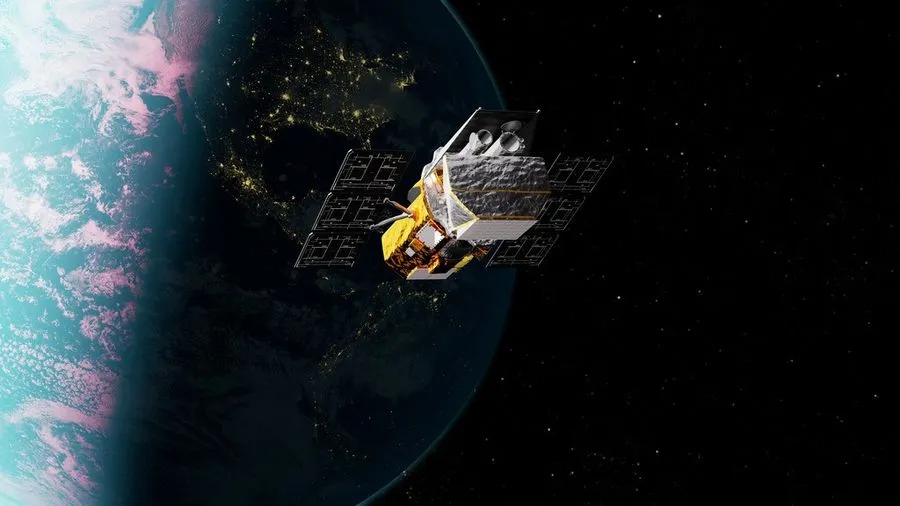
The reason is orbital decay. Residual atmospheric drag at Hubble's altitude slowly lowers the spacecraft. The Verge reports that the orbit will continue to decay, leading to the observatory's demise in the early to mid-2030s unless it is boosted. Ars Technica reports that NASA expects a commercial boost and/or servicing mission to occur by 2032.
NASA Administrator Jared Isaacman said Hubble still has important science ahead, and that NASA should look at every reasonable opportunity to keep the telescope delivering. The NASA announcement frames the effort as an exploration of potential commercial servicing, with the RFI as the first formal step.
The RFI asks companies to describe their current and near-term capabilities for capturing Hubble. It also sets a firm constraint: any commercial boost or servicing mission must not harm the telescope. A provider must demonstrate a path to rendezvous and capture, and must show that the operation leaves the observatory intact. NASA will use the responses to judge which approaches are credible on a timeline that ends in 2032.
The program has a history that predates this notice. In December 2022, NASA and SpaceX agreed to study a possible Hubble reboost. That study was expected to take up to six months and involved collecting technical data from both Hubble and the SpaceX Dragon spacecraft. In the same period, NASA's earlier reboost RFI stated that the agency had no plans to procure a reboost mission. In May 2023, Astroscale and Momentus teamed to offer NASA a commercial solution to reboost Hubble and deliver additional in-space servicing.
The broader context here is a change in posture. A 2022 notice that disclaimed any plan to procure a reboost, set against a 2026 request for proposals, moves the agency's position from exploration toward a possible purchase. The 2022 SpaceX study and the 2023 Astroscale and Momentus proposal were both private initiatives tied to Hubble, and they now sit in the background of a formal solicitation. How NASA weighs that earlier technical work against new responses has not been detailed, and the RFI is an information request rather than a contract.
The timeline is short. A notice closing at the end of November leaves a few years for selection, development, and flight to meet a 2032 target. Any mission must also meet the no-harm requirement, which for a satellite of Hubble's age and profile is as demanding as the rendezvous itself.
In my view, the stakes extend beyond one observatory. Hubble has operated well past what its builders assumed at launch, and whether a commercial vehicle can extend its life is also a test of whether in-space servicing has matured to routine use. Whatever the responses show, the RFI is the point where that question becomes a concrete procurement conversation rather than a study. If a capture and boost mission reaches the telescope before the early-2030s decay window closes, Hubble's remaining instruments would keep producing science, and the servicing capability built for it could be reused for other assets in orbit.