Bonds and Tech Stocks Are Moving Together, and That Weakens the Old Playbook
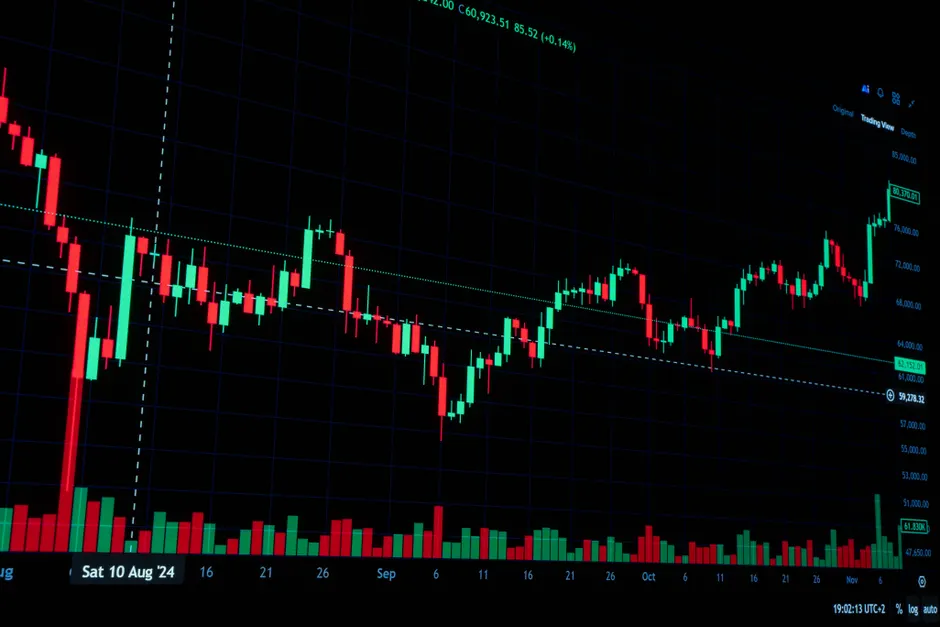
Investment-grade corporate bonds (debt issued by companies with strong credit ratings) and technology stocks have become more tightly linked this year. iShares' Fall 2026 Investment Directions reports that their correlation reached about 0.45 in August, up from about 0.05 in November 2025. Correlation measures how closely two assets move together on a scale from minus one to one. A reading near zero means they move largely independently. A reading of 0.45 means they tend to move together with some regularity. BlackRock's 2026 Fall Investment Directions makes a similar point, describing rising exposure and correlation between corporate bonds and technology.
The reason this matters is that the traditional portfolio depends on bonds offsetting equity losses, a property known as hedging. Allianz Economic Research said in July 2026 that bonds and equities have stopped hedging each other. It argued this undermines the 60/40 portfolio, the classic mix of 60% stocks and 40% bonds. Allianz Wellington Management states that higher inflation expectations are disrupting stock-bond diversification. Wellington Management Vanguard has published on how changing economic conditions influence the stock-bond relationship. Vanguard
The sign of this correlation is not fixed, and the Vanguard work is a useful reminder of that. A relationship that flipped once can flip back, so the 60/40 mix should not be judged only on past behavior.
US bond yields were around their highest level in nearly a quarter century in late October 2026, according to Bloomberg. A yield is the annual return a bond pays relative to its price, and yields and prices move in opposite directions. Higher yields raise the income on offer to savers buying new fixed income. For holders of existing bonds, the same move lowers market value. For borrowers, the benchmark cost of money moves with yields, which feeds into mortgage and corporate borrowing costs.
Bloomberg reported in October 2026 that a Democratic win of both houses of Congress was seen as the outcome most likely to set up a bond rally. Bloomberg Market participants framed the argument through fiscal policy: a divided government checks deficit spending, while a unified outcome is viewed differently. The election is scheduled for November 3, so this remains a scenario some investors are pricing, not a settled outcome.
The S&P 500 rose 13% from the start of 2026 to late October, according to Bloomberg. Bloomberg also cited data showing that US stocks have advanced every year for the past several decades under a Republican president and a split Congress. Bloomberg
In my view, those historical patterns say little about any single year's returns, and the seasonal evidence should be read with that in mind. BNY Investment Strategy & Research Group found that since 1950, the S&P 500 has gained an average of 16.6% in the year after a midterm election. NewsNation BlackRock states that annual US stock market returns, on average, have been weakest in midterm years. BlackRock
Both readings can be true because they describe different points in the four-year cycle. A midterm-year drawdown and a post-midterm recovery are separate observations. Neither tells an investor what the next twelve months will bring, and I would not blend them into one forecast.
Raymond James stated that the 2026 election outcome does not change its outlook for the Federal Reserve, where it expects just one hike in December. Raymond James
If that call is right, the central bank's path will be a more reliable driver of bond prices than the election itself. If the inflation expectations flagged by Wellington and the correlation shifts flagged by iShares persist, bonds could keep offering weaker protection for stocks even without a policy surprise.
The practical question for a saver or allocator is not whether the midterms will move markets. It is whether the assumption that bonds will cushion equity losses still holds under the current inflation and rate regime. That assumption is under strain, and the direction of the stock-bond relationship depends on inflation expectations and fiscal signals that are still unresolved.