The U.S. Strategic Petroleum Reserve Is Running on Empty—And Breaking Down
The U.S. Strategic Petroleum Reserve fell by 6.2 million barrels to 319.5 million barrels in the week ending July 3, 2026, marking its lowest level since April 1983, according to Reuters. The Trump administration has characterized the drawdown as a response to elevated oil and gasoline prices, per the Washington Examiner. It's the second-largest drawdown in the reserve's history.
The problem isn't volume alone. A Government Accountability Office (GAO) report published May 29, 2026, found the SPR has experienced 16 major equipment failures since 2013, including failures in raw water piping and brine disposal systems, per GAO. That's triple the Department of Energy's earlier official count of five major incidents over the same span. The gap reveals a maintenance crisis: the reserve has accelerated withdrawals while falling behind on repairs.
Brine disposal is not a side issue. The SPR's storage caverns are salt domes; brine is the salt-laden water produced when these caverns are leached. Pipeline integrity for brine disposal is fundamental to the entire system's operation—not a peripheral concern. The GAO identified leaking water pumps and pipes as an active operational problem, per GAO. In June 2026, the GAO posed the core question directly: does the U.S. have a long-term plan for the SPR "amid massive drawdowns & maintenance backlogs?" per GAO.
The Department of Energy acknowledges the risk categories explicitly in its FY 2026 budget documents: equipment failures, accidents, and deliberate attacks all figure as concerns for the reserve going forward, per the DOE budget document. In February 2026, DOE assessed the reserve's Bayou Choctaw site, one of four Gulf Coast locations, evaluating Fluor Federal Petroleum Operations, LLC, the private contractor managing site operations, per the DOE assessment. These operator reviews track whether contractor performance is keeping pace with the reserve's condition.
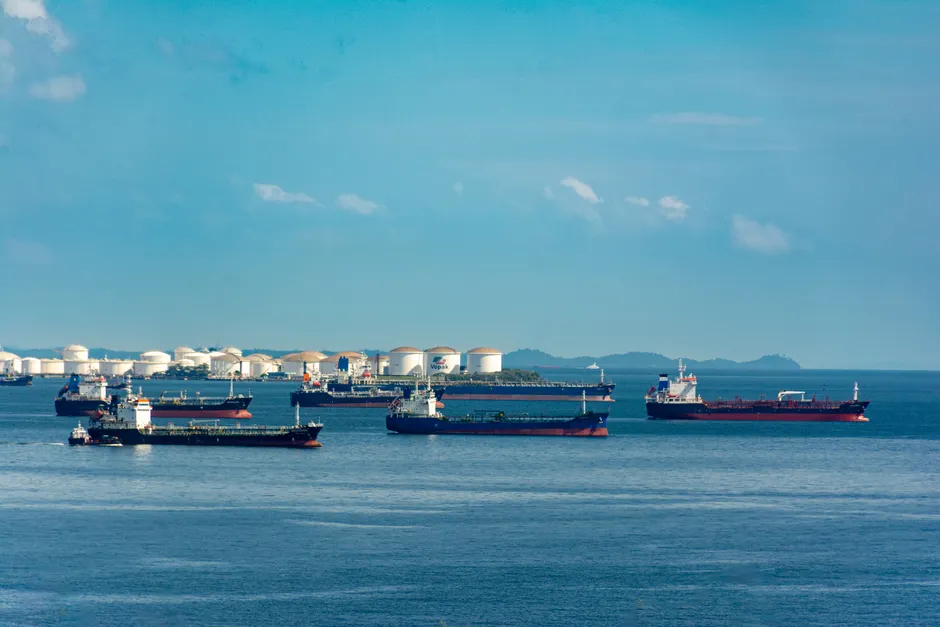
The drawdown is occurring as the Strait of Hormuz—through which roughly 20 percent of the world's traded oil passes—has become a flashpoint. On July 10, 2026, the U.S. demanded Iran publicly commit to halting attacks on shipping in the Strait, citing U.S. officials, per Reuters. Tanker traffic through the Strait had slowed following U.S.-Iran clashes, per Reuters. Iran reasserted its right to control shipping through the Strait and warned Gulf states against aligning with Washington, per Reuters video coverage.
The diplomatic situation shifted rapidly. Trump said on July 11, 2026 that the U.S. and Iran had agreed to continue talks and that the ceasefire was over, per Reuters. By July 12, he said the Strait of Hormuz was open to commercial traffic, per Reuters. The tension between these two statements—ceasefire declared over on one day, the Strait declared open the next—will likely leave traders relying more on tanker shipping data than on official statements.
The White House's strategic posture predates this week's headlines. The 2026 U.S. Counterterrorism Strategy, released in May 2026, states the U.S. will not allow strategic waterways such as the Strait of Hormuz or the Red Sea to be "held hostage" by state or non-state actors, per the White House strategy document. A June 2025 White House release reiterated that Trump has "never wavered" on preventing Iran from obtaining a nuclear weapon, per the White House.
For anyone pricing crude oil, the combination creates a real tension. A reserve at its lowest level since 1983, with documented equipment failures tripled from official counts and no unified Congressional-DOE plan on priorities, carries less surge capacity—the ability to flood the market quickly if supply shocks hit. That loss of spare capacity arrives precisely when Hormuz-related risk is elevated enough to warrant a named counterterrorism doctrine. The original purpose of the SPR was to buffer sudden supply disruptions; a reserve running lean on volume and mechanical reliability buffers less effectively. The gap between what the reserve once offered and what it can now provide is documented.
This is not a forecast. The facts—barrel count, equipment failure records, waterway status—are discrete and dated. Conflating them into a single call on oil prices would claim knowledge that simply isn't there. What stands documented is a reserve under mechanical strain being drawn down toward a four-decade low at the same moment the administration is negotiating and periodically clashing over one of the world's most critical chokepoints for oil supply.


