The Dollar's Summer Drift: Geopolitics, Rate Bets, and What It Means for Your Savings

The Dollar's Summer Drift: Geopolitics, Rate Bets, and What It Means for Your Savings
The US dollar index sat at 97.20 on July 10, 2026, down slightly from 97.28 the day before and 97.64 in late June. For three weeks, Asian currencies had stayed in this narrow band—a roughly 0.44-point range. But the forces pushing the dollar around had shifted sharply The Wall Street Journal. Earlier in the period, traders were betting on US interest rate hikes. Then geopolitical fears took over. Most recently, risk appetite returned—though tenuously.
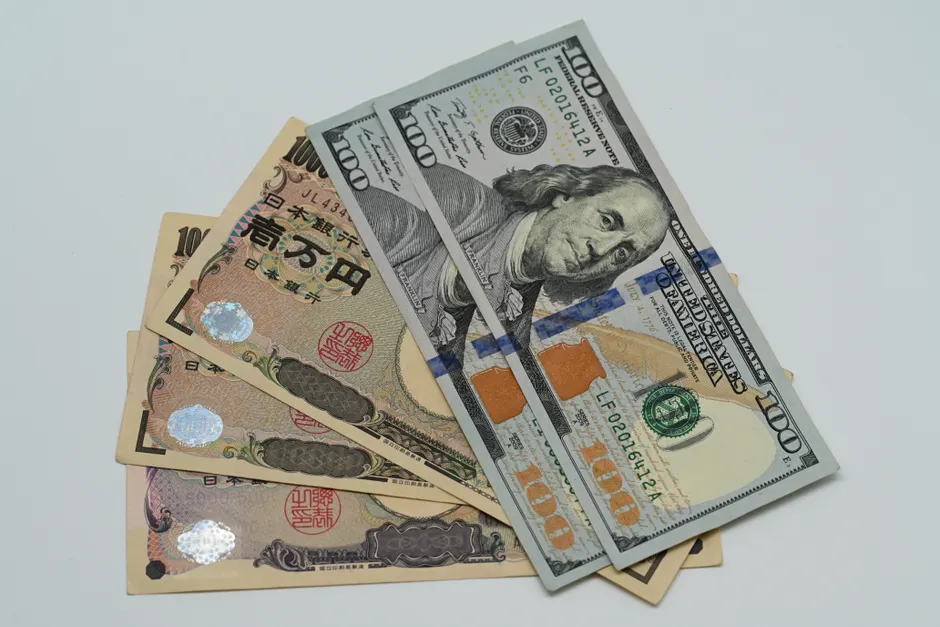
The immediate trigger has been Middle East escalation. On July 13, Reuters reported the dollar jumped after fresh US-Iran military exchanges and concerns about potential closure of the Strait of Hormuz, a critical shipping lane for oil. The yen, Japan's currency, weakened to 162.43 per dollar, a 0.46% drop in a single day Reuters. That's worth pausing on: just two weeks earlier, on July 1, Reuters had reported the yen had already hit a 40-year low. Dollar bulls—traders betting on dollar strength—were gaining ground even as most currency strategists still expected the dollar to weaken eventually Reuters. When geopolitical shock hits, it can override the math that usually governs currency moves, at least for a while.
The path matters as much as the destination. On June 17, the Wall Street Journal noted that treasury yields and the dollar had both risen together—an unusual pairing. Normally when both move up at once, it signals traders are pricing in higher interest rates ("hawkish repricing"), not a panic flight to safety The Wall Street Journal. By June 25, at 97.64, the dollar's strength looked tied to Federal Reserve rate-hike expectations specifically The Wall Street Journal. That's a fundamentally different story from the one now: Mideast tensions, and tentative risk appetite, are doing the heavy lifting instead.
By July 6, the index had eased to 97.26, what the WSJ described as "possible position adjustments"—a euphemism for traders squaring up accounts at month-end or quarter-end rather than responding to fresh news The Wall Street Journal. India's rupee, the unit of currency in India, moved the same way that day: it closed at 95.3950 per dollar, down 0.2%, having dipped to 95.4750 intraday—its weakest level since June 12. Reuters attributed the softness to weakness in neighboring currencies and downward momentum rather than bad news from India itself Reuters. Three days later, on July 9, the WSJ flagged Mideast tensions again as the weight on regional currencies, with the dollar index essentially flat at 97.28 The Wall Street Journal.
The connection between oil prices and Asian currencies isn't new. Back on May 21, Reuters had already reported Asian currencies flashing warning signs of an oil-price shock, with Indonesia's rupiah at 17,700 per dollar and India's rupee approaching 97 Reuters. Here's the structural issue: India and Indonesia run what economists call "current-account deficits"—they import more than they export, and both depend heavily on oil imports. A Hormuz closure or sharp oil-price spike widens their trade gap precisely when portfolio investors are already pulling money out in a risk-off environment. That the rupee has since recovered toward 95.40 from near 97 suggests the worst of that scare had faded before the latest Middle East flare-up reintroduced the same concern.
Beneath all this turbulence sits a deeper fragility that predates recent headlines. The Bank for International Settlements, in its March 2026 quarterly review, flagged shifts in foreign-exchange markets as a signal of growing investor unease in what it called an "increasingly fragile risk landscape," describing conditions as risk-off even at that point BIS. MUFG Research, writing later that month, said Asian currency weakness was deepening, with both geopolitical fears and rate-difference calculations working together to prop up the dollar MUFG Research. The pattern since has been brief stretches of dollar softening—usually when traders are adjusting positions or risk appetite returns—interrupted repeatedly by shocks that push the index back toward the top of its recent 97.20–97.64 range.
The broader context here matters for savers and borrowers exposed to Asian currencies or oil prices. For traders managing books of Asian currency trades, the distinction between a genuine shift in market regime and an index bouncing within a narrow band for weeks is crucial. Nothing in the past month has broken that 97.20–97.64 range decisively. But what has changed is what's underneath the number—first uncertainty over Federal Reserve policy under a new chair, then Middle East conflict risk, now a tentative and fragile appetite to buy risky assets again. A genuine Hormuz closure, were it to happen rather than merely be feared, would be a far larger shock to oil-dependent Asian economies. The rupee's and rupiah's earlier moves toward 97 and 17,700 respectively hint at how much damage such a scenario could inflict—and suggest markets have already priced some of that damage in once this year.