OpenAI Is Building a Talking Speaker Robot. Here's What We Know So Far.

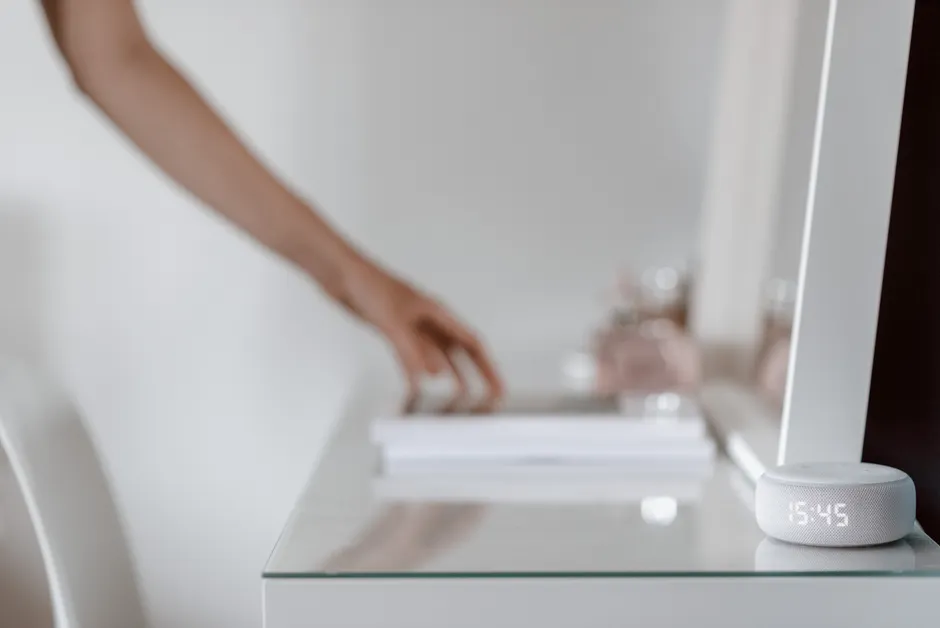
OpenAI's first hardware device will be a portable, screenless speaker designed to act as a conversational AI companion, according to Bloomberg's July 14 reporting, which cited people with knowledge of the project Bloomberg. Reuters corroborated the account the same day KFGO.
The device has no screen. Instead, it uses moving parts that operate on their own — a design choice meant to make it feel "alive," according to Bloomberg's sources Engadget. It can speak naturally, control smart home devices, and play music. A built-in camera and sensors are intended to help it understand what's happening around you, so it can give more personalized responses.
The speaker will run GPT-Live, the real-time voice model OpenAI launched on July 8. That model can listen and speak at the same time — a capability that already powers the newer voice mode in ChatGPT Reuters. The hardware version will be an improved iteration of the same technology.
On price and when it ships, the details are still fuzzy. Reuters reported in February that OpenAI expected the device to cost between $200 and $300, based on conversations with two people familiar with the plan Reuters. Bloomberg's latest reporting suggests a release sometime in 2027, though it cautioned that this timeline could change Engadget.
The design work has come through io, a startup founded by Jony Ive, the former chief design officer at Apple. OpenAI acquired io in 2025 for $6.5 billion. Paul Meade, who previously led the design team for the Apple Vision Pro, now heads OpenAI's hardware division.
This personnel lineup sits at the heart of an active lawsuit. Apple has sued OpenAI, along with two former Apple employees named Chang Liu and Tang Yew Tan, claiming they stole trade secrets. Apple is asking a court to block OpenAI from releasing hardware products. The lawsuit alleges that Liu and Yew Tan downloaded dozens of confidential files containing technical details and proprietary information about unreleased Apple products. Apple also names io as a participant in the alleged theft. In addition, Apple claims that OpenAI has hired more than 400 of its former workers.
These legal claims have not been tested in court, and OpenAI has not been reported as admitting to the charges. If Apple wins its injunction request, it could disrupt the 2027 timeline Bloomberg's sources mentioned, though nothing in current reporting suggests a court decision is close.
The emerging picture suggests this device is not a traditional smart speaker like an Amazon Alexa or Google Home device. Instead, it looks like OpenAI's attempt to build a physical product around the voice-based AI interface it has been developing since launching GPT-Live. When you add a camera and environmental sensors feeding information into a model that already handles two-way speech, you get something quite different from a cylindrical speaker that wakes up on a keyword and sends your voice to the cloud. This is closer in spirit to the companion robot demos that have shown up at tech conferences for years — though whether people actually want a moving object that pretends to be alive instead of a screen they can glance at remains an open question.
The hiring and design talent involved here echoes, in reverse, what made Apple's hardware approach so effective over two decades: a team of world-class industrial designers working alongside tightly integrated custom chips and software built by the same company. OpenAI assembling this same combination — a former Vision Pro designer and Jony Ive's studio — may explain why Apple's lawsuit uses such forceful language rather than treating this as normal employee turnover.
The crucial question is whether this architecture will actually work. A device with no screen that depends entirely on voice and sensors to be useful is a big bet that natural language conversation has become mature enough to replace the glanceable interface you're used to on phones and smart displays. It needs to handle everyday tasks well: setting timers, controlling lights, having a chat. GPT-Live's ability to listen and speak simultaneously is essential for that to work, but it is not enough by itself. What will really matter is how fast the system responds, whether it accidentally wakes up to background noise, and how it handles privacy concerns around a device with a microphone and camera always listening. Those factors will determine whether people see this as a genuine companion or just another gadget they eventually stop using.
What's confirmed right now is more modest than the ambition: a named language model, a design partner, a rough price from one report, a 2027 window from another, and an unresolved lawsuit over how the talent behind it arrived at OpenAI.