Harbinger Raises $240 Million as Its Electric Truck Maker Moves Into Defense
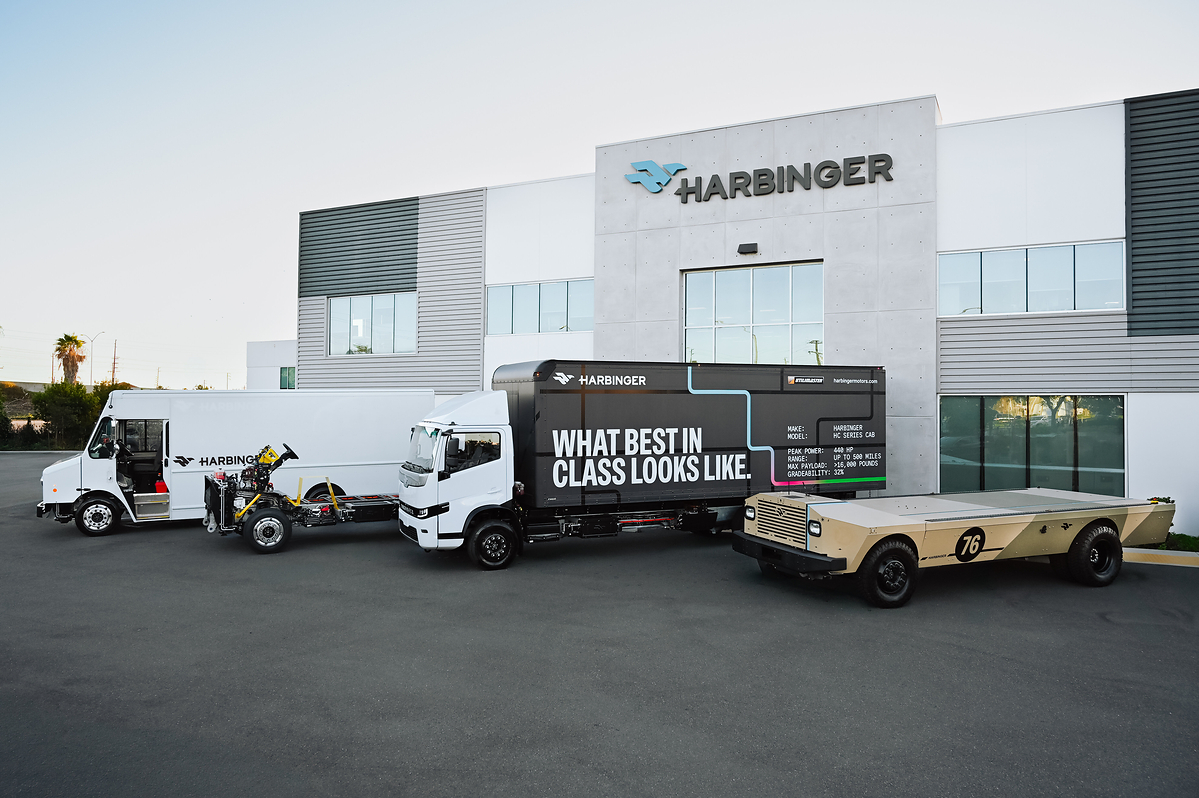
Harbinger has raised a $240 million Series D round, co-led by Tiger Global, Capricorn's technology impact fund and defense-focused firm Ridgeline, the company announced on November 5, 2026. TechCrunch reported that the company has now raised more than $650 million in total.
Maniv, Greycroft, Leitmotif and Fidelity Management also invested. FedEx, which led Harbinger's Series C, participated in the Series D as well. FedEx Senior Vice President of Safety and Transportation Paul Melander has joined Harbinger's board of directors.
According to Bloomberg, the Series D proceeds are earmarked for expanding manufacturing of Harbinger's electrification technology. TT News reported that the company plans to apply that technology to defense, autonomy software and energy storage. The company describes the round as funding three adjacent lines of work rather than its original product alone.
Harbinger was founded in 2022 by former employees of Canoo and QuantumScape. Its first institutional scale-up came through a $160 million Series C, announced in November 2025 and co-led by FedEx, THOR Industries and Capricorn. That round was meant to scale production of U.S.-built electric medium-duty trucks, the mid-sized class that sits between delivery vans and long-haul tractors. It included an initial truck order from FedEx.
That order has since grown. FedEx has ordered 2,000 electric trucks from Harbinger, valued at more than $300 million, according to TechCrunch's earlier coverage of the deal. For a startup that has built its production plan around a single anchor customer, an order of that size gives the production ramp, the period when output climbs toward full volume, a concrete demand signal.
On the product side, Harbinger has acquired autonomy startup Phantom AI, which adds perception and driving software, the systems that sense surroundings and control the vehicle, to its electrification platform. The company is developing hybrid emergency vehicles and has revealed an unmanned hybrid electric vehicle platform aimed at military applications. The platform is driverless. Its hybrid architecture pairs an internal combustion generator, which produces electricity from fuel, with battery-electric drive. That configuration is more typically associated with off-road and mission-specific vehicles than with highway freight.
The broader context here is a shift in customer base. A medium-duty truck program sells into fleet operators with depreciation schedules, route economics and an established procurement process. Defense procurement runs on different timelines, certification regimes and specification requirements, so a company that moves into it has to build relationships and compliance capabilities a commercial fleet vendor does not need. Ridgeline's role as co-lead suggests the investors see that transition as deliberate, but the round does not reveal how quickly defense work will convert into revenue.
In my view, the more instructive detail is the pairing of a commercial anchor with a defense extension. Electrified drivetrains, battery packs and autonomy stacks developed for delivery fleets could, in principle, be reused in platforms that need quiet operation, reduced fuel logistics or unmanned operation in hazardous environments. Whether that reuse holds up at the level of hardware qualification and software assurance is a question the next product announcements will test, not this funding round.
For the wider electric commercial vehicle sector, the Harbinger round offers a specific data point: a venture-backed truck maker raising a large growth round, with its largest fleet customer participating again, and with a product roadmap that extends toward energy storage and government work. The capital is intended to build manufacturing capacity. The defense and storage plans are stated intentions that have yet to appear as deliveries or contracts. What the round makes possible is access to broader markets for the same core electrification engineering, along with a production base in which to test whether that engineering travels.


