About 100 Protesters Enter Microsoft's Amsterdam Data Center Site as Local Limits Tighten

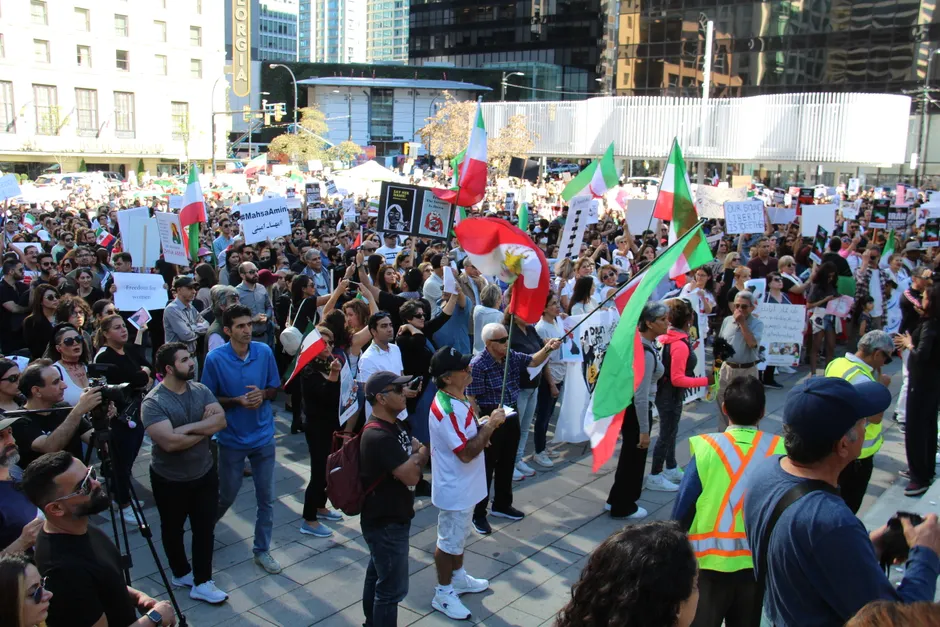
Around 100 people entered the construction site of a new Microsoft data center in Amsterdam on Friday morning, according to The Verge, in a protest against the project.
The demonstration targets the construction of three 85-meter data center towers on the outskirts of the city. A data center is a building filled with servers that run online services, from email and cloud storage to AI models. Geef Tegengas, a Dutch climate and justice collective whose name translates to "Push Back," helped organize the action.
Some protesters scaled a crane to hang a banner with a profane message about AI. Others unfurled a banner reading "Microsoft powers genocide." Participants chanted "Microsoft has got to go" and "free Palestine" on the site.
The facility is being built by Pure Data Centres, a British developer. Microsoft will be the sole tenant. The project was first planned in 2016, before Amsterdam put a ban on new data centers in place. That ban runs until 2030. Reuters reported on November 5 that the city is imposing new restrictions on data center development over concerns about electricity demand and water consumption.
The Friday action is not the first at this site. In July 2026, Datacenter Dynamics reported that Extinction Rebellion pelted the Microsoft site in Amsterdam with acid-filled balloons. Cybernews described the same incident as water balloons containing harmful substances. Extinction Rebellion said its demonstration signaled that the group is joining Geef Tegengas. Earlier, in August 2025, The Guardian reported that activists staged a protest on the roof of a Microsoft datacentre in the Netherlands.
Activism has also reached Ireland. On Tuesday of the same week, activists staged a mock Israeli military checkpoint outside a Microsoft data center in Dublin.
Microsoft's own figures give a sense of the workforce scale involved. A Microsoft document states that its datacenters in the Netherlands employed approximately 400 people as of 2025. A separate Microsoft estimate put the work required to complete its new Dutch datacenters at approximately 3.1 million work hours, with more than 760 jobs needed during peak construction.
The broader context here is the collision between grid capacity, water use and local land-use decisions. The power grid is the network that delivers electricity, and its capacity is finite. Cooling, which keeps servers from overheating, often draws heavily on water. Data center siting now turns on electricity and cooling as much as on land and fiber. Amsterdam's ban and its newer restrictions show how a municipality can change the terms after a project has been planned, which is the situation the developer and tenant face on this site. Protest activity has so far been directed at the company's presence in the city rather than at the technical details of the build, and the banners and chants show that the grievances extend well beyond data center infrastructure.
In my view, the more productive ground for operators is the set of engineering commitments a city can verify: grid flexibility, meaning the ability to raise or lower power draw when the grid is strained; water-efficient cooling; and heat reuse, where waste heat from servers is captured for nearby buildings. Whether this project proceeds, and on what terms, will indicate whether those commitments can carry a build through a restrictive European planning environment.