Books With Fuller Online Records Sell More, NielsenIQ BookData Finds
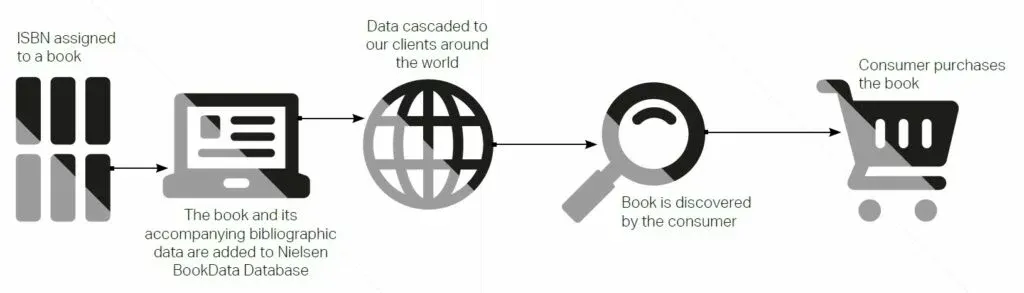
Books with richer online records sell more copies, according to a new UK report from NielsenIQ BookData, a company that collects book sales and product information.
The report, The Importance of Metadata for Discoverability and Sales 2026, was published on 6 November. Metadata means the details attached to each book's record: its description, keywords, cover image and publication dates. Discoverability means how easily a reader can find a book in the first place.
The study combined BookData's bibliographic records with BookScan point-of-sale data, which counts copies sold at the checkout. It covered the top 100,000 bestselling printed books of 2025. The report is the fourth in a series that began in 2012 and was updated in 2016 and 2020.
The numbers are striking. Books with a long description sold 119% more on average than books without one. Books with keyword metadata, the search terms that help a title come up in a search, were associated with 113% higher sales. Books with a cover image sold 73% more copies on average than those without cover imagery.
Timing also mattered. Titles that met the Basic criteria of the Metadata Excellence Award sold 85% more than titles that did not. Titles that met the Basic standard at least 16 weeks before publication sold 250% more than those that did not meet it, or met it only after publication.
Philip Stone, Head of Publisher Account Management at NielsenIQ BookData, wrote the report. He argues that metadata is no longer simply an operational necessity. In his view, it is a strategic asset that helps books reach their full commercial potential.
Why does this matter now? The report says 60% of UK book purchases by volume now take place online. A shopper scrolling a website cannot pick up a book, flick to the back cover or ask a bookseller for a recommendation. The online record has to do that work.
What makes the findings land for readers is how ordinary they are. A good description, a clear cover and accurate keywords are things a publisher can supply, and the report links them to sales.
NielsenIQ BookData says it collects data on English-language books, including audio and ebooks, from publishers in 93 countries. That reach is why its figures are widely watched across the trade, the industry of publishers, booksellers and agents.
Anyone who has searched a library catalogue knows the principle. A clear record is how a book gets found by the person who will read it. Behind a public library desk, that record decides whether a title ever reaches a reader at all.


