The US-Iran Conflict: How Five Months of Escalation, Ceasefire, and Re-Escalation Led to a Full Port Blockade

President Trump reimposed a naval blockade on all Iranian ports on July 14, 2026, and ordered new strikes against Iran's coastal defenses and missile sites, deepening a conflict that began in late February and has cycled through multiple rounds of escalation, ceasefire, and re-escalation across five months (Reuters).
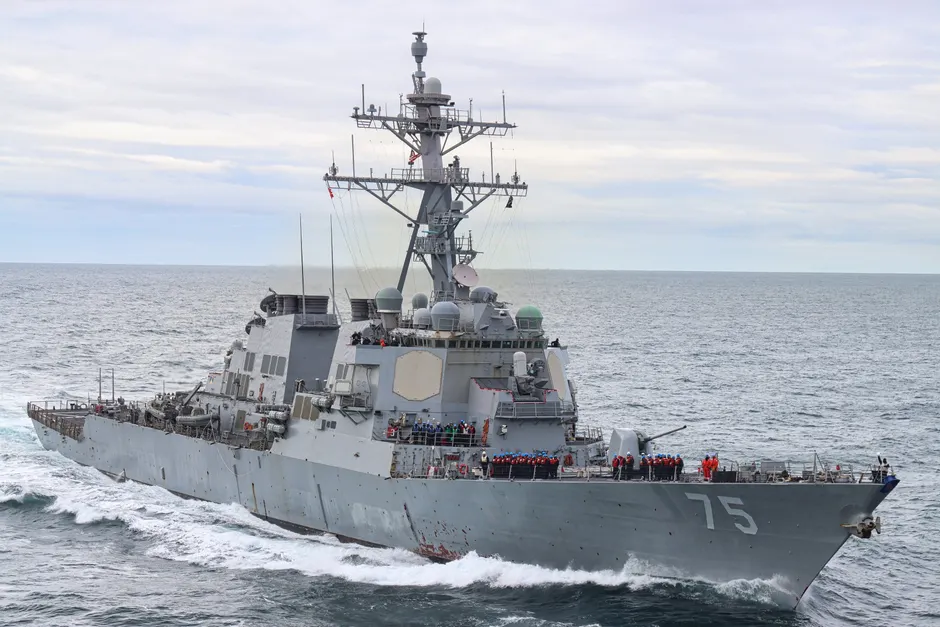
A naval blockade means warships prevent goods and vessels from entering or leaving a country's ports. In this case, the U.S. Navy is physically blocking access to every Iranian port, effectively cutting Iran off from seaborne trade.
The Latest Escalation Chain
The most recent spiral began on July 7, when the Trump administration formally notified Congress that hostilities against Iran had resumed (Reuters). Two days later, Trump stated that recent Iranian attacks on shipping in the Strait of Hormuz signaled the end of a fragile ceasefire (AP News). The Strait of Hormuz is a narrow waterway between Iran and Oman through which roughly one-fifth of the world's daily oil consumption passes.
Iran claimed it struck two oil tankers in the Strait around July 13 (CNN). That same day, Trump notified Congress that "limited" military action had resumed, announced the reinstatement of a blockade on Iran in the Strait, and said the U.S. would charge other ships for safe passage through the waterway (AP News; CNN).
By July 14, the blockade expanded from the Strait of Hormuz to all Iranian ports. Trump threatened to strike Iranian power plants and bridges (Reuters). The following day, the U.S. launched two waves of attacks targeting Iran's coastal defenses and missile sites (Reuters).
How the Conflict Began
The conflict's origins trace to Executive Order 14382, "Addressing Threats to the United States by the Government of Iran," issued on February 6, 2026 (White House). An executive order is a directive issued by the president that has the force of law. By March 7, an opinion piece in The New York Times referenced "a week into Trump's war in Iran," placing the onset of open hostilities around late February (New York Times).
The White House reinforced its legal framing in early March, releasing a statement titled "The Iranian Regime's Decades of Terrorism Against American Citizens" that described Iran as "the world's leading state sponsor of terrorism" (White House).
Economic Pressure Alongside Military Action
The economic pressure track has run in parallel with military operations. Sanctions are government-imposed penalties that restrict a country's trade and financial transactions, often by freezing assets or barring companies from doing business with targeted entities.
The State Department announced sanctions targeting Iran's energy smuggling networks on June 5, followed by additional sanctions against regime financiers and shadow banking networks on July 10 (State Department). Shadow banking refers to financial activity that operates outside the regulated banking system, often used to move money covertly. On July 14, the State Department detailed actions to disrupt and degrade the illicit shipping and sanctions evasion network of U.S.-designated Mohammad Hossein Shamkhani (State Department).
Rhetoric and Political Tension
Trump's rhetoric has matched the operational tempo. On July 8, he stated that U.S. armed forces had been "annihilating" Iran's capabilities in retaliatory strikes (White House). The contrast with his campaign promise to "end wars, not start them" now sits at the center of the political debate over the conflict (New York Times).
The most consequential framing of the conflict emerged on July 15 and 16, when The New York Times published both a news analysis headlined "In Iran, Trump Risks Another American Forever War" and an opinion piece titled "This Is a Forever War in the Making" (New York Times; New York Times). The July 15 news article described the conflict as "a low-level conflict, alternating between moments of negotiation and military strikes" (New York Times).
That characterization is consistent with the operational record. A ceasefire took hold at some point after the initial February escalation, held unevenly, and collapsed in early July after Iranian attacks on commercial shipping.
The Domestic Picture and a Novel Economic Mechanism
An April 14 New York Times report found Americans divided in their opinions on the war with Iran (New York Times). The blockade-for-fee mechanism Trump announced on July 13, in which the U.S. would charge commercial vessels for safe transit through the Strait of Hormuz, introduces a new economic dimension to the conflict. Charging tolls for U.S.-escorted passage would amount to a unilateral assertion of control over a critical maritime chokepoint, with implications for shipping insurance rates, oil prices, and the legal framework governing freedom of navigation.
The Pattern and What It Means
The broader context here is the structural tension between Trump's declared objective of regime degradation and the open-ended operational commitment that objective appears to require. The pattern the Times identified, alternating between negotiation and strikes, has now repeated at least twice within five months. Each cycle has escalated in scope: the February phase involved targeted strikes; the July phase includes a total port blockade, threats against civilian infrastructure, and a toll-collection regime on international shipping. The sanctions architecture has expanded in parallel, moving from energy smuggling to shadow banking to individual illicit shipping networks.
What remains unclear is whether the administration has defined an exit condition that falls short of regime change. Trump's language of "annihilating" Iran's capabilities suggests an open-ended degradation objective, while the congressional notifications framing the action as "limited" point to an attempt to contain the conflict's legal and political footprint. The gap between those two framings, the operational reality of a total port blockade, and the cyclical ceasefire-strike pattern is what gives the "forever war" label its analytical traction.