Zelenskyy Defends Firing His Defence Minister as Civil-Military Rift Goes Public

Ukrainian President Volodymyr Zelenskyy on July 16, 2026 publicly defended his decision to dismiss Defence Minister Mykhailo Fedorov, confirming that the relationship between the defence ministry and Ukraine's top military leadership had broken down beyond repair. Speaking at a joint press conference in Kyiv with British Prime Minister Keir Starmer, Zelenskyy acknowledged that the rift between Fedorov and Commander-in-Chief Col Gen Oleksandr Syrskyi had become unmanageable The Guardian.
Zelenskyy described a "challenging dialogue" between the two men and framed his decision as a forced choice. "I would very much like to see unity. The sides have not found it. And the problem lies not only with the sides, but with me as well," he said. "In such a situation, you have a choice: either one side or the other." The dismissal effectively aligned the presidency with Syrskyi, the general overseeing day-to-day military operations, over Fedorov, the civilian official responsible for the defence ministry's administrative and procurement functions.
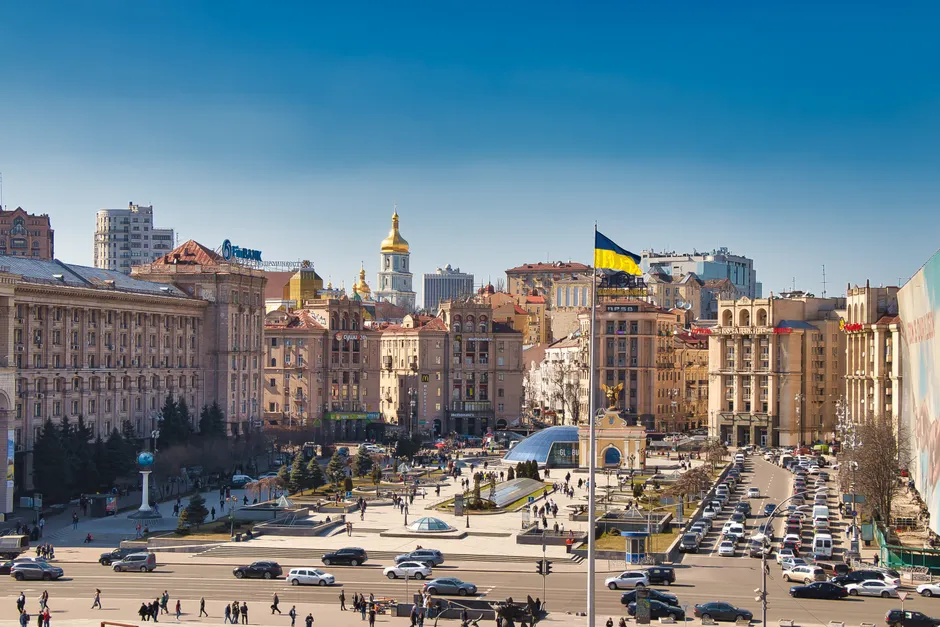
More than 1,000 protesters gathered outside the presidential office in Kyiv on the same day, voicing support for Fedorov. Placards read "For what?" and "Is your head screwed on?" while demonstrators chanted "Syrskyi out." This was only the second time since Russia's February 2022 invasion that large numbers of Ukrainians had protested against their own government, a data point that carries particular weight given the wartime restrictions on public assembly that have prevailed for over four years.
The broader context here is a civil-military fault line that has surfaced repeatedly across wartime Ukraine's command structure. The tension between a defence minister's bureaucratic and political remit and a commander-in-chief's operational authority is structural, not personal. Think of it as the friction between the person who runs the supply chain and the person who fights the battle: each needs the other, but their priorities naturally pull in different directions. Zelenskyy's acknowledgement of his own responsibility in the breakdown is notable for its candor in a political culture that has rarely rewarded admission of error. By choosing Syrskyi, Zelenskyy has signaled that operational continuity at the front takes precedence over political management of the defence portfolio, but it has cost him political capital with a segment of the public that viewed Fedorov as a competent steward of the ministry.
The press conference also served as the stage for Keir Starmer's farewell visit to Kyiv ahead of his departure from Downing Street. The two leaders had maintained an intensive diplomatic cadence in the weeks leading up to the visit: they met in Évian, France, on June 16, discussed countering Russia's shadow fleet (a network of vessels used to evade sanctions on Russian oil exports) and defense support on July 14, and held a further meeting on July 15 focused on strengthening air defense and supporting Ukraine's power grid President of Ukraine. Preparations for negotiations on defense weapons and a diplomatic framework for ending the war were also on the bilateral agenda President of Ukraine.
During the visit, Starmer and Zelenskyy walked along the Wall of Remembrance near St. Michael's Cathedral and paid tribute to Ukraine's fallen defenders President of Ukraine. Zelenskyy awarded Starmer the Order of Freedom, Ukraine's highest foreign honour. Starmer reciprocated with a framed Ukrainian flag that had hung above Downing Street in February 2022, when Russian tanks were advancing toward Kyiv.
Starmer used the platform to offer an assessment of the war's trajectory, stating that Ukrainian drone strikes on long-range targets inside Russia had shifted the conflict's momentum and that Vladimir Putin was "losing." Whether that framing holds up against the operational picture on the ground is a separate question, but it reflects the British government's public posture in the closing days of Starmer's tenure.
Zelenskyy said he hoped to meet Starmer's successor "as soon as possible," though he did not name Andy Burnham. The succession in London introduces a variable Kyiv cannot fully control: continuity of military aid, intelligence sharing, and diplomatic cover at multilateral forums will depend on the priorities of an incoming prime minister with his own political mandate and constituency pressures.
In my view, the convergence of Fedorov's dismissal, the street protests, and Starmer's farewell creates a compressed inflection point. Zelenskyy is simultaneously managing a leadership reshuffle that has drawn public dissent, cementing a relationship with a departing ally, and preparing to reset relations with a new British government. The protest outside his office, modest by pre-war standards but significant by wartime ones, will be watched closely for whether it remains an isolated expression of discontent or signals deeper erosion of the wartime consensus that has sustained his administration since 2022.