A Teleprompter Operator's Alleged Prediction-Market Bets Put Insider Trading in a New Context
Federal investigators believe Gabriel Perez, who has operated President Donald Trump's teleprompter since 2016, used his advance knowledge of upcoming speeches to place profitable bets on Kalshi's prediction markets, according to ABC News reporting confirmed by The Verge on July 16, 2026.
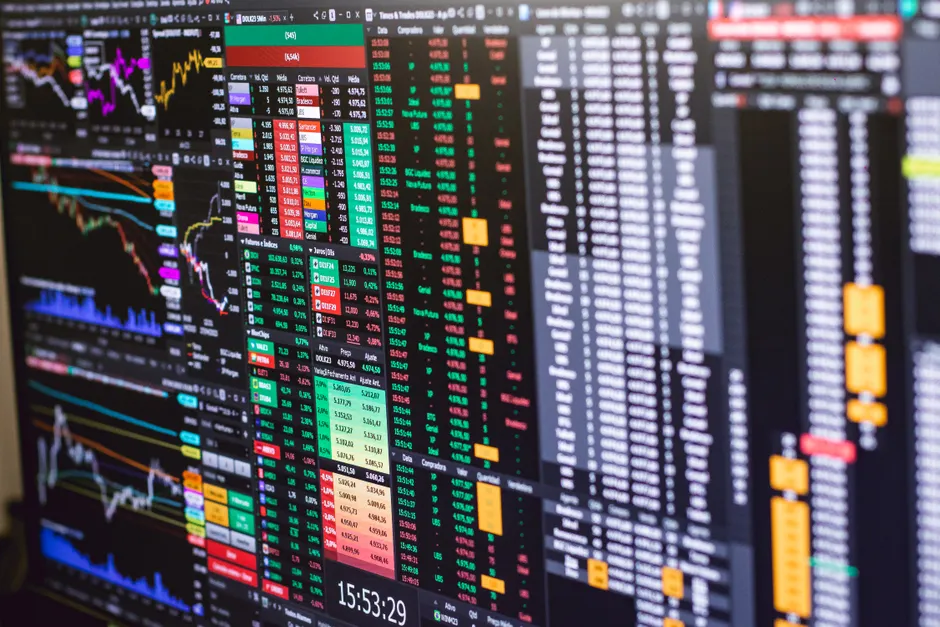
Perez is accused of wagering on what Trump would say during more than a dozen events, including the February State of the Union address, a Medal of Honor ceremony, and remarks at the World Economic Forum. He reportedly won more than $100,000 in total on the platform. Kalshi runs "mentions" markets, where users bet on whether a specific person will say particular words during high-profile events. Traders wagered more than $800,000 on Trump mentions markets alone, betting on whether the president would say terms such as "Hormuz," "rigged election," or "fake" during his speeches. (The Verge, NPR Illinois)
The case comes down to a straightforward information gap. A teleprompter operator, by the nature of the job, sees the text of a prepared speech before it is delivered. Kalshi's mentions markets pay out based on whether specific words or phrases are actually spoken at the event. Someone who already knows the speech text holds material, non-public information — that is, information not available to the public that directly affects the market's outcome. That is the edge federal investigators reportedly believe Perez exploited.
Kalshi's head of enforcement, Robert DeNault, said the company's surveillance team flagged the trades and referred them to the Commodity Futures Trading Commission following an internal exchange investigation. DeNault stated that Kalshi has charged the individual and has been assisting regulators. CFTC spokesperson Zach Fulton said the agency could not confirm or deny any investigation. (The Verge)
According to ABC News, the CFTC and Perez have discussed settling the case. The terms under discussion include Perez returning his earnings and agreeing not to place similar trades in the future. Federal prosecutors declined to open a criminal investigation. (The Verge, ABC News)
Kalshi recently implemented rules requiring users to disclose employment information before betting on markets flagged for heightened insider or manipulation risk. The timing of that rule change relative to the Perez matter is not specified in the available reporting, but the existence of the disclosure requirement points to an exchange actively building out its market-integrity infrastructure for a product category that barely existed as a regulatory concern two years ago.
The broader context here is the collision between prediction markets and insider information — a tension that traditional securities and futures markets spent decades building legal and technical frameworks to address. Kalshi's mentions markets are a novel product class: they resolve not on economic indicators or commodity prices but on the specific words spoken by a public figure at a scheduled event. That structure creates a wide and easily identifiable surface area for insider trading, because the set of people with advance knowledge of a speech's content is small, traceable, and in many cases publicly known. A teleprompter operator is one such person. Speechwriters, White House communications staff, and senior advisors would occupy similar positions.
What gives this case particular weight is not the dollar amount. One hundred thousand dollars is modest by the standards of insider trading enforcement. It is the clarity of the information edge that matters. In equity markets, proving that a trader possessed material non-public information and traded on it often requires extensive forensic work to reconstruct who knew what, when, and how they communicated it. Here, the informational advantage is structural and self-evident: the teleprompter operator has the text before the speech is delivered. The market resolves on whether specific words appear in that text. The connection is direct.
The decision by federal prosecutors to decline a criminal investigation, while the CFTC pursues a civil settlement, suggests regulators see this as a market-integrity enforcement matter rather than a criminal fraud case. That is consistent with how the CFTC has historically approached comparable conduct in traditional futures markets: civil penalties, disgorgement (returning profits), and trading bans, not prosecution.
For Kalshi, the fact that its own surveillance team identified and referred the trades is significant. It suggests that the exchange has built detection mechanisms capable of surfacing suspicious trading patterns in a product category that is still in its early stages. Whether those mechanisms were in place before or after the suspected trades occurred is a question the available reporting does not answer.
Prediction markets have spent the past two years moving from the fringe toward mainstream regulatory acceptance, with Kalshi's CFTC-regulated status as a central pillar of that shift. The Perez case will not derail that trajectory. But it does illustrate, in unusually clean form, the kind of integrity challenge that comes with offering markets whose outcomes can be known in advance by a small, identifiable group of people. Every regulated market confronts insider trading. The question for prediction markets is whether the products they offer create informational asymmetries — gaps between what insiders and ordinary traders know — that are too easy to exploit and too difficult to police.