A Century-Old Pipe Bursts Under Sunset Boulevard, Reigniting Los Angeles Infrastructure Debate
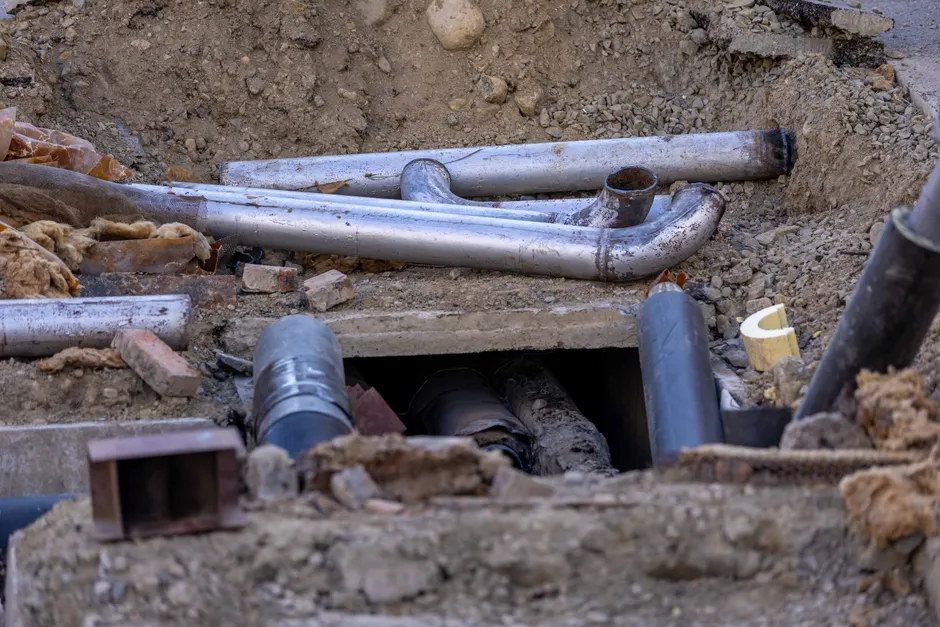
On July 16, 2026, a 110-year-old riveted steel water main burst in West Hollywood, California, opening a sinkhole on Sunset Boulevard and flooding the surrounding street network. The rupture compromised pavement along the Sunset Strip and submerged neighborhood streets off Sunset Boulevard and Holloway Drive, leaving local metro buses partially submerged in murky brown water. The Los Angeles Department of Water and Power (LADWP) confirmed the break affected the broader vicinity, noting in an initial press release that the incident affected "West Hollywood and the surrounding area near Sunset" (LADWP). The New York Times characterized the resultant ground collapse as a "giant sinkhole" on Sunset Boulevard (New York Times). The Los Angeles Times reported the ruptured water line was 110 years old (Los Angeles Times).
No injuries were reported, according to West Hollywood Mayor John Heilman, who confirmed there was no immediate need for evacuations and that all residents were safe. David Hanson, interim general manager of LADWP, confirmed that neighborhood residents retained access to clean drinking water. The rupture's economic and commercial disruptions were immediate: Dialog Cafe, a brunch spot on the Sunset Strip, sustained significant water damage and temporarily closed.
Anselmo Collins, chief operating officer of LADWP, told reporters the agency did not yet know what caused the pipe to rupture. He offered operational context, noting that water pressure typically surges at night and that water main breaks normally occur during those hours. Collins did not provide a timeline for repairs, saying officials were working to shut smaller valves and assess the situation. LADWP followed its initial public statement with an update titled "LADWP Continues Response Efforts Following West Hollywood Water Main Incident – 11 AM July 16, 2026" (LADWP).
The burst pipe's origins predate the 1984 incorporation of West Hollywood as an independent city. Riveted steel — a fabrication method phased out decades ago in favor of welded joints, which fuse pipe sections together more durably — remains in service across portions of the municipal water grid. Collins noted that LADWP annually installs and replaces roughly 45 miles of pipe, a replacement rate the agency maintains even as segments dating to the early twentieth century remain in active service.
The broader context here is the tension between how fast pipes are being replaced and how old they are. A 45-mile annual replacement program operates against a backdrop of pipes that have exceeded the century mark, creating a window where structural failures occur before scheduled intervention. Think of it like repainting a large house one wall at a time: by the time you reach the last wall, the first may already need attention again.
Los Angeles Mayor Karen Bass cited the pipe break as evidence of why the city needs a comprehensive infrastructure plan. Bass said a plan was rolled out approximately two months prior and is slated to go before voters on the November 2026 ballot. The November ballot measure Bass referenced would, if passed, determine whether that replacement rate accelerates through new funding mechanisms or maintains its current trajectory. The West Hollywood rupture provides a tangible data point for proponents of the plan, though the cause of this specific failure remains under investigation.
For now, the operational focus remains on valve isolation and damage assessment. The absence of a repair timeline reflects the complexity of shutting down smaller valves in a pressurized network while simultaneously evaluating below-grade infrastructure integrity. The presence of a sinkhole on a major arterial corridor like Sunset Boulevard complicates that assessment, as surface collapse indicates potential subsurface soil displacement beyond the immediate pipe joint.


