Australia Escalates Diplomatic Pressure on Laos Over Methanol Poisoning Charges

Australia has summoned Laos's ambassador to Canberra and sent a special envoy to Vientiane after Laos signalled it would pursue charges carrying penalties of no more than one year in jail over the methanol poisoning deaths of six foreign backpackers in November 2024. Foreign Minister Penny Wong said Australia was "deeply frustrated and bitterly disappointed" with the direction of the case, adding that Canberra wanted "real charges with teeth" (The Guardian, 17 July 2026).
Wong published a media release titled "Laos methanol developments" on 17 July 2026 (Australian Foreign Minister media release, 16 July 2026), outlining a diplomatic response that layers several channels of pressure at once. She appointed Pablo Kang as Australia's special envoy to "explore all avenues" in the investigation, sending him to Laos the same day to convey Australia's objections directly. Wong also said she would raise the matter with her Lao counterpart at an ASEAN (Association of Southeast Asian Nations) meeting in Manila the following week (BBC, 17 July 2026).
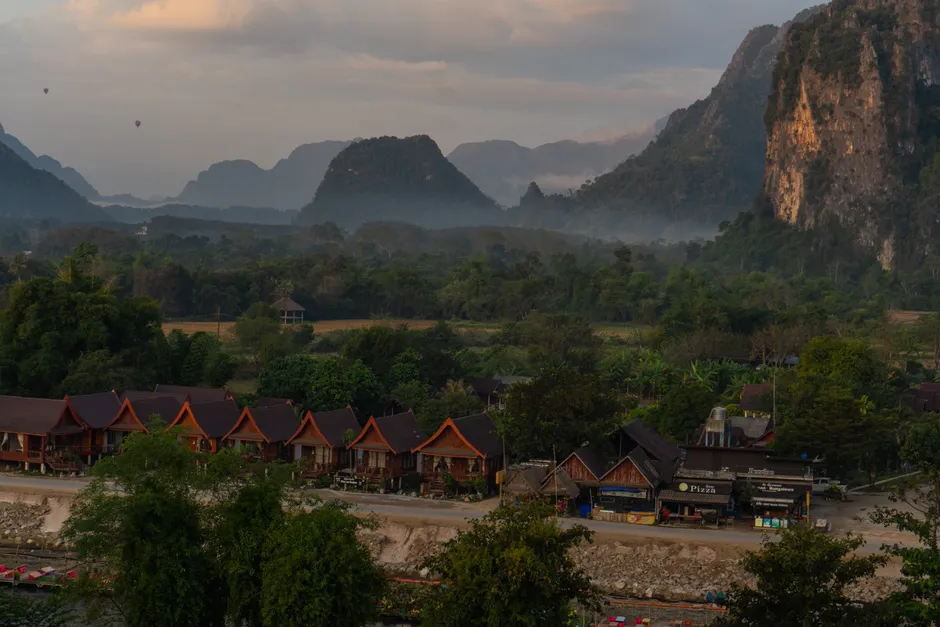
The charges Laos is expected to press stem from an incident at the Nana Backpacker Hostel in Vang Vieng, a town long popular with foreign travellers on the Southeast Asia backpacker circuit. Six tourists died after consuming free shots served at the hostel that were believed to be tainted with methanol, a toxic substance sometimes illegally mixed with ethanol-based alcohol to cut costs. Methanol is not the same as the ethanol found in normal alcoholic drinks — it is highly poisonous even in small amounts and is sometimes used by unscrupulous operators as a cheap substitute. The victims included Bianca Jones and Holly Morton-Bowles, both 19-year-old Australians, along with British, American, and Danish tourists. Simone White, a 28-year-old lawyer from southeast London, was among the dead (Reuters, 21 November 2024). A New Zealand citizen who was also poisoned survived and returned home (Reuters, 24 November 2024).
ABC News reported on 16 July 2026 that Lao authorities were expected to lay charges carrying collective penalties of up to one year in jail and a maximum fine of A$1,600 (ABC News, 16 July 2026). That penalty structure has drawn outrage from the victims' families. Mark Jones, father of Bianca Jones, told the ABC that "furious would be an understatement" regarding the expected charges, and he called on Prime Minister Anthony Albanese to reach out directly to his Lao counterpart to insist on genuine justice. Shaun Bowles, father of Holly Morton-Bowles, said it was "very hard to comprehend" the expected charges (BBC, 17 July 2026).
The prospective charges follow an earlier legal proceeding in Laos connected to the same hostel. Ten people associated with the Nana Backpacker Hostel were previously charged with destroying evidence, receiving suspended sentences and fines of $185 each (BBC, 17 July 2026). The distinction between evidence-destruction charges and the new charges targeting those allegedly responsible for the poisoning itself is central to the Australian government's objection: Canberra's argument is that penalties of up to one year are grossly disproportionate to the loss of six lives.
Laos initially signalled a different posture. In November 2024, the Lao government said it was "profoundly saddened" by the deaths and pledged to prosecute those responsible (Reuters, 24 November 2024). The gap between that pledge and the penalty structure now emerging nearly two years later is the fault line Canberra has chosen to exploit through diplomatic channels.
The timing of Australia's escalation is shaped by the ASEAN ministerial calendar. Wong's planned bilateral engagement with her Lao counterpart on the margins of the Manila meeting provides a structured diplomatic venue for the confrontation, while Kang's in-country presence creates a parallel track for direct pressure on Lao investigators and prosecutors. The BBC reported that Lao authorities were expected to hold a press conference later on the day of Wong's announcement, suggesting Vientiane is preparing its own public framing of the charges (BBC, 17 July 2026).
The broader question is whether diplomatic pressure from a middle power can meaningfully alter the prosecutorial decisions of a one-party state with limited independent judiciary infrastructure. Australia's leverage over Laos is constrained: bilateral trade is modest, and Laos's primary external partners are China and Vietnam. The summons of an ambassador and the dispatch of a special envoy are significant diplomatic instruments, but they signal concern rather than impose consequences. What Canberra is effectively doing is building a record of formal objection that could support future measures, including updated travel advisories or coordinated action with the governments of the other victims, if the charges proceed as currently framed.