The Trump Administration's New Visa Rule: What Changes for Foreign Journalists, Students, and Exchange Visitors
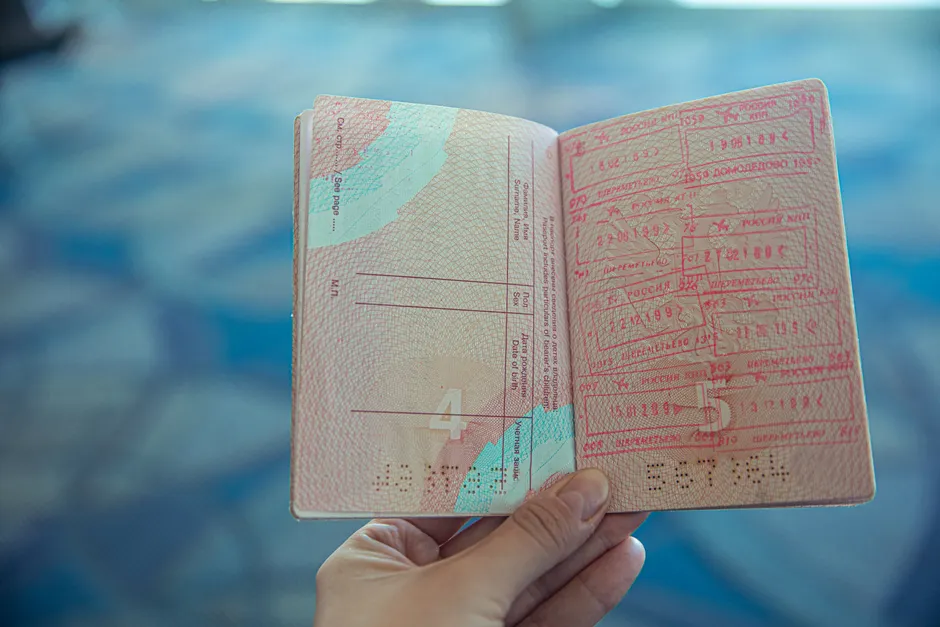
The Trump administration has finalized a Department of Homeland Security rule that replaces a decades-old system for foreign journalists, students, and exchange visitors. Under the new framework, foreign journalist visas drop from up to five years to 240 days, while Chinese journalist visas are capped at just 90 days. DHS published the final rule on July 16, 2026, under Federal Register document number 2026-14439, titled "Establishing a Fixed Time Period of Admission and an Extension of Stay Procedure for Nonimmigrant." It takes effect 60 days after publication in the Federal Register (The Guardian).
To understand what is changing, it helps to understand the system being replaced. Since the Carter administration, the United States has used what is called "duration of status" for certain visa categories. Think of it like an open-ended library card: as long as you kept meeting the rules, your visa stayed valid. You did not need to reapply periodically. This system covered foreign journalists on I visas (officially, the "foreign information media representative nonimmigrant visa classification," per the USCIS policy manual) and has governed foreign students on F visas since 1978. Under the new rule, F visas and J visas (for exchange visitors like researchers or visiting scholars) are capped at a maximum of four years (Reuters; Al Jazeera).
DHS Secretary Markwayne Mullin defended the overhaul in stark terms. He said the duration of status system had been in place for "nearly half a century" and "compromised national security and created an environment ripe for immigration fraud" (The Guardian; DHS).
The rule went through more than a year of regulatory process. DHS published a notice of proposed rulemaking on August 27, 2025, with the proposal appearing in the Federal Register the following day as document number 2025-16554. The final version was posted for public inspection on July 16, 2026, under document number 2026-14439 (Federal Register NPRM; Federal Register Final Rule). The rule also lands alongside a broader tightening of screening: USCIS issued an update on strengthened screening and vetting on June 5, 2026, that includes increased social media and financial scrutiny of foreign nationals seeking entry or immigration benefits (USCIS).
Press freedom organizations responded sharply. Reporters Without Borders (RSF) said the change "cruelly limited the duration of visas for foreign journalists from a period of up to five years to a fixed eight months." The Committee to Protect Journalists (CPJ) called the policy "the behavior of a backsliding democracy, not the international vanguard of free speech" (The Guardian).
China reacted swiftly. Foreign ministry spokesperson Lin Jian called the decision "discriminatory" and said China "reserves the right to take reciprocal countermeasures" (The Guardian). The specific 90-day cap on Chinese journalist visas revives a measure first proposed by the Trump administration in 2020, which the Biden administration subsequently dropped.
The broader context here is a systematic unwinding of discretionary admission categories that have governed entire classes of nonimmigrants for decades. The "duration of status" framework was not a loophole; it was a deliberate policy choice dating to the Carter administration, designed to give consular officers flexibility while placing the onus on visa holders to self-maintain compliance. Replacing it with fixed terms transfers administrative burden from the government to the applicant. Every journalist, student, and exchange visitor in the affected categories will now need to file extension petitions to remain beyond their capped period. For news bureaus, the reduction from five years to 240 days means correspondent rotations that previously required a single visa application will now demand at least one renewal cycle per assignment. For Chinese state media outlets operating in the United States, the 90-day limit effectively imposes quarterly visa processing as a permanent operational cost.
The decision also intersects with an escalating pattern of reciprocal media visa restrictions between Washington and Beijing. The 2020 proposal that presaged this rule came during a period of tit-for-tat expulsions and visa caps between the two countries. Lin Jian's language signaling "reciprocal countermeasures" suggests that cycle may resume. For international news organizations that rely on Chinese correspondents for U.S. coverage, the 90-day cap introduces a structural vulnerability: a single denied renewal could remove a correspondent mid-assignment, with no guarantee that a replacement would clear consular processing in time.
For universities, the four-year F visa cap creates a particular problem for doctoral programs and other degree tracks that routinely extend beyond four years. Students in those programs will now need to navigate an extension of stay process whose adjudication timelines and approval rates under the new rule remain unknown. Exchange visitors on J visas face the same fixed-term structure, though the practical impact will vary by program length.
DHS framed the rule primarily through an immigration enforcement and national security lens, with its July 2026 announcement titled around ending "foreign student visa abuse." But the scope extends well beyond students. The inclusion of journalists in the I visa category places media organizations squarely within a regulatory framework whose stated rationale targets fraud and security risks, categories that press advocates argue do not map onto the operational realities of accredited foreign correspondents.
The 60-day implementation clock begins on Federal Register publication. How USCIS adjudicates the expected surge in extension petitions, whether Beijing follows through on its reciprocal threat, and whether news organizations restructure their U.S. bureau staffing in response are the variables that will determine the rule's practical impact in the months ahead.


