Six Nights of US–Iran Strikes: Why Neither Side Can Find an Exit

The United States and Iran have exchanged military attacks for six consecutive nights as of July 17, 2026, with US airstrikes hitting Iranian ports and infrastructure while Iran retaliated against Gulf states and shipping in the Strait of Hormuz, deepening a conflict that both sides appear unable to terminate The Guardian.
The Strait of Hormuz is a narrow chokepoint between Iran and Oman through which roughly one-fifth of the world's oil supply passes. Whoever controls it can throttle the global energy trade.
The latest US strikes on July 17 targeted Chabahar on the Gulf of Oman and Bandar Abbas, collapsing a tower and damaging highways and bridges. At least seven people were killed in airstrikes on bridges in Iran's southern Hormozgan province overnight into Friday AP News. US Central Command stated the strikes were aimed at Iranian command centers and air defense sites DNA India. The July 17 wave also extended to a water desalination facility and an airport inside Iran AP News; Reuters.
Iran's response extended well beyond US forces. Tehran attacked Qatar, Bahrain, and Kuwait, including a strike on a power and desalination plant in Kuwait. The targeting of that facility carries outsized strategic weight: desalination, the process of removing salt from seawater to make it drinkable, provides an estimated 90% of Kuwait's water supply The Guardian.
The current campaign follows a 38-day spring bombing campaign conducted by the US and Israel, which claimed to have destroyed or decimated Iran's military. President Trump told Fox News that Iran's weapons were "down 91%," a claim that contradicts both leaked US intelligence assessments and the demonstrated scale of Iranian retaliation The Guardian.
Those intelligence assessments, leaked to the Washington Post and reported by The Guardian on May 9, 2026, concluded that Iran had regained access to 30 out of 33 missile launch sites along the Strait of Hormuz and retained approximately 70% of its overall prewar missile stockpile and launchers. The same assessment suggested Iran could endure three to four months in a Strait of Hormuz standoff before facing greater difficulties The Guardian. US Central Command announced three waves of strikes against Iran beginning on July 7 CFR.
Iran has moved to demonstrate that capability. On July 13, two oil tankers were struck by missiles on the southern route of the Strait of Hormuz near Oman, killing one sailor and wounding eight. A third tanker was hit in the Gulf of Oman, 45 miles northwest of Qalhat. Another tanker was struck on July 17, with no casualties reported. By July 16, daily transits through the Strait had dropped to three, the fewest since May. Brent crude, the benchmark for global oil prices, rose from $75.50 to $82 per barrel The Guardian.
Iran has demanded that all ships transiting the Strait of Hormuz travel through a channel close to its coast and stated that US strikes could not break its grip on the waterway Reuters. Iran claimed to have targeted 85 US military facilities in retaliation for US attacks on Hormozgan province and the port city of Bandar-e Mahshahr Al Jazeera.
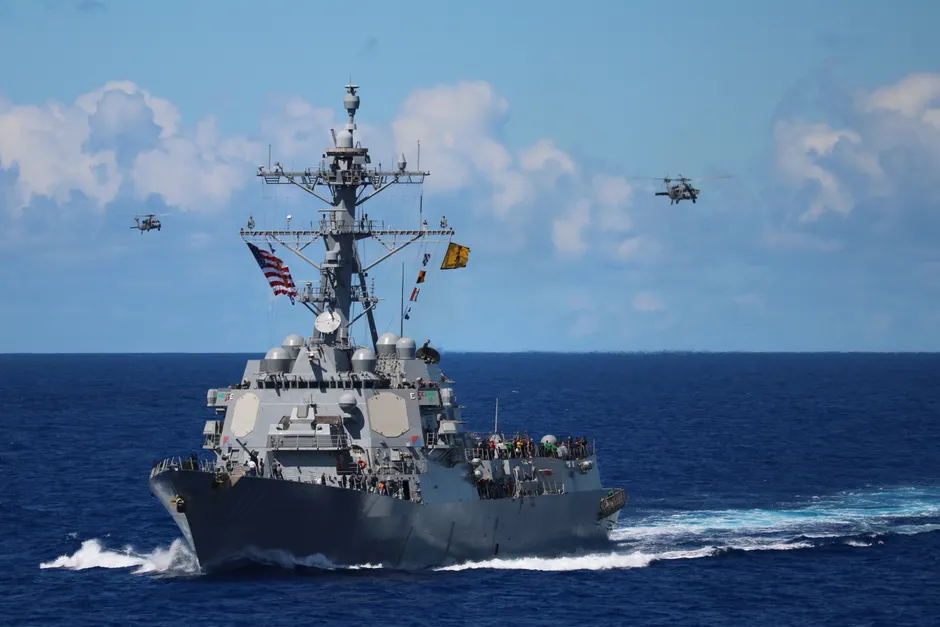
The US reimposed its naval blockade of Iranian ports on July 14 CNN, with the USS Boxer amphibious group and its 2,200 marines enforcing the blockade in the Gulf of Oman. A naval blockade is a military operation that prevents ships from entering or leaving a country's ports, used here to cut off Iran's seaborne trade. Additional US strikes have hit the port cities of Jask, Sirik, and Bandar-e Mahshahr, the city of Ahvaz in southwestern Iran, and Abu Musa Island, an Iranian-held island in the Persian Gulf Caspian News; India Today; DNA India; Al Jazeera. India has development investments in Chabahar port, giving New Delhi a direct stake in the facility's operational status ThePrint.
Iran's foreign ministry stated that the latest wave of US attacks had rendered recent diplomatic efforts "futile" CBS News. At the July NATO summit, President Trump described Iran's leaders as "scum" and "sick people." Military escalation was considered at a White House Situation Room meeting on July 14 The Guardian.
The gap between declared success and battlefield reality is widening. The administration's public assertions of Iranian degradation, whether measured at 91% or framed as the total decimation of Iran's military, sit against an intelligence record that warned months ago of Iran's resilience and against six nights of sustained Iranian strikes reaching across the Gulf. Michael Carpenter, a former Biden administration national security official now with the IISS, stated that the White House had "no clear or well thought-through strategy for how to get out of this" The Guardian.
The broader context here matters for understanding where this is headed. The May intelligence assessment's three-to-four-month sustainability window, measured from late spring, places the outer bound of that estimate squarely within the current period. If Iran's endurance assessment holds, the structural pressure points on both sides will intensify in the weeks ahead rather than ease. The Strait of Hormuz transit collapse, the targeting of Gulf state critical infrastructure, and the reimposition of a naval blockade all point to a conflict that has moved past escalation phases and into a sustained attrition dynamic, a state of war in which both sides grind down each other's resources without a clear path to negotiation, with no negotiated off-ramp visible.