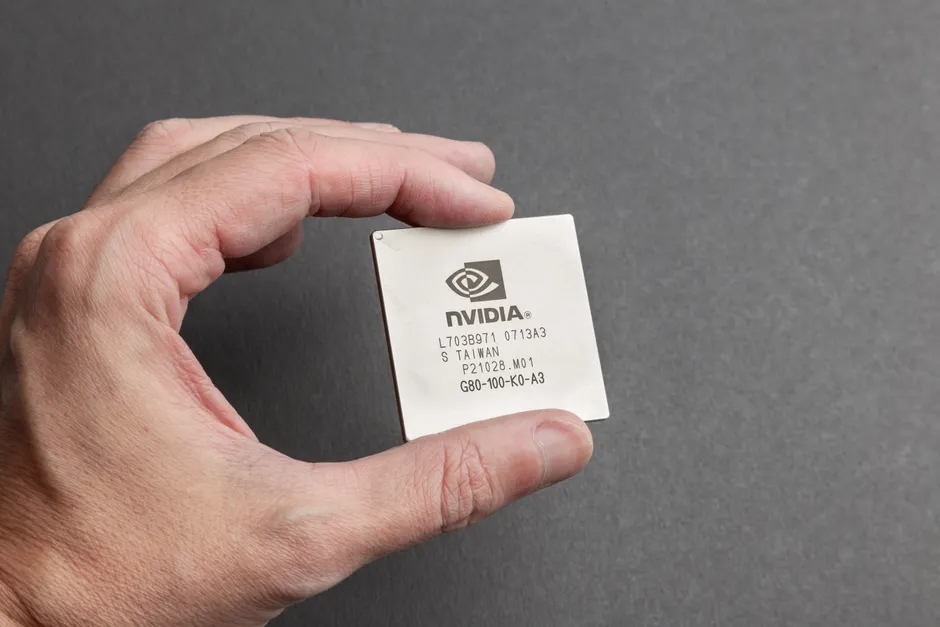
Cantwell Says Commerce Is Letting Nvidia AI Chips Reach China Through the Back Door

Senator Maria Cantwell, one of the top Democrats on the Senate commerce committee, sent a letter on Sunday, November 15, 2026, to Commerce Secretary Howard Lutnick. The letter accuses the Department of Commerce of failing to enforce protections meant to keep Nvidia AI chips from reaching China. Cantwell's letter uses strong language.
Cantwell wrote that the department has "undermined America's national security," and that its failures "help give away America's technology advantage in AI." She said advanced AI chips have been flowing through companies with ties to the People's Republic of China, despite Congressional authority to restrict that flow.
The letter cites several specific cases. Cantwell said the department did not heed warnings from White House and intelligence officials to restrict Megaspeed's access to AI chips. She also criticized the department for allowing Alibaba and ByteDance to reach Nvidia chips through overseas data centers. A further complaint concerns the extension of a loophole that lets restricted companies obtain American AI technology through subsidiaries, meaning companies controlled by a parent firm but operating as separate legal entities.
The sharpest charge is that the department is "putting business interests ahead of national security." To support it, the letter points to Cantor Fitzgerald, a firm formerly led by Lutnick and now steered by his sons. According to the letter, Cantor Fitzgerald held $1.2 billion in Nvidia stock at the time of Lutnick's nomination as Commerce Secretary.
The letter arrived ahead of a Thursday meeting in China between US President Donald Trump and Chinese President Xi Jinping, a session in which chip export policy is likely to surface in some form.
A separate thread runs through the same policy area. The Wall Street Journal reported that Lutnick is expected to unveil an initiative designating Nvidia, OpenAI, Anthropic, Amazon and Microsoft as AI "national champions." The designation would grant expedited export license approvals for overseas expansion.
The mechanics matter for anyone building or operating these systems. Export controls on advanced accelerators, the specialized chips that run AI workloads, have historically been easiest to route around at the edges: through corporate subsidiaries, through third-party cloud capacity sited in other jurisdictions, and through intermediaries whose ownership is layered across several entities. Cantwell's complaints map closely onto those edges. A restriction written against a named company is only as durable as its treatment of affiliates and remote compute, meaning the servers a company rents rather than owns.
In my view, the tension between the two threads is the real story here. A licensing regime that grants fast-track approvals to a handful of named champions for overseas expansion, while enforcement against restricted parties is contested, asks the department to be both accelerator and gatekeeper. Those roles can coexist, but only if the rules on affiliates, offshore compute and ownership are written tightly enough that a license means the same thing across every subsidiary and data center it touches.
The broader context here favors clarity. Chip firms, hyperscalers and model developers plan capital spending and overseas capacity against the rules they expect to live under. If the loopholes Cantwell describes are closed and licensing criteria are published and applied consistently, US companies can expand abroad with a defensible compliance posture, and the advanced silicon stays where Congress intended it to stay. That outcome depends on enforcement that matches the policy on paper, which is the gap the letter asks Lutnick to address.