Our Next Energy Plans Nasdaq Listing Through SPAC Merger
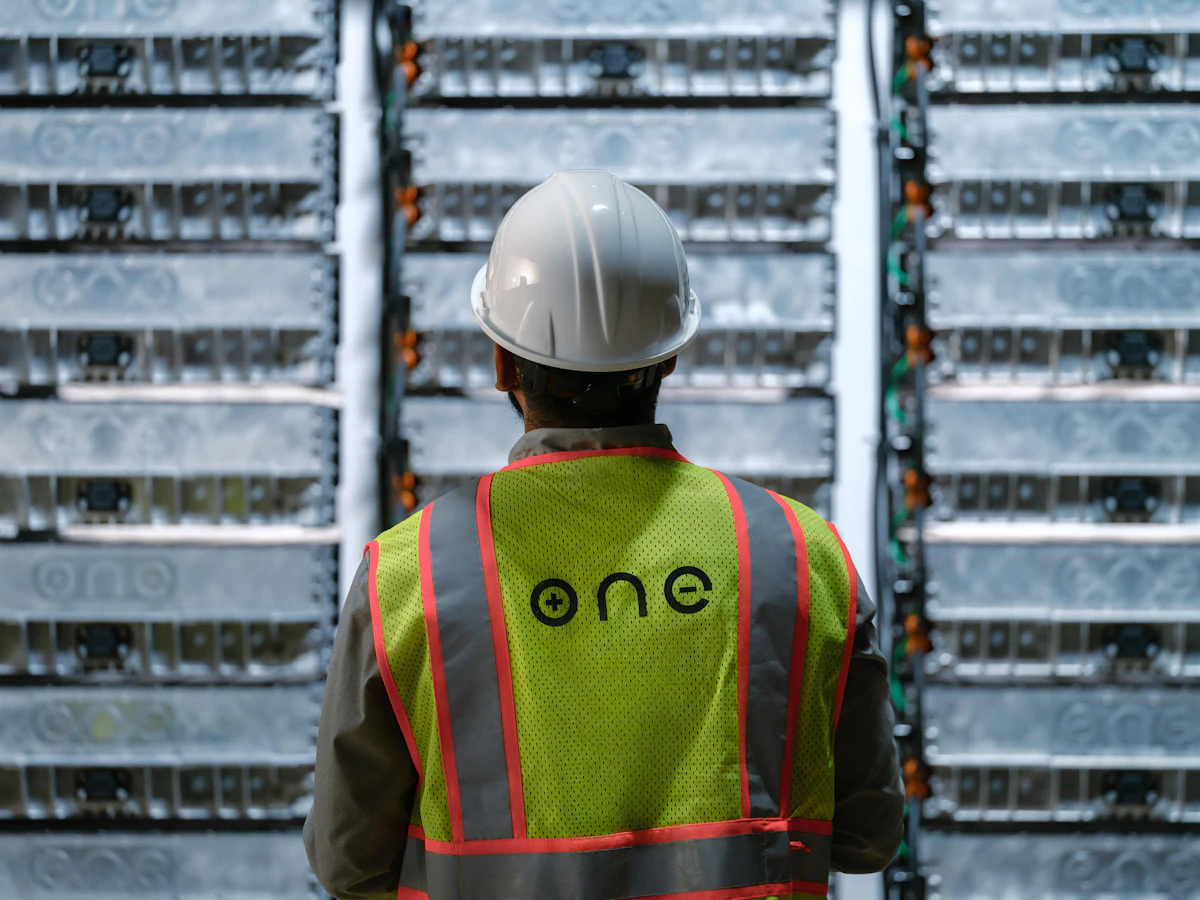
Our Next Energy (ONE) plans to go public by merging with Wen Acquisition Corp., a special purpose acquisition company (SPAC), a shell company that lists on the stock market first and then combines with a private business. The combined company would trade on Nasdaq under the ticker ONEE. TechCrunch reported the plan on November 16, 2026. The transaction has not closed.
The company stated a pre-money valuation of $600 million for the deal. On a pro forma basis, which adjusts the figures as if the deal had already happened, the combined company's implied equity value is $1 billion. The merger is expected to bring in $400 million in gross proceeds, assuming no redemptions, meaning no SPAC shareholders choose to withdraw their cash from the trust account. That assumption carries weight. Redemptions are the main variable in how much capital a SPAC deal ultimately delivers, so $400 million is a ceiling under that scenario, not a guaranteed sum.
The company has raised money before pursuing a listing. PitchBook puts its total raised at $483 million. At one point the company was valued at $1.3 billion, which places the $600 million pre-money figure well below that mark.
ONE describes itself on its website as a U.S. manufacturer of lithium-ion batteries for grid storage, rail and defense applications. Its inaugural LFP (lithium iron phosphate) cell factory is named ONE Circle, and the company states that the ONE Circle cell supports 12-minute fast charging. It also operates a pack facility in Novi, Michigan, which supports its rail and energy storage system (ESS) products. Company-level ISO 9001 quality certification is in place, and the OTP cell has achieved UN 38.3 certification, the United Nations safety test series for lithium batteries.
LFP chemistry trades some energy density for thermal stability and cycle life, which is why it has become the default for stationary storage, such as batteries that store power on the electrical grid. Twelve-minute fast charging should be read against the cell format, the operating temperature window and the test conditions behind it, much as a laptop's advertised charging speed describes lab results rather than every day use. Rail and defense customers bring their own qualification hurdles. UN 38.3 is a prerequisite for shipping cells by air or sea, not a measure of field performance.
The broader context here is the route itself. A SPAC merger gives a private manufacturer access to public markets and a defined cash amount, but it ties the company's capital position to shareholder redemptions and to the trading behavior of a newly listed stock. For a battery maker still scaling a cell factory, the gap between $400 million and a materially smaller figure would affect how fast the Novi and ONE Circle operations can expand.
In my view, the detail to watch is not the headline valuation but the redemption rate and the cash that remains after closing. If the transaction closes as described, the listing would give a domestic LFP cell maker serving grid storage and rail a public currency and a larger capital base, just as stationary storage demand is concentrating in the same kind of supply. That outcome is a plan today, with its conditions still ahead.


