Natural Cycles Launches NC Band 2 and Its First Smart Ring
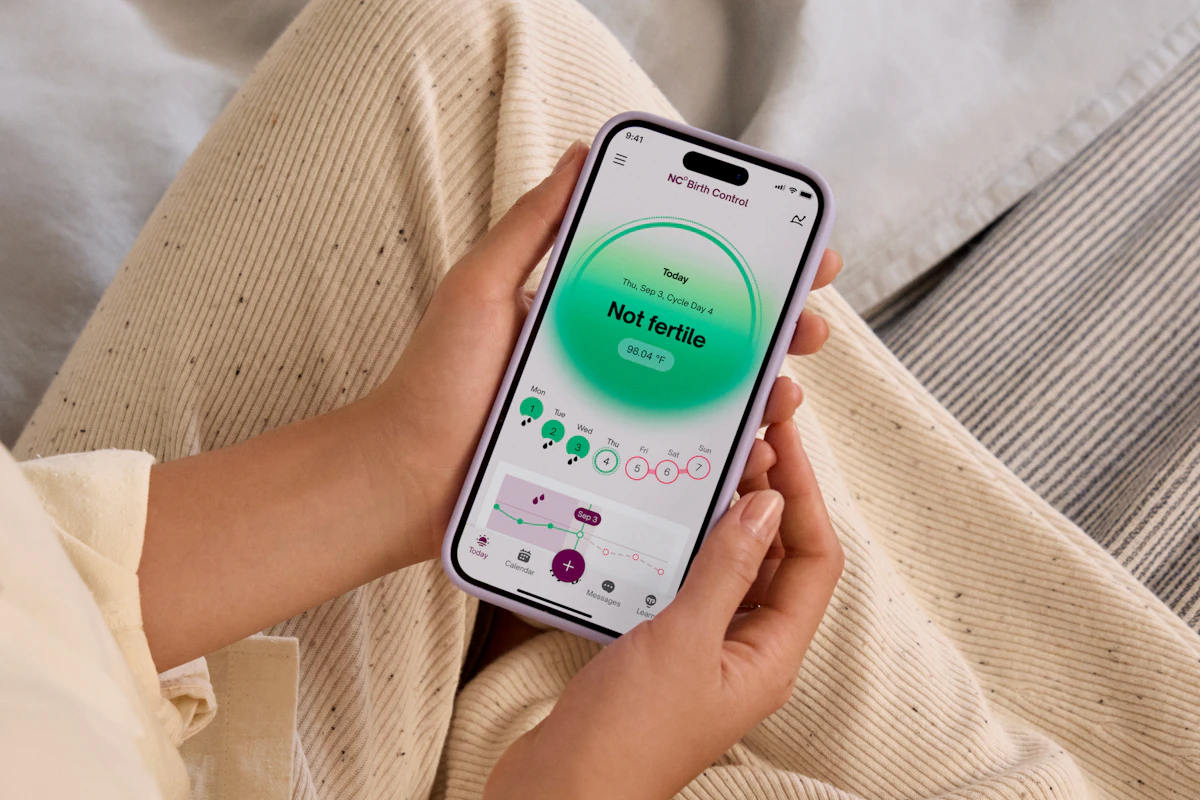
Natural Cycles has announced the NC Band 2, the second generation of its fertility-tracking wearable, and the NC Ring, the company's first smart ring. Engadget reported the announcement on 17 November 2026.
The NC Band 2 is a screen-free band meant to be worn day and night as a general-purpose activity tracker. It pairs with the Natural Cycles app and offers five modes: Birth Control, Plan Pregnancy, Follow Pregnancy, Postpartum and Perimenopause. Battery life is 21 days, up from 14 days on the original NC Band. The unit is smaller and lighter than its predecessor and is water-resistant to 50 meters. It is available to pre-order at $149 with a year's app plan, or at $99 for existing users. Purchases are HSA/FSA eligible, meaning they can be paid from tax-advantaged health spending accounts in the US. Shipping is expected to begin in December. Natural Cycles states that NC Band 2 shipping starts in December 2026 and that NC Band 1 ships right away.
The NC Ring measures 2.43 mm thick and 5.8 mm wide and tracks temperature and movement. It has no optical heart rate sensor, the light-based component most wrist trackers use to read pulse. It offers up to 14 days of battery life on a single charge and connects over Bluetooth to the Natural Cycles app for fertility and cycle tracking. The ring is not available in the US. According to Engadget, it has begun shipping in Canada, Europe and Australia.
On the regulatory side, Natural Cycles describes itself as FDA-cleared birth control. The company states that its birth control is 98% effective when used as intended and 93% effective with typical use, which reflects real-world behaviour including imperfect use. Its published typical-use comparison lists IUDs at above 99%, NC Birth Control and the Pill at 93%, and condoms at 87%. Natural Cycles also says couples using the app to plan pregnancy conceive on average within three cycles. For US users, Natural Cycles subscriptions are eligible for FSA/HSA reimbursement, and the company is offering a free NC Band with an annual plan for a limited time.
The app's compatibility list has also widened to include select Oura, Garmin, WHOOP and Apple Watch models, so users who already own one of those devices can use the app alongside them.
The broader context here is the shift from a phone-based tracking product to a family of body-worn sensors. The same app now spans contraception, pregnancy planning, pregnancy follow-up, postpartum and perimenopause, and the hardware is designed to sit on the body continuously rather than rely on manual logging. That design puts sensor data in a more central role. A device used for birth control carries different expectations of accuracy and consistency than a general activity tracker, and the two roles share one band and one app.
In my view, the most useful question for buyers is which claims apply to which device. The effectiveness figures and FDA clearance are attached to the birth control function, while the activity tracking, battery and water-resistance specifications describe the hardware generally. The NC Ring's temperature and movement sensing, without an optical heart rate sensor, is a narrower feature set than the wrist-worn competitors it sits beside, and its unavailability in the US limits who can buy it at launch.
The longer-term case rests on whether continuous, low-friction measurement can make cycle and reproductive health data easier to use across the years a person needs it. A 21-day battery and a ring form factor reduce the daily charging routine that often leads people to abandon tracking. If those specifications hold up in ordinary use, the hardware could make the app's modes less dependent on the user remembering to log each morning.