Ukraine's Defense Minister Ousted, Protests Erupt: What's at Stake

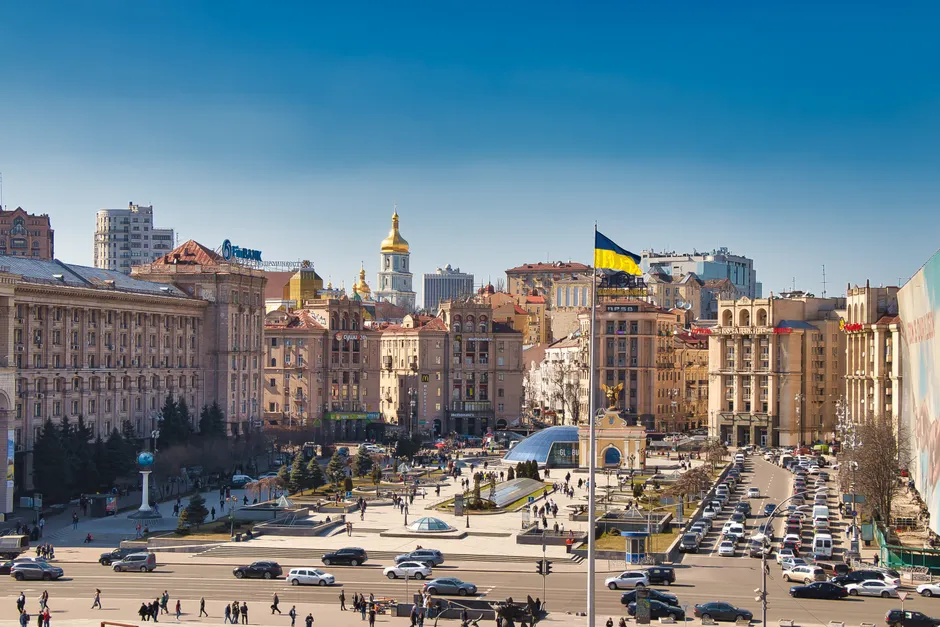
Thousands of protesters rallied across Ukraine on July 16 and 17, 2026, demanding the reinstatement of ousted Defense Minister Mykhailo Fedorov in what Reuters described as a rare display of wartime public dissent. Demonstrators gathered outside President Volodymyr Zelenskyy's office in Kyiv for a second consecutive day, chanting "Syrskyi away" and "Bring Fedorov back," while protests spread to major cities beyond the capital. (Reuters)
Fedorov was dismissed only six months after his appointment as defense minister, part of a surprise government reshuffle that saw Ukraine's parliament elect a new government. (Reuters) (Reuters) President Zelenskyy cited friction between Fedorov and General Oleksandr Syrskyi, the commander of Ukraine's armed forces, as a reason for the dismissal. (AP)
The ouster laid bare a rupture at the top of Ukraine's war leadership. Fedorov publicly accused Syrskyi of stirring up intrigue and blocking his reform initiatives, telling a news conference that the general had "split the country." (Reuters) (Al Jazeera) Appearing in a dark T-shirt and jeans, Fedorov defended his efforts to modernize the Ukrainian armed forces and disclosed that he had privately urged Zelenskyy to replace both Syrskyi and Chief of the General Staff Andrii Hnatov. (WPXI) (BBC) (New York Times)
At the core of this clash is a tension that many defense systems face: a civilian minister's mandate to modernize institutions versus a wartime commander's authority over military operations. Fedorov's claim that Syrskyi actively obstructed reform initiatives suggests the friction was not a simple policy disagreement but a structural collision between two centers of power within Ukraine's national security apparatus. Think of it as two people sharing a steering wheel, each pulling in a different direction.
The broader context here is what Zelenskyy's choice reveals about his priorities. By removing the minister rather than the commander, he signaled a preference for keeping military operations uninterrupted over sustaining the momentum of civilian-led reform. That calculation carries weight for how defense governance may evolve when a country is fighting a prolonged war.
The scale of the protests adds a dimension that personnel changes rarely produce. Wartime Ukraine has seen consolidated public support behind the national leadership, making the multi-city demonstrations against Fedorov's removal a notable departure. The slogans directed at Syrskyi by name indicate that public frustration is not diffuse but targeted at a specific command figure, raising the political cost of maintaining the current military leadership without addressing the grievances Fedorov channeled.
Fedorov himself struck a measured tone about the path forward. He publicly stated he was "certain" Zelenskyy "hears the Ukrainian people" and that "the situation will be 100% corrected." (United24) The phrasing leaves ambiguous whether Fedorov expects his own reinstatement or a broader course correction, but it frames the crisis as resolvable within the existing political framework rather than through escalation.
Hnatov served as Chief of the General Staff at the time of Fedorov's ouster, and Fedorov's recommendation that both he and Syrskyi be replaced indicates the ousted minister viewed the problem as systemic within the senior military command, not isolated to a single individual. (BBC)
The government reshuffle that accompanied Fedorov's removal extended beyond the defense ministry. Ukraine's parliament moved to elect a new government amid the public outcry, according to Reuters, placing the personnel changes within a broader restructuring rather than a single targeted dismissal. (Reuters)
What remains unresolved is whether Zelenskyy's administration will absorb the protest energy as a pressure valve for reform demands or treat the demonstrations as a passing disruption to be weathered. Fedorov's public posture keeps the door open for reconciliation, but the specific accusations against Syrskyi, made on the record and attributed by name, make any return to the status quo politically complicated. The protests entering a second day with no indication of immediate concession from the presidency suggest the standoff has momentum beyond a 48-hour news cycle.