Musk Says SpaceX Has Designed a Rooftop Cell Tower to Fill Indoor Gaps in Starlink Coverage
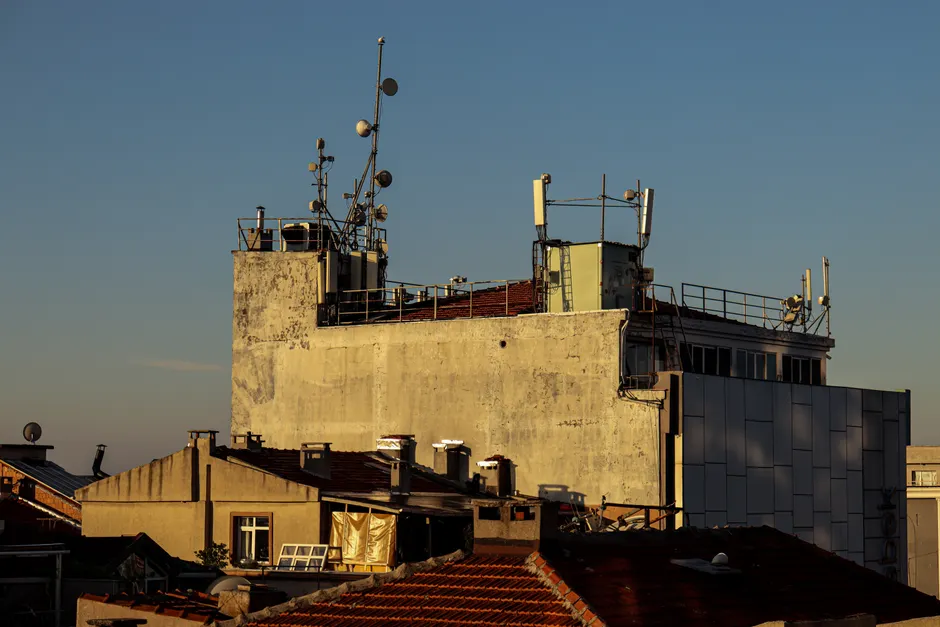
Elon Musk said on November 19, 2026 that SpaceX has completed the design of a miniature rooftop cell tower intended to improve mobile coverage inside buildings, where signals from Starlink satellites struggle to arrive. The plan, as he described it, is a terrestrial layer beneath the satellite network.
Musk made the remarks in an interview at the DealBook Summit. He described the device as a micro cell tower that mounts on a roof in much the way a Starlink dish does, and said the miniature cell towers are expected to go into production in 2027. TechCrunch reported the remarks and the design plan.
The reason for a terrestrial component, in Musk's account, is physical. Indoor locations, particularly buildings with metal or thick roofs, block signals coming from space. A satellite link that works well on an open rooftop can fail a few floors down. The handset in a basement, stairwell or steel-framed office is the case he singled out, and he said a terrestrial solution is therefore needed to reach those spaces.
On the satellite side, Musk said SpaceX will launch its Direct-to-Cell V2 constellation next year, with a 40-fold increase in bandwidth. He did not give further detail on the constellation's architecture.
He also said one approach would be to bundle the small cellular base stations together with Starlink terminals. That suggests the rooftop unit and a Starlink terminal could be sold or deployed as a pair.
In my view, the most useful way to read the announcement is as a statement of architecture rather than a product. Musk outlined two layers: satellites for broad outdoor reach, and rooftop cells to carry indoor traffic back into the network. Each layer has its own problems. The satellite layer depends on launch cadence, capacity per beam and the terms on which handsets can use the service. The rooftop layer depends on backhaul, power, installation, and the carrier agreements that determine whether a subscriber's phone attaches to the device at all. The interview resolved none of those dependencies.
The timeline also deserves a plain reading. Design completion, 2027 production and a 2027 constellation launch are forward-looking statements from the chief executive, made in a conference interview. They are statements of intent, and hardware schedules for new radio equipment often move.
For network engineers, the key question is whether a roof-mounted unit can integrate into existing terrestrial core and radio access networks without special handling. For building owners and facilities managers, the question is simpler: whether a rooftop device can end the dead spots that have typically been fixed with indoor distributed antenna systems (DAS) or added small cells. If the units work as described, the practical gain would be coverage where a phone currently has no signal at all, such as the lower floors of a dense office block or a building with a metal-clad envelope. That is narrower than the phrase "eliminate dead zones" suggests, but it is still meaningful for anyone who has lost a call standing next to a window.
The broader context here is that indoor coverage predates satellite connectivity. Satellites were always going to struggle with materials that block radio at the frequencies they use. Musk's answer is to stop asking the satellite to do that job and to place an antenna where the signal can reach it. It is a division of labour the industry will recognise. If the 2027 production target holds, the rooftop cell could make satellite-plus-terrestrial coverage a single service from the subscriber's point of view, with the building as the hand-off point rather than a gap.


