Ukraine's Military Leadership in Crisis as Protests Demand Commander's Ouster

Ukraine's top military commander, General Oleksandr Syrskyi, was widely expected to lose his position as of July 20, 2026, with an anonymous armed forces source telling The Guardian that "His destiny is decided." Ukraine's general staff denied reports of his imminent dismissal the same day, stating that Syrskyi and his deputy Andriy Hnatov continued to carry out their duties. No formal decree announcing Syrskyi's removal had been published on President Zelenskyy's official website as of the search date.
The crisis began after Zelenskyy dismissed defence minister Mykhailo Federov on approximately July 16, 2026. Federov, 35, was described as a moderniser credited with improving Ukraine's battlefield position during his six months in the role The Guardian. The Associated Press reported on the reshuffle and subsequent protests the same day AP. Zelenskyy confirmed that the working relationship between Federov and Syrskyi had broken down. Federov accused Syrskyi of blocking reforms with bureaucratic obstacles and rewarding brigades that were personally loyal to him The Guardian.
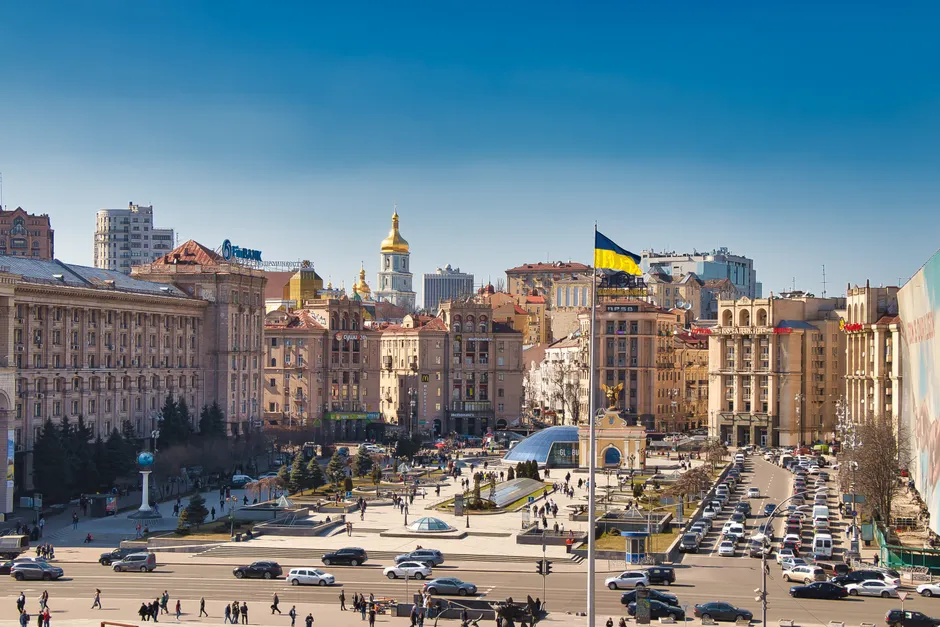
Federov's dismissal set off five days of demonstrations outside the presidential office in Kyiv. Thousands chanted "Syrskyi out" and waved cheese graters as a pun on the commander's name. Protest organisers issued a deadline of Friday, approximately July 24, for Zelenskyy to reinstate Federov, threatening a "general indefinite protest" across the country if he did not The Guardian.
Zelenskyy's chief of staff, Kyrylo Budanov, stated on or before July 20 that "the position of society has been heard" and that the situation was being resolved "professionally and constructively" The Guardian. The general staff's denial ran parallel to this conciliatory language, creating an official posture that acknowledged public discontent while rejecting the specific reporting on Syrskyi's departure.
On July 20, Zelenskyy met with possible replacements for Syrskyi. Among them was Mykhailo Drapatiy, head of Ukraine's joint armed forces, who built his reputation by driving a tank through a pro-Russian blockade in Mariupol in 2014. Zelenskyy's newly appointed defence minister, Yevheniy Khmara, attended the meetings with top military figures The Guardian. The anonymous armed forces source indicated that the replacement should be popular but without open political ambitions.
Syrskyi's command tenure has unfolded against a complex operational picture. In late June 2026, he reported that Ukrainian forces had liberated over 670 square kilometres since the start of the year and that the pace of Russian advances had more than halved in the first half of 2026 Ukrinform. He also assessed that the Kremlin views a new wave of mobilisation as a last resort, potentially deferred until after State Duma elections Ukrinform. As recently as May 2026, Syrskyi reported to Zelenskyy that despite an announced ceasefire, Russian forces had not reduced their assault actions president.gov.ua. He further warned that Russian forces had not abandoned plans to seize Ukrainian territory and establish a buffer zone in the north Ukrinform.
Syrskyi is a graduate of the Moscow Higher Combined Arms Command School The Guardian, a biographical detail that has long drawn scrutiny in a country where Soviet-era military education is politically sensitive. The friction between Federov's reformist agenda and Syrskyi's command style, with Federov stating that the commander was not prepared to discuss existing problems in the military openly Ukrinform, exposed a structural tension within Ukraine's civil-military hierarchy.
The broader context here matters for several reasons. A change of commander in chief mid-war is inherently disruptive, but the mechanism driving this potential transition is unusual: it is not a quiet rotation ordered from the presidential office, but a crisis catalysed by street protests that have put a specific name forward for removal and a specific name forward for reinstatement. Protesters are not merely demanding Syrskyi's ouster; they are demanding the reversal of a cabinet decision and the return of a sacked minister. That is a qualitatively different pressure on executive authority than generic dissatisfaction with the war's conduct.
The parallel with Ukraine's political history is hard to avoid. Mass demonstrations outside the presidential office demanding specific personnel changes evoke the dynamics of the Maidan era, albeit on a smaller scale and directed at military leadership rather than the head of state. The protest organisers' deadline of July 24 creates a fixed point of escalation. If Zelenskyy does not reinstate Federov, the threat of a "general indefinite protest" raises the prospect of sustained domestic unrest at a moment when the front line remains active and Russian territorial ambitions, according to Syrskyi's own assessments, remain unchanged.
Budanov's language, "the position of society has been heard," is carefully ambiguous. It concedes legitimacy to the protesters' grievances without committing to any specific action, whether Syrskyi's removal or Federov's reinstatement. The general staff's more direct denial, by contrast, risks looking defensive if a dismissal materialises within days. The anonymous source's declaration that Syrskyi's "destiny is decided" suggests that internal military channels have already accepted an outcome that the official statement has not yet confirmed. Whether the gap between these two postures closes with a formal decree or with the protests dissipating will likely become clear by the July 24 deadline.